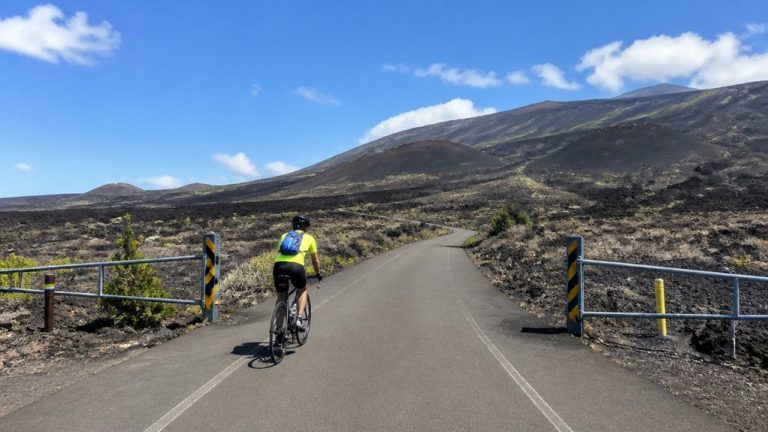
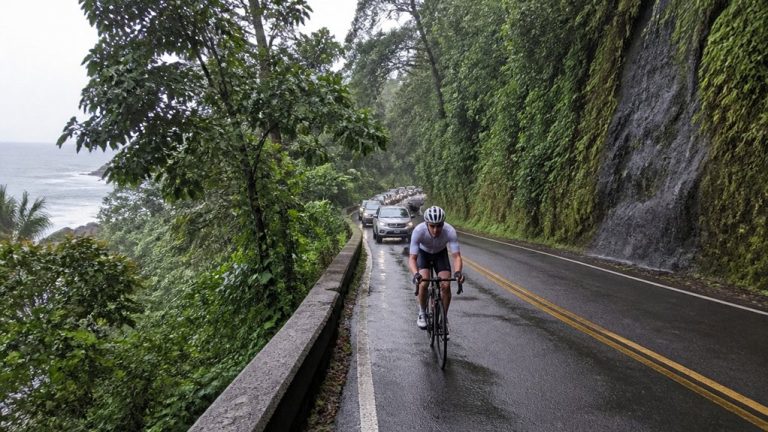
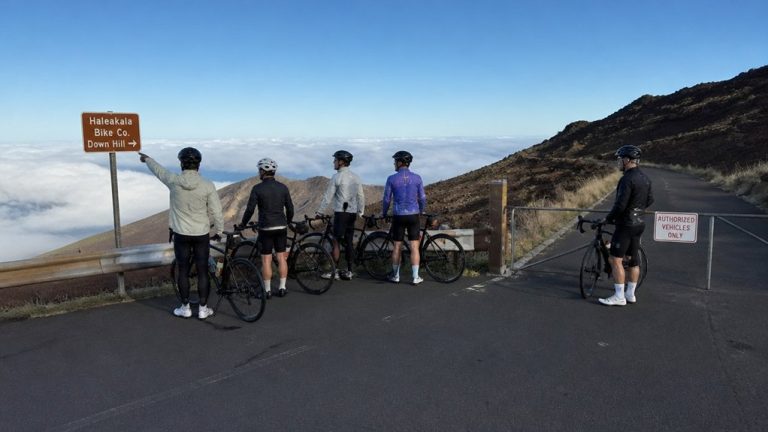
Before you coast down Haleakala, you’ll want a kit that handles sunrise chill, dry wind, and the slow warm-up below the clouds. Pack light but smart: layers you can peel off, closed-toe shoes, sunglasses, sunscreen, water, and any meds you can’t afford to forget. A small backpack keeps it simple while the road hums and the crater glows in the early light. The tricky part isn’t bringing more stuff. It’s bringing the right few things.
Key Takeaways
- Wear layered clothing: a moisture-wicking shirt, fleece, long pants, and a windproof shell for cold, gusty summit conditions.
- Bring closed-toe shoes with good grip; they’re required for safety and proper pedal control on the bike.
- Pack a small daypack for removable layers, sunscreen, sunglasses, water, snacks, and personal medications.
- Use high-SPF sunscreen, SPF lip balm, and UV-protective sunglasses with a strap for intense sun and wind.
- Keep essential meds, phone, and valuables in quick-access, weather-protected pockets or a waterproof bag.
What to Bring on a Haleakala Bike Tour
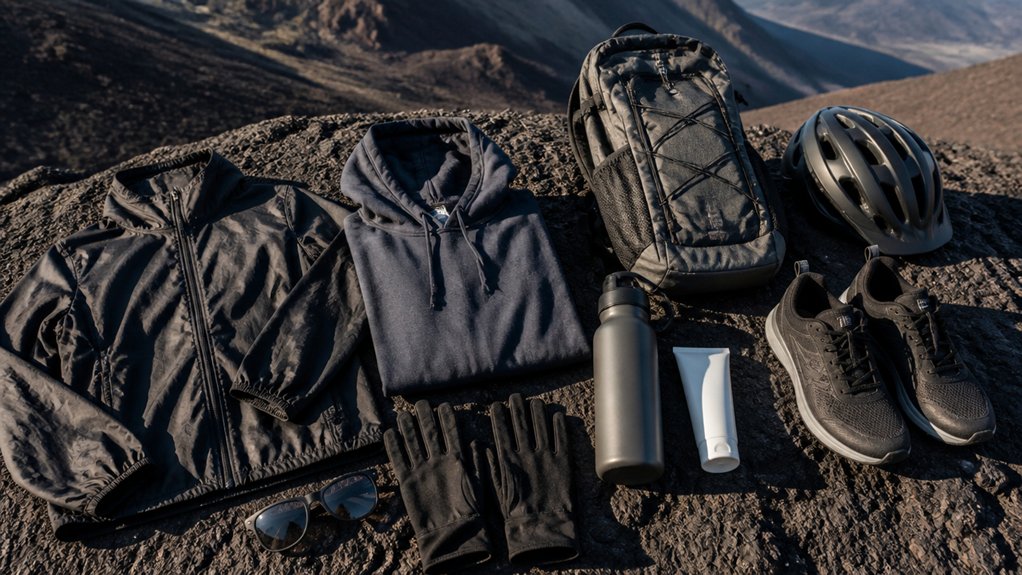
Start with the basics, because Haleakala can feel like two different worlds in one ride. You’ll want closed-toe shoes and layered clothing so you stay comfortable from the chilly summit to the warmer lower slopes. Think sneakers or hiking shoes, plus a T-shirt, a fleece, and a windproof jacket.
At nearly 10,000 feet, the air bites. Temperatures often sit around 30 to 40 degrees, and the wind can whip hard enough to make you laugh once, then zip your jacket fast. Gloves help, too, especially when your hands meet cold handlebars. If clouds roll in or the breeze turns sharp, the operator can provide Helly Hansen rain gear. Dress for the summit first, and the ride down feels easier, safer, and far more fun all the way. These cold summit tips can make a big difference in how comfortable you feel before the downhill begins.
Pack the Essential Items First
Once you’ve got your summit layers sorted, think about the small items that make the ride smoother once the wheels start rolling. First, pack closed-toe shoes and a small backpack. Bike Maui supplies Dakine packs, which are handy for storing extra gear and ride basics below.
| Item | Why it matters |
|---|---|
| Sunglasses | Cut glare and protect your eyes |
| High-SPF sunscreen | Strong UV sneaks up fast |
| Water bottle | Keeps you hydrated on the descent |
Bring a windproof/waterproof outer layer too. The company provides rain gear, but your own lightweight jacket makes quick changes easier. Because the route follows the Haleakala descent, having your essentials easy to grab helps at scenic stops and changing elevations. Add a simple snack, like a granola bar, plus any medications. Tuck in a charged phone or camera for photos, safety stops, and those big volcanic views. Your future self will thank you later.
Dress in Layers for Summit Weather
At Haleakala’s 10,000-foot summit, you’ll feel the cold fast before sunrise, so dress in layers that keep warmth close and still let you adjust on the way down. Start with a base layer and a fleece or sweatshirt, then pull on a windproof shell like the provided Helly Hansen suit to block the sharp wind and any stray mist. Keep long pants, closed-toe shoes, and extra pieces like a hat or gloves handy in your backpack, because the descent warms up quickly and you won’t want to wrestle with your clothes roadside. Make sure your helmet guidelines are covered before the tour, since Maui bike tours require proper head protection for safety.
Base And Mid Layers
Because Haleakala can feel like two different seasons in one ride, you’ll want base and mid layers that handle both the chilly summit and the much warmer descent. Start with a lightweight moisture-wicking T-shirt, short or long sleeve, so sweat doesn’t cling as you drop into lower elevations. Add a mid-layer like a fleece or cozy sweatshirt for the summit’s 30 to 40 degree air. Bring long pants too. Dressing properly also supports bike tour safety by helping you stay warm, focused, and comfortable during the cold start.
- Moisture-wicking base layer keeps you drier as temperatures rise.
- A fleece or sweatshirt adds warmth while you wait at the summit.
- Long pants help during the cold start and pack easily later.
Choose pieces you can peel off fast and stash in the provided Dakine backpack. That way, you stay comfortable instead of wrestling with extra clothes roadside later.
Windproof Outer Shell
Layers do the warming, but a windproof outer shell does the real guarding when Haleakala’s summit air starts whipping around before sunrise. At 10,000 feet, 30 to 40°F can feel sharper when gusts cut across the overlook. Pull a lightweight layer underneath, then zip on your windproof outer shell. Since best time of day conditions can feel coldest and windiest before sunrise, having that outer shell ready right away makes the start of the ride far more comfortable.
| Item | Why it matters |
|---|---|
| Shell jacket | Blocks biting gusts |
| Shell pants | Adds full lower-body coverage |
| High collar | Shields your neck |
| Hood and cuffs | Seal out sneaky drafts |
| Secure pocket pack | Stows gear later |
A windproof and waterproof jacket and pants are provided on all Maui Downhill Bike Tours, which makes packing simpler. If a little mist blows through, you’ll stay protected. When the air softens below, stash your shell in supplied Dakine® backpack.
Warmth For Descent
When the sun still feels far away, Haleakala’s summit can sit in the 30 to 40°F range, and the cold has a sharp, dry bite that makes waiting around feel longer than it is. You’ll be happier if you dress in layers you can peel off later. Start with a close-fitting base layer, then add a fleece or sweatshirt to trap heat. Pull the provided Helly Hansen jacket and pants over everything to block wind and surprise rain. A pair of gloves also helps protect your hands during the descent, especially when braking tips matter most on the long ride down.
- Base layer that sits close and stays comfortable
- Mid-layer fleece or sweatshirt for insulating layers
- Long pants, hat or scarf, plus outer shell
At the summit, long pants and a warm hat or scarf help with wind chill. As the road drops and the air softens, stash extra layers in your Dakine backpack. Your fingers will thank you later.
Wear Closed-Toe Shoes
Even if the sunrise steals your attention, your shoes still matter on a Haleakala bike tour. For any Haleakala Downhill ride, closed-toe shoes aren’t optional. They protect your feet when you brake, stop suddenly, or hop off the bike. Sandals might feel beach-ready, but sneakers or hiking shoes grip the pedals better and keep you steadier over the steep 23 to 26 mile descent.
Choose sturdy shoes that stay on in windy summit air, where temperatures often hover around 30 to 40 degrees. You want footwear that feels comfortable for hours and works well with the provided Kona mountain bikes, which use 29-inch wheels and a single-speed setup. Proper footwear also supports safer riding for guests who meet the tour’s age, height, experience requirements. Check your gear before check-in too. Staff will turn you away without proper shoes, whether you arrive before sunrise or at the 8 AM morning tour.
Pack Sunglasses and Sunscreen
You’ll want sunglasses and sunscreen before that long Haleakala descent, where bright summit light and strong UV can sneak up on you fast. Choose sunglasses that stay put in the wind and cut the glare, so you can keep your eyes comfortable as the road unwinds below you. Put on SPF 30+ before the tour, cover your face, neck, ears, and hands, and tuck a small tube in your Dakine® backpack for easy touch-ups at stops. These Maui bike tour essentials help keep you comfortable from the cool summit air to the warmer lower elevations.
UV Protection Essentials
Although the air feels cool at Haleakala’s summit, the sun means business, so pack broad-spectrum sunscreen in the SPF 30 to 50+ range and a pair of polarized sunglasses with UV400 protection. At 10,000 feet, UV stays intense, even when clouds drift by and wind nips your cheeks.
- Reapply high-SPF sunscreen every two hours, or sooner after heavy sweating.
- Use sunglasses to protect your eyes from harsh light and block 100% UVA/UVB rays.
- Keep sunscreen, lip balm with SPF, and shades in your Dakine® backpack.
You’ll appreciate easy access while waiting at the summit and rolling through shifting microclimates. A lightweight neck gaiter adds extra coverage for your face and neck when the sun and wind team up. Haleakala’s rays don’t joke around, even if the temperature does. The exposed conditions on the Haleakala downhill route can make sun protection feel even more important as you descend.
Reduce Glare Safely
Because sunrise can hit hard at Haleakala, pack polarized sunglasses and high-SPF broad-spectrum sunscreen where you can grab them fast. At nearly 10,000 feet, UV feels sharper, so reapply SPF 30+ or 50+ before the summit and again during breaks. Polarized sunglasses cut glare from bright morning light and the reflective road during the 23 to 26 mile descent. They also protect your eyes when wind and sun team up.
Keep your shades on a strap or retainer so a gust doesn’t send them flying downhill before you do. Store sunscreen and glasses in the Dakine backpack for easy access and safer lenses. Bring an extra sunscreen tube and a microfiber cloth too. You’ll wipe away smudges, clear moisture, and keep every switchback crisp in view all morning long. On a typical bike tour itinerary, you’ll have several stops and transitions, so keeping both items handy makes reapplying and cleaning up much easier.
Bring Water and Light Snacks

Even if the ride is mostly downhill, your body still burns through water fast in Haleakala’s thin, chilly air. Bring at least one small reusable bottle and sip often. The summit air can dry you out before you notice. Add electrolyte tablets or a sports drink if you can. They help replace salts and keep that woozy, empty feeling away.
- Pack compact snacks like nuts, dried fruit, or energy chews.
- Bring a granola bar or protein bar for quick fuel.
- Keep water and snacks in your provided Dakine backpack.
Choose snacks that are easy to open and easy to eat. You want quick bites, not a crumb storm on a roadside pullout. Non-perishable options work best. They stay tidy, travel well, and give you steady energy all the way down. This matters even more on a Maui bike tour, where first-time riders may not notice dehydration or fatigue right away.
Carry a Small Bag for Extra Layers
A small backpack or daypack gives you a simple place to stash peeled-off layers as the sun warms the descent, and many tour operators can provide one if you need it. You’ll want quick access to a fleece, wind or rain layers, plus gloves and a hat when the summit air feels sharp and the road hums beneath you. Keep a small water bottle and a compact snack tucked inside too, so your bag stays light, useful, and ready for the next temperature swing. On a Haleakala bike tour, changing elevations can make conditions shift quickly between chilly morning air and warmer lower slopes.
Packable Layer Storage
While the ride is mostly downhill, your comfort depends on having a small bag that lets you shed layers as the sun climbs. Bring the Dakine® backpack from your operator, or a similar 10 to 20 liter daypack, so you can stash clothing without fuss. At the summit, 40°F can feel sharper when the wind starts talking.
- Fold a lightweight wind/rain jacket small so it disappears into your pack.
- Add a fleece or sweatshirt that you can peel off as the air softens.
- Use a waterproof stuff sack or zip-top bag to protect electronics, ID, and snacks.
Choose a bag with secure straps or a hip belt. That keeps it from flapping wildly on the 23 to 26 mile descent. A stable pack feels better, and your layers stay ready when Maui changes its mind. Be sure your bag stays compact and balanced so it does not add stress while sharing the road with traffic on Haleakalā.
Keep Essentials Handy
Once your layers have a home, keep the rest of your ride-day basics within easy reach too. A small backpack lets you stash extra clothing and grab what you need fast as Haleakala shifts from summit chill to sunny lower slopes. Tuck in your rain gear, since summit winds can bite and weather can flip quickly.
Add a fleece or sweatshirt, plus a light hat or scarf, for that 40-degree start. Slip in a small water bottle and a granola or protein bar so you stay fueled through the long 23 to 26 mile descent. Keep sunscreen, sunglasses, your phone or camera, and any personal meds in secure pockets. You don’t want to dig around at a scenic stop while the crater glows and your snack plays hide-and-seek in the bag. If you booked a breakfast experience with your Haleakala bike tour, keeping a snack handy is still smart for the early start and long morning.
Lightweight Bag Choice
Choose a small, lightweight bag that can ride easy with you as the air warms and your layers start coming off. On Haleakala, the summit starts cold, then the descent turns brighter and softer. You’ll want a lightweight bag in the 10 to 20 liter range that sits snugly in the Dakine® backpack slot and doesn’t bounce over rough pavement. Since the bike tour distance is long enough to span changing temperatures, having room for shed layers makes the ride much more comfortable.
- Stow removed layers, snacks, and sunscreen so your pockets stay clear.
- Pick quick-access pockets for sunglasses, your phone or camera, and a small sunscreen tube.
- Use chest or waist straps so the bag stays put in summit wind.
Fold your waterproof layer flat to save space. The provided Helly Hansen® gear helps, but keeping it handy is smart. A compact daypack works fine if your Dakine® backpack isn’t packed like a burrito.
Know What Gear the Tour Provides

Before you stuff your own bag, it helps to know how much the tour already covers. For DOWNHILL riding, you’ll get a Kona front-suspension bike with 29-inch wheels, a single-speed setup, and BIKING WITH HYDRAULIC DISC brakes that feel smooth and confident on long descents. If you want gears, you can ask about the newer fleet before booking.
You won’t need to pack the basics either. The tour provides a Bell full-face helmet for most riders, plus a backpack, gloves, lock, and route map. Equipment gets daily maintenance and certified mechanic checks, and you’ll get a safety briefing before rolling out. If something goes sideways on the route, roadside assistance is available. On applicable tours, the vehicle portion, park entrance, and directions back to the shop are included too. Tour length can vary, so it’s smart to confirm how long your Maui bike tour will last before deciding what extra layers, snacks, or water to bring.
Prepare for Wind, Rain, and Cold
The tour handles the bike and safety gear, but Maui’s summit weather is still the part you need to dress for. At Haleakala, predawn temperatures can sit around 30 to 40°F, and the wind makes that bite harder. Dress in easy layers you can peel off as the road drops into warmer air.
- Start with a base layer, add a fleece, then top it with a windproof jacket.
- Use the provided Helly Hansen rain jacket and pants if clouds roll in fast.
- Wear closed-toed shoes, gloves, and sunglasses to stay warmer and more comfortable.
Strong gusts can snatch hats and rattle loose clothing, so secure everything before you roll. A small Dakine backpack helps you stash shed layers during the descent. Weather shifts quickly here, and that’s part of the adventure. Since many tours begin at predawn hours, dressing warmly from the start makes the early summit conditions much easier to handle.
Bring Personal Medications and Basics
Don’t set off without the personal basics that keep you comfortable once the summit air, bright sun, and winding descent start to do their thing. Keep prescription medications handy, not buried, and slip them into the provided Dakine® backpack so you can reach them fast if needed.
Tour operators may also have height and weight limits, so bring any medical essentials in a compact way that stays easy to carry and access.
| Bring | Why it matters |
|---|---|
| Inhaler, EpiPen, daily meds | Cold air and altitude can stir up symptoms |
| High-SPF sunscreen | You’ll want a fresh layer after the summit wait |
Pack over-the-counter helpers you trust, like allergy meds, pain reliever, antacid, or anti-nausea tablets. Keep inhalers and emergency meds on your person, never in checked luggage. If you use heat-sensitive medications, tuck them into an insulated pouch or ask staff about safe storage. Small items, big peace of mind on Maui.
Make Sure You Meet Rider Requirements
Even if the route trends downhill, this ride still asks a lot from your hands, focus, and balance. Before you pack, make sure you qualify to ride and can handle long braking stretches, cool air, and changing road views without losing control.
Even downhill, this ride demands steady hands, sharp focus, and confident balance from start to finish.
- Riders must be at least 15 years old and at least 4’10” (147 cm) tall to participate.
- Maximum rider weight is 270 lbs (122.5 kg), and pregnant guests aren’t permitted to ride.
- You need recent bike experience, must control speed with handbrakes, avoid alcohol or drowsy meds, and sign a risk acknowledgment form.
- Be sure you understand the where to ride rules before the tour so you only bike on approved sections of the Haleakala route.
If you’re bringing younger kids, note this rule: children under 15 may ride only when accompanied by an adult (15+) and will ride in the follow-vehicle, not on the downhill route. Safety first, volcano views second.
Plan Check-In and Transportation
Once you know you’re cleared to ride, map out the morning so the day starts smoothly. Sunrise tours usually have check-in between 3 and 4 AM, while Morning tours often start around 8:00 AM. Double-check your booking confirmation, then work backward from there so you’re not greeting Haleakala in a panic.
If you choose transport, many resorts and cruise ports offer pickup and return, and the price is included when you select that option. Pickup details can vary depending on whether you’re joining from Kahului or another area, so confirm your assigned location and timing in advance. If not, head to the shop at 810 Haiku Rd #120, Haiku, HI 96708 for check-in, paperwork, and gear fitting. Expect about 8 hours for Sunrise or 7 for Morning. Your vehicle climbs the same winding road you’ll later coast down, with narrated stops and park admission arranged for applicable tours too.
Avoid Common Packing Mistakes
While Haleakala’s downhill feels breezy and carefree, a few packing missteps can make the day colder, hungrier, and less comfortable than it needs to be. First, wear closed-toe shoes. They’re required and they protect your feet on Kona® downhill mountain bikes. Next, don’t trust the sunshine at the summit. Temperatures can hover near 40°F, and the wind cuts fast, so pack layers and use the provided Helly HANSEN® RAIN gear when clouds roll in.
- Bring a protein bar or small breakfast since no food is provided at the shop.
- Use the supplied Dakine® backpack or a small daypack, not bulky luggage.
- Pack sunscreen, sunglasses, and personal meds so they stay handy and secure.
A little planning keeps the ride light, warm, and gloriously distraction-free all morning.
Frequently Asked Questions
Can Beginners Safely Enjoy a Haleakala Downhill Bike Tour?
Yes, you can safely enjoy a Haleakalā downhill bike tour as a beginner if you meet requirements and have basic braking control. You’ll benefit from guided practice, supportive guides, safety gear, and steady skill progression.
How Long Does a Typical Haleakala Bike Tour Last?
A typical Haleakalā bike tour lasts about 7–8 hours, a ribbon of adventure unwinding downhill. You’ll see average duration vary by tour type, while time estimates shift with weather, traffic, group pace, and pickups.
Are There Restroom Stops During the Downhill Bike Tour?
Yes, you’ll have restroom stops during the downhill bike tour. Guides manage restroom logistics with summit, Kula, and Pāʻia breaks, plus van-supported options. Follow restroom etiquette, and you’ll also find restrooms at the shop afterward.
What Is the Best Time of Year for This Tour?
You’ll find the best season is spring through fall, especially April–May and September–October, when weather windows stay drier and warmer. If you travel midweek, you’ll usually dodge bigger crowds and enjoy smoother, clearer downhill conditions.
Can I Bring My Phone or Gopro While Riding?
Yes, you can bring your phone or GoPro while riding. Like Odysseus chasing horizons, you’ll love the views. Follow smart phone usage, secure action cameras firmly, charge devices fully, and stash them safely when you’re not filming.
Conclusion
Pack smart and you’ll trade summit shivers for smooth spinning. You’ll start in crisp mountain air, peel layers as the road unwinds, and keep small comforts close, from lip balm to water. Closed-toe shoes, sun protection, and a few just-in-case basics save you from little surprises. Then all that’s left is the good part: brake hum, wide blue sky, and Maui opening below you like a slow reveal.