You can spend one minute rolling past waterfalls and bamboo, then hit a blind curve with wet pavement and a tour bus coming at you. That contrast is why the Road to Hāna looks dreamy on a map but scares off most cyclists in real life. You’re not just pedaling far. You’re managing steep climbs, one-lane bridges, slick mossy shoulders, and long stretches with no quick pickup. The real question is where the risk starts to outweigh the magic.
Key Takeaways
- The route is dangerous for cyclists because blind curves, one-lane bridges, cliffside squeezes, and backing vehicles leave little room for error.
- Wet rainforest pavement stays slick from moss, runoff, mist, and shaded corners, making braking and descending unpredictable.
- The full ride from Paia is extremely demanding at about 90 miles round trip with roughly 8,300 feet of climbing.
- Tourist traffic and tour buses increase sharply after early morning, creating stressful passing, delays, and sudden stops.
- Remote stretches have spotty cell service, limited water and restrooms, and no easy pickup if something goes wrong.
Is Biking the Road to Hana Safe?
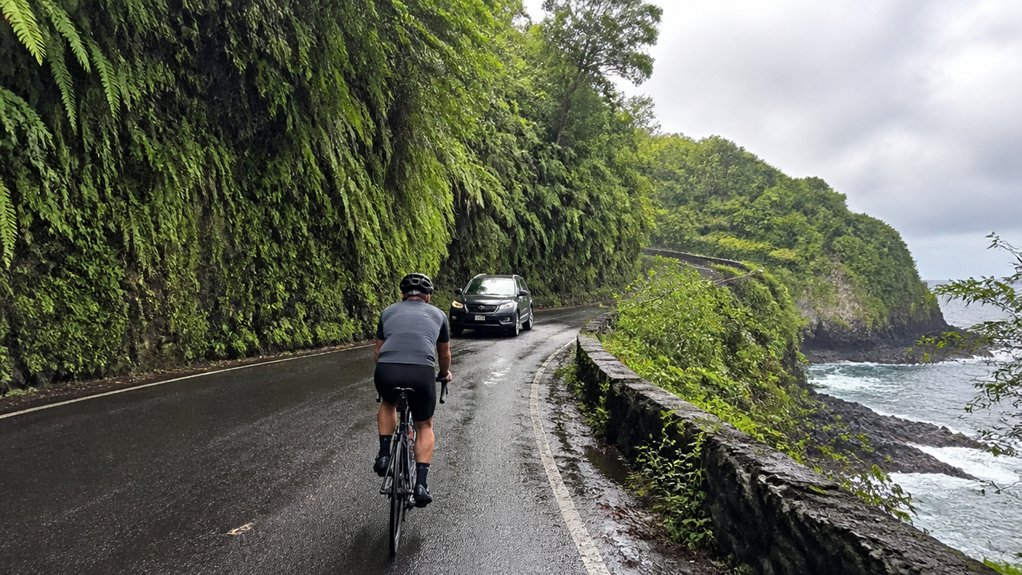
While the Road to Hāna sounds dreamy on two wheels, the honest answer is that it’s only safe for a small slice of riders. On the Road to Hana, you face blind curves, one-lane bridges, and stretches where shoulder width shrinks to almost nothing. In a few spots, you’re squeezed between cliffside rock and passing cars with inches to spare.
Your best move is to start early, ideally before tourist traffic thickens after 8:00 a.m. That quiet window gives you cleaner pavement, cooler air, and fewer distracted drivers. Still, you need strong bike handling. Similar to the Iao Valley to Wailuku ride, realistic Maui cycling advice comes down to matching the route to your skill level and comfort with traffic. The route means climbing to Puaʻa Kāʻā, then managing a long descent where descending skill matters as much as fitness. If you’re highly experienced and well-prepared, it can work. For most riders, it’s a hard no.
Why the Road to Hana Feels Risky
You feel the risk fast here, because blind curves and one-lane bridges keep hiding what’s coming next. In the rainforest sections, the pavement can stay damp and slick, so your tires and brakes have to work harder than you’d like. Add spotty cell service, and you can’t count on an easy backup plan if the road throws you a surprise. Even riders who prefer the calmer Paia to Hookipa stretch on Maui’s North Shore often avoid the Road to Hana because it feels far less forgiving.
Blind Curves And Bridges
Because the Hana Highway folds around rock walls and cliff edges, the road can feel thrilling one minute and tight the next. You roll into blind curves where visibility disappears fast, especially between mile markers 6 and 17. Near Hana, some turns shrink to barely one and a half cars wide, and cliff edge clearance can feel measured in breaths.
Then come the one‑lane bridges. You wait, listen, and sometimes use honking/start early habits to stay ahead of surprises. In shaded rainforest stretches, the pavement edge, mossy ditch, and damp air can blur your line, adding slippery traction concerns without warning. Add tour bus traffic later in the morning, and every crossing gets busier. If you ride early, you meet more birdsong than bumpers, which is a much better travel companion. Riders who’ve tackled the West Maui Loop often describe a similar tradeoff between real roadside risk and unforgettable scenery.
Slippery Rainforest Pavement
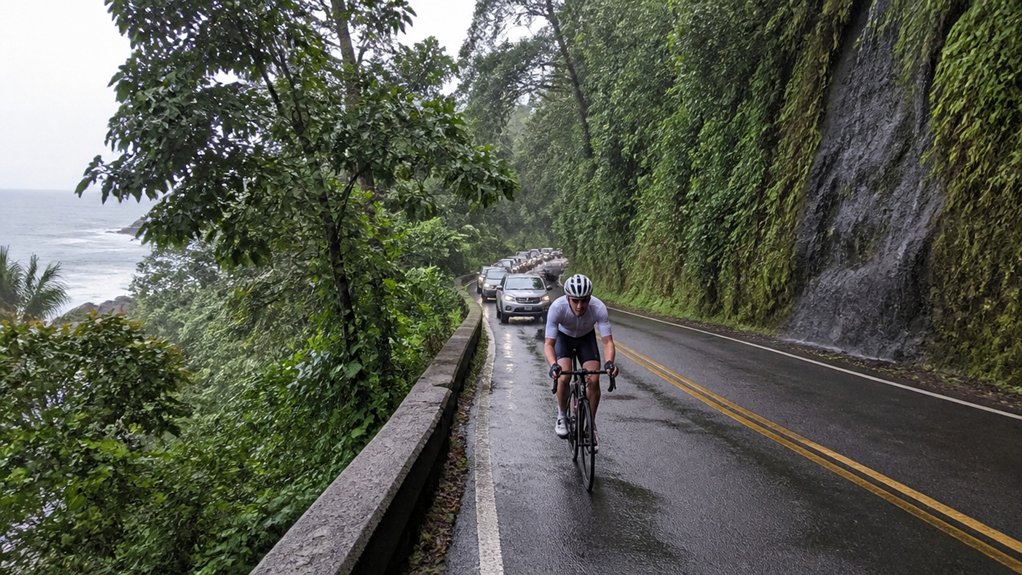
Often, the sketchiest part of the Road to Hana isn’t the drop-off. It’s the rainforest sheen under your tires. From MM7 to MM17, constant moisture, moss, and little oozing crossings can leave slippery pavement looking faintly green. Around MM12–MM16, algae, runoff, and concrete ditches make traction feel optional, especially in shaded canyons.
| Spot | What you feel |
|---|---|
| MM12–MM16 | Tires skate on wet gloss |
| Shaded corners | braking margins shrink fast |
Even morning starts won’t dry this 12-mile band. You still roll into damp patches while sunny stretches behind you feel like another island. Add tight turns and that sharp 180 just past MM6, and you’ll understand why speed discipline matters. Riders chasing turtles and surf timing elsewhere on Maui may be surprised how little the rainforest here ever really dries. Good brakes help. Grippy tires help more. Confidence alone definitely doesn’t.
Still comparing Road To Hana By Bike: Why Most People Don’t Do It?
Ask for tour ideas, hotel suggestions, or a simple trip plan that combines both.
Trip Helper
Limited Cell Service
Even when the road feels busy, your phone can go strangely quiet from about MM7 to MM17, where the rainforest swallows signal for long stretches. You can ride ten miles with weak cell service or no cellular coverage at all, even while waterfalls roar nearby.
That silence matters. If you crash, flat, or snap a chain past Keanae or closer to Hana, calling emergency services may not happen quickly. Navigation gets shakier too. Live traffic, weather, and detour apps can’t help much on narrow curves and one-lane bridges. Bring offline maps and a paper cue sheet. Plan check-ins at Twin Falls, Haiku, Puaa Kaa Park, and Hasegawa. Assume the whole round trip may go dark. Share an itinerary, pack a power bank, and carry a satellite messenger if you can. A whistle helps too. If you do stop for pictures, the golden hour can make Maui bike tour photos clearer and more dramatic when service-free stretches limit your ability to rely on editing or planning apps.
Road to Hana by Bike Distance and Climbing

You’re not just riding to Hana, you’re taking on real mileage and a surprising amount of climbing. From Paia, the round trip runs about 90 miles with roughly 8,300 feet of gain, while a shorter start near Twin Falls can trim it to about 65 miles and 5,500 feet. Those rainforest rollers and the long drop into Hana feel great on the way out, but your legs will remember them when it’s time to pedal back. If you’re staging a ride before or after other island cycling plans, it also helps to know Maui bike tour parking options in Kahului, Paia, and Kihei.
Total Miles
Ninety miles round-trip gives the Road to Hāna by bike its real shape. If you roll from Paia to Hasegawa General Store in Hana and return, you’re signing up for serious miles, steady climbing, and big vertical gain. Start in Haiku and you trim some distance stress, but not the commitment.
- Paia to Hana and back lands at about 90 miles round-trip.
- Starting in Paia means roughly 8,300 feet of vertical gain.
- Starting in Haiku drops that to around 7,600 feet.
- A shorter option near Twin Falls cuts it to about 65 miles.
You’ll climb about 1,300 feet by Puaa Kaa Park, then enjoy a 12-mile drop into town. Fit riders often need 2.5 to 3 hours just for the outward climbing, so pacing matters. Riders used to Kula to Makawao routes may find this distance-and-climbing profile significantly more demanding.
Elevation Gain
Tackle the Road to Hāna by bike and the real story is the climbing, not just the mileage. If you start in Paia, you’re looking at about 8,300 feet of elevation gain round trip. Roll out from Haiku instead and you trim roughly 700 feet, but you still face serious vertical gain.
The first big climb rises about 1,300 feet to Puaʻa Kaa Park, then you drop for nearly 12 miles into Hāna. That sounds generous until the return climb reminds you who’s in charge. Fit riders often spend 2.5 to 3 hours on climbing sections one way, and first timers usually take longer because waterfalls keep stealing their attention. If you add side trips or longer loops, totals can push toward 10,000 feet, so conserve effort early. By contrast, the Kihei Bike Path is known as a relaxed, easy ride that suits visitors far better than this much climbing.
Why Traffic Makes This Ride Dangerous
Even if the scenery feels dreamy, traffic is what turns the Road to Hāna into a serious bike ride. On the Road to Hāna, you’re sharing narrow pavement with tourist vehicles, heavy traffic, and drivers who brake for waterfalls like they’ve spotted treasure. Shoulder width changes fast, so a comfortable stretch can suddenly become a cliffside squeeze.
- Blind curves and hairpin turns hide oncoming cars.
- One‑lane bridges force awkward waits and close passes.
- Moss‑slick pavement and rain squalls stretch stopping distance.
- Limited cell service makes any crash or mechanical issue harder.
You also deal with sudden photo stops, backing cars, and buses taking up nearly everything. Around mm3.5 and through the mm7 to mm17 rainforest, the road often gives you almost no room. That’s where attention has to stay razor sharp. If you want a safer ride day on Maui, guides to nearby alternatives can help you find open routes that avoid Hāna Highway’s worst traffic pinch points.
When to Start and How to Time It
Timing changes this ride almost as much as traffic does, so the smartest move is to start early and stay a little ahead of the day. In summer, you should roll by 5:30 to 6:30. In winter, aim for 7:00. Leaving Paia at sunrise gives you the full day and the cleanest light.
If you want less mileage, start from Haiku or farther out. You’ll still ride a bicycle through the dripping green corridor, but with less traffic exposure. Try to reach Puaa Kaa Park before midday. That keeps you clear of the thickest tour buses on the descent toward Hana and lets the trade winds help on the way back. Build in slack for rain squalls, slick pavement, and slow, misty stretches. This route rewards patience, not heroics, and good timing saves stress. Riders easing into Maui road cycling often prefer a flat coastal cruising start near Paia before taking on a bigger day.
Food, Water, Stops, and No Cell Service

Along this wet green ribbon of road, food and water matter more than most riders expect. On the Road to Hāna, you can’t count on taps. Park water isn’t potable, so leave Paia with plenty of water, real food, and a few backup snacks.
- Carry 2 to 3 liters per rider
- Buy bottled water at Nahiku or Hasegawa General Store
- Use restrooms early, before lines build
- Expect patchy cell service and no easy pickup
From Paia to Hasegawa General Store is about 35 miles one way. That makes delays expensive in calories. Restrooms appear at Twin Falls, Haiku, Kaumahina, Keanae, and Pua’a Ka’a, but not whenever you want one. Cell service often vanishes from mile 7 to 17 and beyond Hāna. Your phone may become camera only. If you are used to easier day rides like the Makawao bike ride, do not expect the same frequency of quick food stops on this route.
Better Alternatives to Biking the Road to Hana
If hauling extra water, watching restroom stops, and losing cell service already sounds like work, you’ve got better ways to see this road. On Maui, a guided van or bus tour lets you relax through one-lane bridges and blind curves while still stopping at Twin Falls, Keanae, and Hasegawa General Store. A Maui bike tour can be a better fit for riders who want a scenic day adventure without committing to the full Road to Hana.
If you want freedom, take a rental car instead. You can cover Waianapanapa State Park, Hana, and even the Pools of Oheo without turning the day into a 90-mile grind. A helicopter ride trades sweaty climbs for waterfall views and the black sand coast. If you still want pedals, keep it short. Start near Twin Falls or do a Paia warmup and turn back. Or drive to Hana first, then use an e-bike for quiet local loops past Puaa Kaa.
Frequently Asked Questions
Can You Legally Bike Every Section of the Road to Hana?
Yes, you can legally bike most paved Hana Highway sections, but you can’t assume legal access everywhere; watch private bridges, signage clarity, liability concerns, county ordinances, pedestrian conflicts, parking restrictions, and seasonal closures beyond Hana or parks.
Do Bike Rental Shops on Maui Allow Road to Hana Trips?
Yes, but you’ll usually face rental restrictions: shops often discourage or forbid full Hāna trips, require liability waivers, insurance requirements, helmet policies, age limits, check reservation availability, bike condition, and sometimes charge drop off fees.
What Type of Bike Is Best for Hana Highway?
Like a sure-footed goat, you’ll do best on a hybrid comfort or gravel capability bike with disc brakes, wide tires, drop bars optional, not full suspension; prioritize durable frame material and low gear range.
Are There Organized Guided Bike Tours on the Road to Hana?
Yes, you’ll find guided operators offering small groups with shuttle support and licensed guides. You can book private charters, expect seasonal availability, choose custom itineraries, and often get e bike options instead of full self-powered rides.
How Do Weather Changes Affect Braking and Tire Choice?
Weather changes reduce your wet grip, raise puncture risk, and demand braking modulation. You’ll want tread selection for rain, watch heat fade and rim overheating on descents, and account for cold shrinkage and compound hardening too.
Conclusion
You can picture it now: wet pavement glinting under jungle shade, a one-lane bridge ahead, brakes humming, no signal bars, and a tour bus appearing around the next blind curve. That’s the quiet truth of biking the Road to Hāna. If you go, you’ll need skill, timing, water, and nerve. If you don’t, you won’t miss Maui’s magic. A shorter ride, a van tour, or a rental car still gets you waterfalls, sea cliffs, and banana bread.