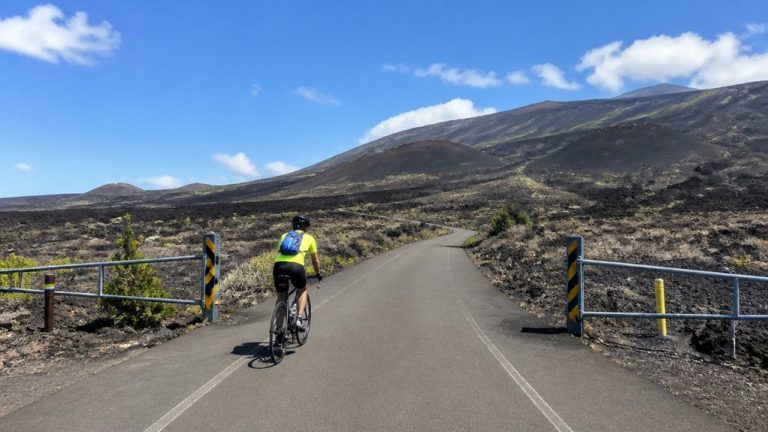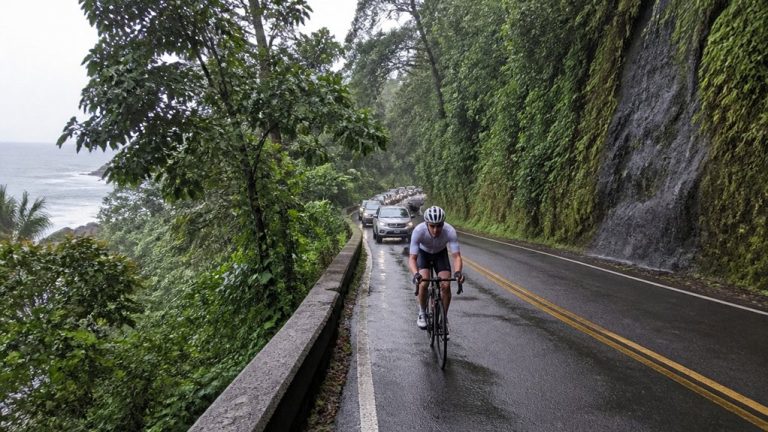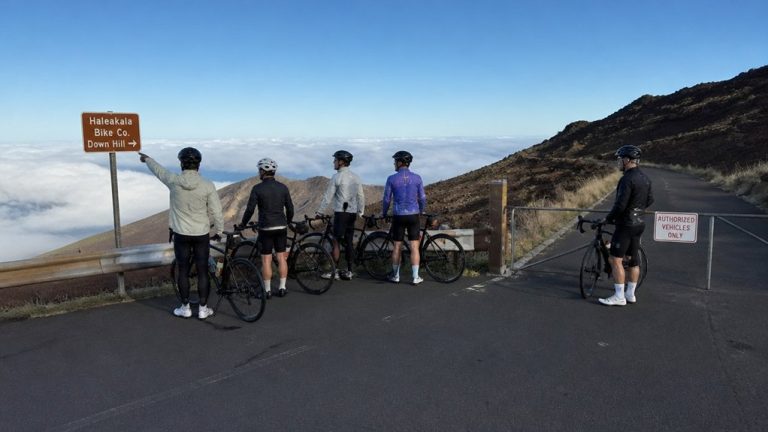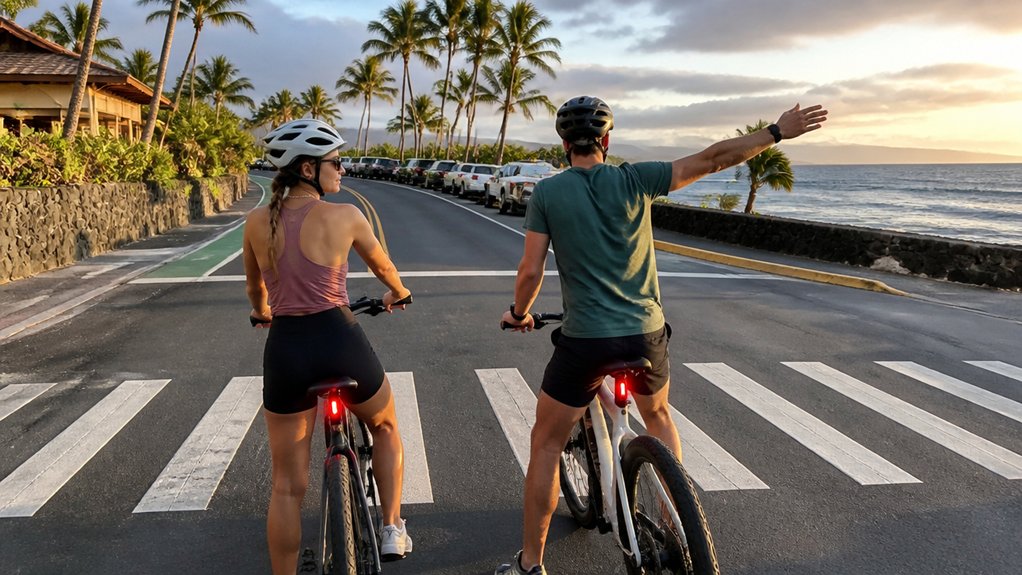
If you plan to bike on Maui, you’ll want more than sunscreen and a beach map. The island’s roads can shift fast from quiet shore stretches to busy lanes with trade winds in your ears and salt on your skin. Hawaii’s bike laws cover helmets, lights, lane position, and even what happens after a crash. A few rules are simple, a few may surprise you, and knowing them can save your trip before the first downhill turn.
Key Takeaways
- Cyclists follow Maui traffic laws like drivers: stop fully at stop signs and red lights, ride with traffic, and signal turns clearly.
- Riders under 16 must wear helmets everywhere; adults are strongly advised to wear one, and many rentals or guided tours require helmets.
- From 30 minutes after sunset to 30 minutes before sunrise, bikes need a white front light, rear reflector, and side reflectors or lights.
- Ride near the right curb or shoulder when slower than traffic, but take the lane when it is too narrow or unsafe.
- Sidewalk riding is banned in business districts; elsewhere, ride under 10 mph, yield to pedestrians, and give an audible passing signal.
Maui Bike Laws Visitors Need First

Before you roll past swaying palms and lava-dark shoulders, know the rule that shapes every ride on Maui: the law treats you like the driver of a vehicle. That means your bicycle must follow traffic signals, stop at stop signs and red lights, and move with traffic, not against it.
Stay near the right curb or shoulder when you’re slower than cars. Still, you can take the full lane when it’s too narrow to share, when you’re setting up a turn, or when debris makes the edge sketchy. At night, your bike needs a white front light, a red rear reflector, and side reflectors or lights. Drivers must give you three feet when passing. Ride single file, stay alert, and keep your helmet fit snug for every mile. On Maui bike tours, following helmet guidelines helps protect you on descents, curves, and busy roads.
Who Must Wear a Helmet on Maui
If you’re riding on Maui and you’re under 16, you must wear a helmet on public roads, paths, and parks. If you’re an adult, the law doesn’t always require one, but you’ll want that extra protection when trade winds pick up and traffic hums past. You should also expect most bike rentals and guided rides to require helmets for everyone, so it pays to know the rules by age before you roll. Following Maui bike tour safety basics can also help first-time riders feel more confident on unfamiliar roads.
Helmet Rules By Age
While Maui’s bike routes can feel breezy and carefree, the helmet rule is pretty clear: anyone under 16 must wear one when riding a bicycle on public property under HRS §291C-150. If you’re under 16 years old, you MUST wear a helmet on roads, paths, and park areas open to the public.
- Picture a family cruise by the beach path. Kids clip helmets before the palms start flicking in the wind.
- If you’re 15, the rule still applies. At 16, the legal requirement ends.
- Many rental shops and guided tours ask every rider to wear a helmet anyway, so don’t be surprised at check-in.
- Choose one that sits low on your forehead, fastens snugly, and stands out with bright color or reflective details after dusk. It helps.
Some guided rides, including a Haleakala Bike Tour, may also have their own age, height, and experience requirements in addition to Maui’s helmet rules.
Adult Helmet Recommendations
Although Maui County only requires helmets for riders under 16, adults should still buckle one on every time they ride. You won’t get a ticket if you’re over 16 and skip it, but that’s a gamble your vacation doesn’t need. About 75% of bike deaths involve head injuries, and studies show helmets can cut that risk by up to 80%.
Choose a helmet that sits low on your forehead and fits snugly without wobbling. Look for safety labels like Snell or ANSI. Better yet, wear a bright or light-colored helmet so drivers spot you faster on sunny roads near beaches and cane fields. This matters even more if you’re considering a Haleakala bike tour, where long downhill stretches make visibility and head protection especially important. Put it on before you mount the bike. For more fitting help, check helmets.org or call the Hawai‘i Bicycling League at 735-5756 before riding.
Maui Bike Light Rules After Dark
Once the sun dips behind the West Maui Mountains, your bike needs to light up like it means business. On Maui, that starts 30 minutes after sunset and lasts until 30 minutes before sunrise, so don’t guess by the sky.
- Aim a white front light ahead. It must be visible from 500 feet, enough to catch eyes along dark coastal roads.
- Add a red rear reflector at least four inches square. It needs to show from 600 feet.
- Make your sides visible too. Reflective material or side lights must be seen from 500 feet.
- Check everything before you roll. Clean lenses, unobstructed reflectors, and fresh batteries matter under HRS §291C-147.
LED lights, flashing or steady, help drivers spot you sooner. Toss on reflective clothing too. If you’re joining a Haleakalā descent, follow where to ride rules as well, since bike tour routes have specific areas where riding is allowed and prohibited.
Required Bike Equipment Beyond Helmets and Lights

A few other gear rules matter on Maui, and they’re easy to miss when you’re focused on helmets and night lights. Your bike needs working brakes that can stop you within 25 feet from 10 MPH on dry pavement. If your wheels are 20 inches or larger, Maui County also requires bike registration, a one-time $15 fee. For riders planning logistics around Kahului, Paia, or Kihei, Maui bike tour parking can also make your start and finish much smoother.
| Item | What you need | Maui image |
|---|---|---|
| Brakes | Stop in 25 feet | Dry shoulder |
| Rear reflector | Visible 600 feet | Red flash |
| Side reflectors | 4-inch square each side | Cane-road glint |
| Registration | $15 permanent | Sticker on frame |
Before you roll, picture your bike humming past palms, chain clicking, tires whispering, and every reflector catching headlights right on time. Small rules, smoother rides.
Where Visitors Can Ride Bikes on Maui
On Maui, you’ll usually ride on the road with traffic, keeping near the right curb or shoulder unless the lane is too tight, a hazard pops up, or you need to set up for a turn. You should use a bike lane when it’s usable and you’re moving slower than traffic, but you can take the travel lane when it’s safer, and on some one-way roads you may ride near the left curb. Sidewalks can seem tempting beside sunny storefronts and beach paths, but they’re off-limits in business districts and elsewhere you must stay slow, yield to people walking, and give a quick audible signal when you pass. If you’re considering longer scenic rides, the West Maui Loop offers big views, but visitors should weigh road conditions and safety before committing to the full route.
Road Position Rules
Where should you ride when Maui traffic starts moving faster than your bike? Stay as close to the right-hand curb or shoulder as practicable, but not at the cost of safety. If the lane feels too narrow for a car to pass cleanly, you can take the lane. You can also do that before a turn or when debris, potholes, or parked cars crowd your path. On Maui roads, using the shoulder when safe can help create more space between cyclists and passing vehicles.
- Ride single file unless a local rule clearly allows otherwise.
- Follow traffic, never pedal toward oncoming cars.
- On a one-way street with two or more lanes, you may ride by the left curb.
- If traffic stacks up behind you, you may still lawfully hold your lane, though pulling over safely when possible is the aloha move, and keeps engines from grumbling.
Sidewalk And Bike Lanes
Sorting out bike lanes and sidewalks on Maui is pretty simple once you know the few rules that matter. Use bike lanes when they’re provided and safe, especially if you’re moving slower than traffic. You can take the full lane when it’s too narrow to share side by side safely, when you’re turning, passing, or dodging hazards. On North Shore Maui routes like the Paia to Hookipa ride, these same lane-positioning rules still apply for visitors biking between town and the coast.
| Where | Rule |
|---|---|
| Business district sidewalks | Don’t ride there |
| Other sidewalks | Ride 10 mph or less |
| Passing pedestrians | Yield and give an audible signal |
| One-way streets, 2+ lanes | Left curb is allowed |
On roadways, ride single file unless a bike path specifically allows side by side riding. If you match normal traffic speed, you may leave the bike lane and ride in the travel lane instead.
Maui Bike Lane and Shoulder Rules
Even if the ocean is pulling your eyes left, Maui’s bike lane and shoulder rules ask you to keep your wheels predictably to the right. If you’re moving slower than traffic, ride near the right curb or on the shoulder when it’s practicable. On roads with usable bike lanes, use them unless you’re turning, passing, or dodging hazards. If you’re comparing tour logistics before a ride, understanding shuttle or self-drive options can help you choose the safer, less stressful start.
- On two-way roads, stay with traffic on the right, where trade winds and grit can push you around.
- On one-way roads with two or more lanes, you may use the left curb, which can feel surprisingly calm.
- If cars stack up behind you, pull over when it’s safe and convenient. It’s courteous.
- Skip sidewalks in business districts. Elsewhere, keep sidewalk riding under 10 mph and yield to pedestrians. Ring first.
When Cyclists Can Take the Lane on Maui

Claiming your space matters on Maui’s roads, especially when a lane is simply too narrow for a car and a bike to travel side by side safely. In that moment, you may take the lane and ride centered. Hawaii law lets you stay there even if traffic slows behind you. That rule matters on winding roads where mirrors, lava rock shoulders, and gusts leave little room.
On Haleakala bike tours, traffic can vary, so taking the lane when conditions narrow your safe riding space helps drivers see and pass you more predictably. You can also use the full lane when you’re setting up for a turn, passing another rider, avoiding potholes or debris, or entering a mandatory turn lane. Stay single file on the roadway, and if cars stack up, pull over when it’s safe and convenient. Drivers must treat you like any slow vehicle and pass only where legal, leaving at least 3 feet when overtaking you.
Sidewalk Riding Rules on Maui
Road rules don’t end when the pavement edge starts. On Maui, you can usually ride on a sidewalk outside business districts, but you must treat it like shared space, not a shortcut. Pedestrians come first. Keep your speed at 10 mph or less, and ring a bell or call out before you pass. In business districts, sidewalk riding is off-limits, so use the road or a bike lane instead. If you ride carelessly and scare or endanger walkers, you can still get cited. Riders under 16 need a fastened helmet everywhere, including the sidewalk. Before booking a ride, ask about accessibility questions if anyone in your group may need extra support on sidewalks, paths, or tour stops.
On Maui sidewalks, ride slow, yield first, and remember business districts mean wheels belong in the street.
- Hotel strip shops mean no sidewalk riding.
- Beach paths demand slow wheels and soft warnings.
- Crowded corners reward patience, not slalom moves.
- Sometimes the road feels calmer, wider, and safer.
Maui Rules at Stop Signs and Lights
At Maui stop signs and red lights, you must come to a full stop every time, just like a driver. You should signal clearly, glance over your shoulder, and yield before you move through an intersection or out from a driveway. It’s a simple habit that helps you stay smooth and safe while island traffic hums around you. If you’re joining a guided ride, check height and weight limits ahead of time so you know what to expect before your tour starts.
Full Stops Required
Even if the intersection feels quiet and the trade winds make the ride feel easy, you still need to come to a full stop at every stop sign and red light in Maui. On a bike, you follow the same rule as drivers. That means you must stop at stop signs and wait at red signals before rolling on.
- Picture coasting toward a shady corner in Paia, then making a complete stop within the marked limit line.
- Hear slippers slap the crosswalk. You wait for pedestrians first.
- See a pickup, a scooter, and another bike arriving together. You proceed only when it’s safe and lawful.
- If you ignore the sign because the road looks empty, you risk a citation and a crash. No beach day needs that surprise.
For first-time riders, practicing full stops early can make Maui bike tours feel smoother and safer from the start.
Signal And Yield Properly
Often, the smoothest way through a Maui intersection is to make your next move obvious. At stop signs and red lights, you must fully stop, then go only when it’s safe. Use every signal clearly so drivers, walkers, and that rental Jeep behind you can read your plan before you move.
For a left turn, glance back first and signal. If traffic feels fast or tight, don’t force a vehicle-style turn. You can merge left when it’s safe, or make a two-stage turn and cross like a pedestrian. Always yield to people in crosswalks and respect the pedestrian’s right-of-way. Yield to vehicles that already have the right-of-way too. If you’re riding slower than traffic, stay calm. Pull over at a safe spot when you can and let cars pass. If you’re unsure how to handle busy intersections, choose a route that matches your skill level and comfort in traffic.
Hand Signals and 3-Foot Passing Law
Before you roll through Maui traffic, know the hand signals that tell drivers what you’re about to do. You’ll use your left arm straight out for a left turn, your right arm straight out or left arm up for a right turn, and your left hand curb side down to show a stop. Check behind you first, then signal for several seconds.
Before rolling through Maui traffic, check behind you and use clear hand signals to show every turn and stop.
- You glance over your shoulder, hear tires hum, and confirm the lane is clear.
- You hold your signal steady so drivers can read your next move.
- If the lane feels tight, you may take it fully and still signal before shifting or turning.
- When cars pass, they must leave at least 3 feet, the same buffer given around other slow vehicles.
If traffic stacks up, pull over safely when convenient and wave cars by. Recreational drone users nearby may also be following visual line of sight rules, so staying predictable on the road helps everyone anticipate movement.
Prohibited Bike Behavior on Maui
Maui’s road rules also spell out what not to do once you’re in the saddle. When you’re riding a bicycle, don’t hitch a tow from a car or truck. Clinging to a motor vehicle is illegal and may bring misdemeanor charges. You also can’t carry extra passengers unless your bike was built for them and has a permanent seat.
Keep your pace sensible for conditions. Don’t race on public roads without approval, and never ride against traffic. If you’re carrying beach gear or groceries, secure it so you can still control the bike and keep at least one hand on the handlebars.
Sidewalk rules change by location. In business districts, stay off them. Elsewhere, yield to pedestrians and keep your speed at 10 mph or less. Visitors using guided bike tours should still follow the same Maui traffic laws and local riding restrictions as anyone on a self-guided rental.
DUI and Alcohol Rules for Maui Cyclists
Road rules on Maui don’t stop with lane position and sidewalk etiquette. If you drink or use drugs, you can’t legally ride your bike. Hawaii treats bicycles as vehicles, so a DUI can bring criminal charges, fines, and a record that looks a lot like a motor-vehicle case.
On Maui, a bike after drinks can still mean DUI charges, fines, and a criminal record that follows you home.
- Picture a sunset cruise in Kihei. One extra beer can turn that breezy ride into a stop with field sobriety tests.
- Police may ask for breath, blood, or balance evaluations, just as they would with drivers.
- If you’re impaired, you’re still responsible for collisions, even though cyclists get vulnerable user protections.
- Keep ID and a phone with you, and skip the bike after drinking. The road hums, tires whisper, and bad decisions get loud fast on Maui nights.
- If weather shifts after drinking, rainy conditions can make it even harder to ride safely, so it’s smarter to wait or reschedule than risk the road.
After a Maui Bike Crash
If you crash on Maui, stop if it’s safe, help anyone who’s hurt, and call 911 right away so police and medics can get rolling. Then gather the practical details you’ll wish you had later: names, numbers, license plates, witness contacts, and photos of the road, your bike, and any injuries, even if the scene feels bright and strangely quiet. If your crash happened during a commercial ride or rental outing, ask promptly about the company’s refund policy and what documentation they need. Before you leave, report any driver harassment or reckless moves promptly, and make sure you get the officer’s name and report number so your next steps are a lot smoother.
Stop, Assist, Report
- Check yourself and others fast. Blood, shock, and confusion can hide under scraped knees and rattled nerves.
- Call 911 and ask for medical help and police. Palm trees don’t count as landmarks, so name the road.
- Follow police instructions and stay calm. Keep your ID and phone handy for the process.
- If road hazards caused the wreck, report them through the COM Connect app later. Potholes love surprise cameos.
- If the crash also leaves your bike unridable, use basic flat tire steps from your tour guidance to get safely off the road and assess the damage.
Gather Key Information
Once everyone’s safe and help is on the way, turn your attention to the details that can vanish fast in Maui sun and traffic noise. Write down the other vehicle’s make, model, color, license plate, driver’s name, contact info, and insurance. Get witness names and numbers too.
Use your phone like a field notebook. Photograph vehicle positions, skid marks, road grit, damage to your bike and helmet, signs, signals, and any rough pavement. Note the exact location, date, time, and lighting. If your bicycle on a street was involved, record your bike’s make, model, and registration if it has one. Also document your helmet brand, fit, and whether you wore it. Snap clear photos of visible injuries. Knowing your rights and responsibilities starts with solid notes.
Report Harassment Promptly
When a crash rattles more than your bike, report harassment right away. In Maui, threats, taunting, intimidation, or reckless endangerment against a bicyclist can be misdemeanors. If a driver or bystander scares you after a wreck, call 911 and ask officers to document it with the crash report. To report harassment promptly, use your cell phone if it’s safe and stay where people can see you.
- Note the vehicle’s color, make, plate, and direction.
- Photograph faces, damage, skid marks, and the exact spot.
- Record the time, road, landmarks, and what was said or done.
- Get witness names, addresses, and contact details.
Describe specific acts, like aggressive passing or forcing you off the road. Those details can support charges and protect your rights.
Reporting Harassment or Reckless Driving
Even in paradise, a close pass, shouted threat, or taunting driver can turn a ride sour fast, and Maui treats that behavior seriously. If you face harassment or reckless endangerment, call 911 right away, or use non-emergency dispatch if the danger has passed. Tell officers what happened and where.
Try to capture the practical details before they drift away like trade wind dust. Note the time, road, direction of travel, driver description, vehicle make, model, color, and license plate. Get witnesses’ names and numbers. Save photos or phone video. If a crash or injury happens, stop, stay put if it’s safe, help the injured, and follow police instructions. Exchange information and file a report. Keep damaged gear and clothing too. Hawaii law may increase penalties for serious injuries.
Frequently Asked Questions
Can Visitors Bring Bicycles on Maui Buses?
Yes, you can bring bicycles on some Maui buses if you use exterior racks or fold them. You handle bike boarding yourself, space depends on rack capacity, and you should call ahead during busy travel periods.
Are Bike Racks Available at Maui Beaches and Parks?
Yes, you’ll find bike racks at many Maui beaches and parks, shimmering beside sand and palms. Check a bike rackmap, since availability varies. If none’s there, practice parking etiquette: lock your bike to sturdy, immovable objects.
Do Rental Bikes Usually Include Locks and Safety Gear?
Yes, you’ll usually get a lock and basic safety gear, but rental variations matter. You should confirm helmets, lights, and extras meet safety standards, especially for night rides or e-bikes, since shops’ included equipment differs.
Can Visitors Take E-Bikes on Maui Bike Paths?
Yes, you can glide along Maui bike paths on true low-speed e-bikes, tires humming in sea air. Check your electric classification, because faster devices may be banned. Follow trail etiquette, posted signs, helmet rules, and rental restrictions.
What Should Tourists Know About Biking in Maui Rain?
You should slow down in Maui rain, use lights for reduced visibility, wear rain gear and bright clothing, brake gently, avoid slick surfaces and puddles, take the lane if needed, and stop riding when conditions worsen.
Conclusion
On Maui, freedom on two wheels comes with a funny twist: the best rides start with rules. You clip on a helmet if you’re under 16, switch on your white front light and red rear reflector after sunset, and ride with traffic like any other vehicle. Then the island opens up. You hear wind in the palms, tires humming on warm pavement, and waves beyond the shoulder. Follow the basics, and your carefree ride stays exactly that.