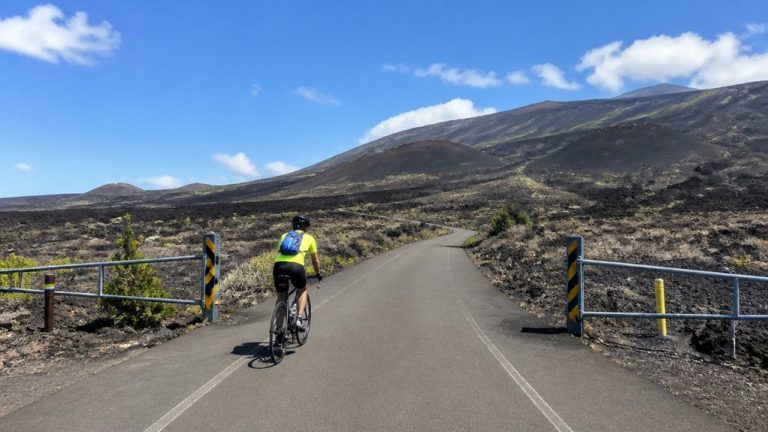
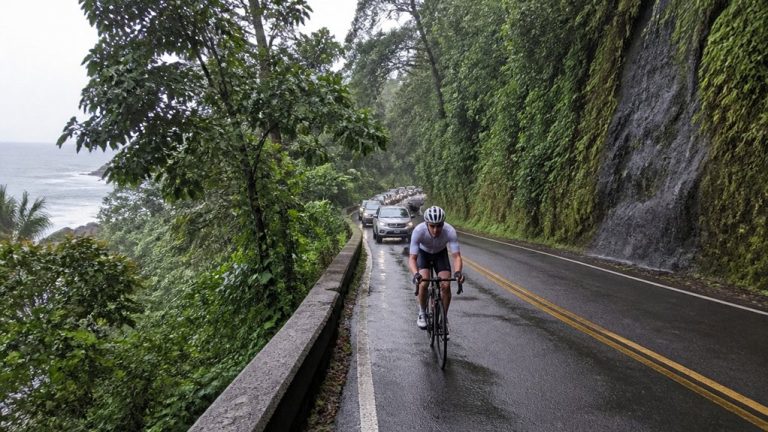
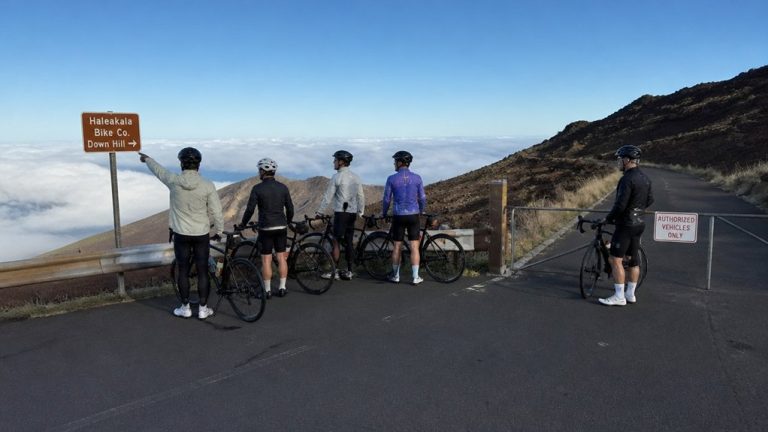
Salt spray hangs in the air as you round a Maui curve, with black lava rock on one side and a bike tire humming close to the white line on the other. You can’t treat these roads like wide mainland highways. Shoulders vanish fast on Hana Highway and near Kahakuloa, and drivers need space, patience, and sharp eyes. Cyclists need steady lines, bright gear, and good timing. The tricky part starts where the pavement narrows.
Key Takeaways
- Many Maui roads have narrow or disappearing shoulders, especially Hana Highway and West Maui Loop, so cyclists and drivers should expect lane-sharing.
- Cyclists should ride as far right as practicable, single file, and take the lane when shoulders vanish or hazards block safe space.
- Drivers should give at least 3 feet when passing, and more on windy or twisting sections where bikes may shift sideways.
- Shoulders may be reduced by gravel, red clay, leaves, runoff, or parked-car door zones, limiting safe riding space.
- Use bright clothing, a white front light, and a red rear light or reflector in fog, rain, dawn, or dusk.
Where Maui Roads Have Narrow Shoulders
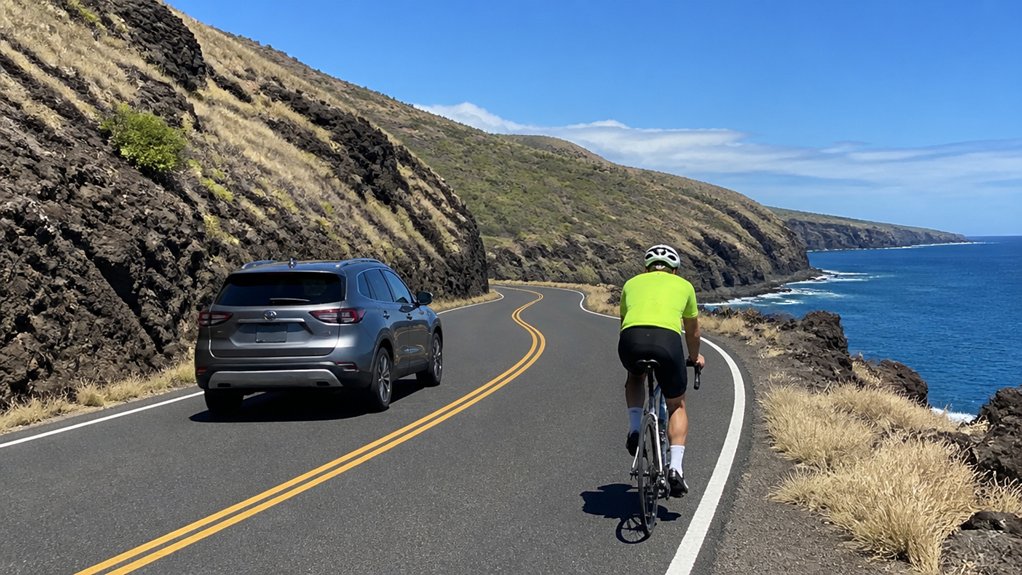
Although Maui can look like a cyclist’s dream from the windshield, plenty of its prettiest roads give you very little shoulder to work with. On the Hana Highway and the West Maui Loop, you’ll find narrow shoulders or none at all, especially through windward rainforest bends and near Kahakuloa, where the road pinches tight.
Some coastal stretches between Lahaina and Kapalua feel roomy on the divided highway, but that shoulder width fades fast once you leave those sections. Elsewhere, scenic edges look inviting until debris and gravel, red clay, or fallen leaves eat up the usable strip. On roads like Hana, the lack of shoulder is one reason so few attempt the Road to Hana by Bike. Upcountry climbs toward Kula and parts of Olinda or Hanamu can feel rough and skinny too. On steep or twisty pitches, you may need to take the lane. Haiku Road sometimes gives you a little more breathing room.
How Drivers and Cyclists Share Maui Roads
Share the road well on Maui, and the whole island moves a little smoother. On Maui roads, you help everyone by staying predictable. If you’re cycling, ride as far right as practicable and travel single file, especially on Hana Highway and other narrow routes with thin shoulders.
If you’re driving, leave 3 feet when you pass and more when trade winds shove a bike sideways. Watch for rain grit, red clay, and runoff on shoulders. Cyclists may move left to avoid the door zone near parked cars or debris. You should expect that choice, not punish it with a close pass. Everyone should signal clearly and follow traffic flow. Before dawn or after sunset, use lights/reflectors so others can see you in low light. The result is simple: less guesswork, fewer jolts, and more room to enjoy surf, cliffs, and eucalyptus scent.
How Cyclists Stay Visible on Maui Roads
Often, staying visible on Maui roads starts with looking a little brighter than the landscape around you. Wear a bright helmet and high-visibility clothing so you don’t fade into lava rock, jungle shade, or sea glare. Add a white front light, red rear reflector, or flashing taillight before sunrise, after sunset, or during quick fog and rain. On downhill tours, riders prone to motion sickness should keep their eyes forward and stay calm so sudden curves and elevation changes don’t distract from safe road positioning.
- Ride as far right as practicable and stay single file on narrow stretches.
- Glance over your shoulder and use hand signals before moving or turning.
- Try rear-facing radar for extra awareness on winding roads.
Leave at least 3 feet from parked cars so a sudden door doesn’t ruin the ride. Hold a steady line. Drivers can read you better, especially on Hana Highway and the West Maui Loop, where shoulders sometimes disappear completely without warning.
Frequently Asked Questions
Are Helmets Required for Cyclists on Maui Roads?
No, on Maui roads, you must follow helmet laws with mandatory use only for riders under 16; age requirements drive enforcement practices. Adults should wear helmets meeting helmet standards; local ordinances, penalty fines, child exemptions, helmet distribution, educational campaigns vary.
Which Maui Routes Are Best for Beginner Road Cyclists?
Want easy spins with ocean views? You’ll love Kihei Coastline on the South Shore, Lahaina Loop, and gentle West Maui sections, plus Quiet Neighborhoods and Scenic Backroads near Haleakala Foothills; skip Upcountry Routes, seek Safe Shoulderways, Low Traffic.
When Is the Safest Time of Day to Bike on Maui?
You’ll ride safest in early morning, especially dawn patrol, with low winds, high visibility, and off peak traffic. Avoid late afternoon, rush hour, midday heat, golden hour, and dusk riding, when conditions worsen quickly.
Can Rental Bikes Handle Maui’s Steep Climbs and Descents?
Yes, bike rentals can handle Maui’s climbs and descents if you check gear fit, gearing range, brake quality, frame strength, tire traction, weight limits, electric assist, maintenance access, and use smart descent technique.
What Weather Conditions Make Biking Especially Risky on Maui?
Watch out: strong winds and crosswinds, heavy rain, slippery pavement, high surf, dense fog, flash floods, volcanic vog, fallen debris, and road spray make Maui biking risky. You’ll lose visibility, traction, and control fast.
Conclusion
On Maui, you share the road like a good cast in a small island play. You watch the shoulder shrink near Kahakuloa, ease up on Hana’s bends, and give riders a full three feet. If you’re biking, you hold a steady line, click on your light before dawn, and let bright gear catch the gray morning. Trade hurry for patience, and the road feels less like a contest and more like a tide everyone can read.