
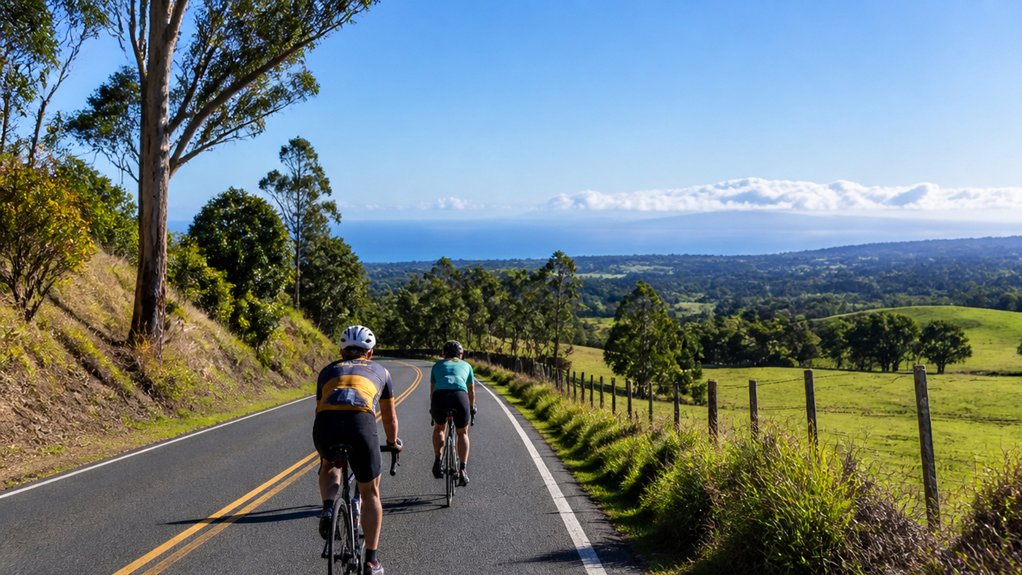
If you want Maui beyond the beach, point your bike toward Kula and Makawao. You’ll climb through cool ranchland, smell eucalyptus on the wind, and drop into fast rollers with ocean views off to the side. One route gives you a tight 40-mile figure-8. Another stretches toward the windmills with much more climbing and a real chance to question your gearing. The weather shifts fast up here, and that’s where the route choice gets interesting.
Key Takeaways
- Kula to Makawao routes feature rolling Upcountry roads, cooler temperatures, and sustained climbing, ideal for riders wanting more than a downhill bike tour.
- A popular Upcountry loop starts near Kula, climbs toward Crater Road, then descends via Kekaulike through Makawao for a scenic circuit.
- Figure-8 style routes linking Baldwin, Makawao Avenue, Kula, and Haiku deliver about 40 miles and roughly 4,500 feet of climbing.
- Shorter options include Rice Park to Keokea or steep Pulehu Road climbs from Kahului, both offering challenging elevation gain in less distance.
- Expect narrow shoulders, rough pavement, strong winds, and fast descents, so bring layers, extra water, snacks, and ride cautiously.
Choose the Right Upcountry Maui Bike Route
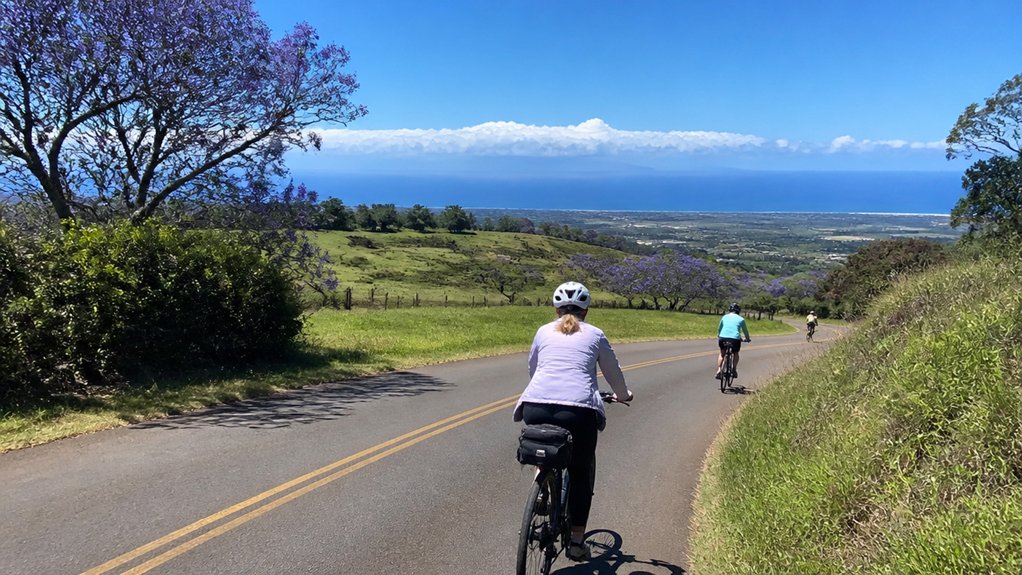
To choose the right Upcountry Maui bike route, start with the kind of day you want on the bike. If you want a big, steady challenge, roll from Pukalani near CVS and Longs off Kula highway toward the windmills. You’ll cover about 55 to 60 miles and climb for hours before a long scenic drop.
If you want a shorter gut check, start at Home Depot in Kahului and grind up Pulehu Road to Kula highway. The pavement gets rough early, so stay loose and alert. For a balanced route, try the Makawao Figure-8. You’ll climb Baldwin, pass through town near Makawao Ave., loop through Kula and Haiku, then finish with a friendlier run toward Paia. Want easy access to water and restrooms? Rice Park and Kula Lodge make solid checkpoints. If your ride rolls into Makawao, plan a pause for local eats and quick stops before heading back out.
Check Weather Before Your Upcountry Ride
Always check the weather before you roll in Upcountry Maui, because the mood can shift fast between the coast and the slopes. Start looking 30 to 60 minutes before you leave, then keep checking as you ride. If the westside is rainy, Upcountry Maui may actually look better.
Higher up near Kula and Makawao, the air often turns cooler and mistier than the beach. Pack a light windbreaker and arm warmers, even if Kihei feels hot. Trade winds can get punchy too, especially along Haleakala Highway and the south side of Haleakala. A quick forecast check helps you pick a route that feels smoother in the wind. Shelter is limited, so know a few stops like Kula Lodge, Rice Park, or Grandma’s Coffee, and carry extra water, snacks, and cash. If you’re heading toward higher elevations, dress with cold summit tips in mind since temperatures can feel much colder than expected.
Know the Climbing, Descents, and Road Risks
Even if the mileage looks manageable, Upcountry Maui can turn into a real leg test fast. You’ll face long, steady climbing, often 1,500 to 4,500 feet, with repeated 15 to 17 percent pitches on roads like Pulehu and Omaopio. It’s gorgeous, but your legs will definitely file a complaint.
Descents demand equal respect. Drops from the Kaulike and Crater Road area can rocket past 40 or 50 mph, with tight turns and hidden driveways. This reflects the Haleakala downhill experience, where steep grades and sustained descending require careful speed control. Pavement changes constantly too. Kekaulike feels smooth, while early Pulehu rattles like cobbles, and rough patches appear near Haleakala National Park and beyond. On Kula hwy, shoulders can vanish, so ride single file and yield at blind corners. Bring water, snacks, and layers, since cool air arrives quickly above 3,000 feet.
Choose Your Upcountry Maui Start Point
Your start point shapes the whole ride, from easy parking and water stops to the kind of climb your legs will meet first. You can roll out from Kula, Kahului, Pukalani, Paia, or near the Crater Road turn, and each one changes the grade, the traffic, and even the view in those first quiet miles. Pick the spot that fits your plan, because a smooth lot and the right first turn can feel almost as good as fresh legs. Riders coming from Paia should compare local options with a Haleakala bike tour route, since that side of Maui sets a different tone for pacing, descent planning, and support logistics.
Best Parking Options
From mellow rollers to summit grinds, the smartest place to park depends on where you want the ride to begin. Match your parking choice to the town you want under your wheels first, and you’ll save time, legs, and a little pre-ride wandering.
- For Pukalani or Kula starts, use the CVS and Longs area off Aapueo Parkway by King Kamehameha High School. You’ll roll quickly to Kula Highway, then drop about a mile to Haleakala Highway.
- For Kahului or Paia departures, the far end of the Home Depot lot near Akamai Coffee works well and keeps access simple.
- For Makawao loops, park downtown near Makawao Ave. Rice park and Kula lodge also help, especially if you want restrooms, water, food, or summit access before the bigger miles ahead.
These parking tips work especially well for riders planning routes through Kahului, Paia, or Kihei before heading into Upcountry.
Route Start Considerations
Before you clip in, pick the start that matches the ride you actually want. Many riders choose the CVS or Longs near Aapueo Parkway off Kula Highway. You get easy access to both Kula Highway and Haleakala Highway, plus simple parking and quick bail-out options. If you want a harder warmup, start in Kahului by Home Depot near the Akamai Coffee hut. From there, Pulehu Road pitches up fast, and the pavement can feel rough under your tires. For the classic big day, start in Paia at sea level and climb Baldwin through Makawao toward Hanamu, Kekaulike, and Crater Road. Maui bike tour operators also publish meeting locations and check-in details, which can help if you want an organized start instead of sorting parking on your own. Let weather guide you too. Rain on the west side? Begin Upcountry. Strong southerly storms? Keep it short, warm, and maybe reward yourself with coffee afterward nearby.
Ride Rice Park to Keokea and Back
Roll south out of Rice Park and the road quickly shows you what this stretch of Kula Highway is about: a brisk drop, a few punchy climbs, and wide Upcountry views that make you want to keep going to Keokea.
Roll south from Rice Park into a brisk drop, punchy climbs, and broad Upcountry views pulling you toward Keokea.
You’ll roll near 3,000 feet, then dip and rise toward Keokea with changing pavement and quick speeds. Stay alert. Some shoulders narrow, driveways can appear blind, and descents can hit 40 to 50 mph. Like the Iao Valley to Wailuku ride, this route is best approached with realistic expectations about speed, road conditions, and how quickly a mellow start can turn demanding.
- Fill bottles and use restrooms at Rice Park before you start.
- Pause in Keokea at Grandma’s Coffee House for water, food, and a reset.
- Turn around there for a tidy out-and-back, or keep the option of a longer day in mind.
If you want a shorter Upcountry spin with easy parking and simple logistics, this one fits nicely. It’s scenic, brisk, and honest.
Climb Kula to the Windmills
If Keokea feels like a tidy sampler, the climb from Kula to the windmills turns the day into a real Upcountry ride. Start near CVS or Longs by Aapueo Parkway off Kula Highway, then roll about a mile down to Haleakala Highway and turn right toward the crater. The first six miles bite hard, gaining roughly 1,500 feet before Rice Park at about 3,000 feet. You’ll find water, restrooms, and a good excuse to stare at the slope and call it strategy.
From there, continue past Kula Lodge toward the white windmills near mile marker 31. A typical out and back runs 55 to 60 miles with 4,500 to 5,500 feet of climbing. Kekaulike Road rewards you with a fast descent, broad views, and a shoulder, though driveways can appear suddenly. Riders who have tackled the West Maui Loop often compare this route’s scenic payoff to one of the island’s classic all-day rides.
Ride Pukalani to the Windmills
Set out from the CVS or Longs area off Kula Highway near Aapueo Parkway, then enjoy a quick one-mile dip to Haleakala Highway and turn right toward the crater. From there, you grind upward through ranchland, gaining about 1,500 feet in six miles. The shoulder usually gives you 1 to 5 feet, enough to settle into the climb and watch Lower Kula open below.
Roll out by Aapueo, dip to Haleakala Highway, then settle into a steady ranchland grind as Lower Kula unfolds below.
- Refuel at Kula Lodge for water, food, and restrooms.
- Stop at Rice Park if you want another easy water break.
- Turn around above the new wind farm and its white windmills.
After topping out near 3,750 feet, you get a sweet descent on Kekaulike Road. Then continue along Kula Highway toward Keokea and Grandma’s Coffee House. It’s a big, rewarding out-and-back with real Upcountry character. Compared with a typical Haleakala bike tour, this Upcountry route is shorter and more self-powered, with a sustained climb instead of a long guided descent.
Try the Short Kahului Upcountry Climb
Climbing straight out of central Kahului gives this ride a punchy, no-nonsense start. Park at the far end of Home Depot near the Akamai Coffee hut, roll south to Hookele Street, then turn left toward Pulehu Rd for the Short Kahului Upcountry Climb.
You won’t get much warm-up. A half mile of cobble-like broken pavement rattles your bike and your teeth before the grade eases briefly. Then the real work begins. Steep pitches can hit 17 percent, shoulders stay narrow, and the climb stacks up about 1,800 feet in roughly 3.5 miles from the fork area. Riders staying in South Maui often compare this effort with Kihei transport planning for Haleakala bike tours before deciding where to start. Watch for potholes, dirt, and washed-out patches on Pulehu and Holopuni. Around mile five you reach Kula Highway near 2,500 feet, where food, water, and restrooms finally reappear nearby if needed.
Add Crater Road to Your Kula Ride
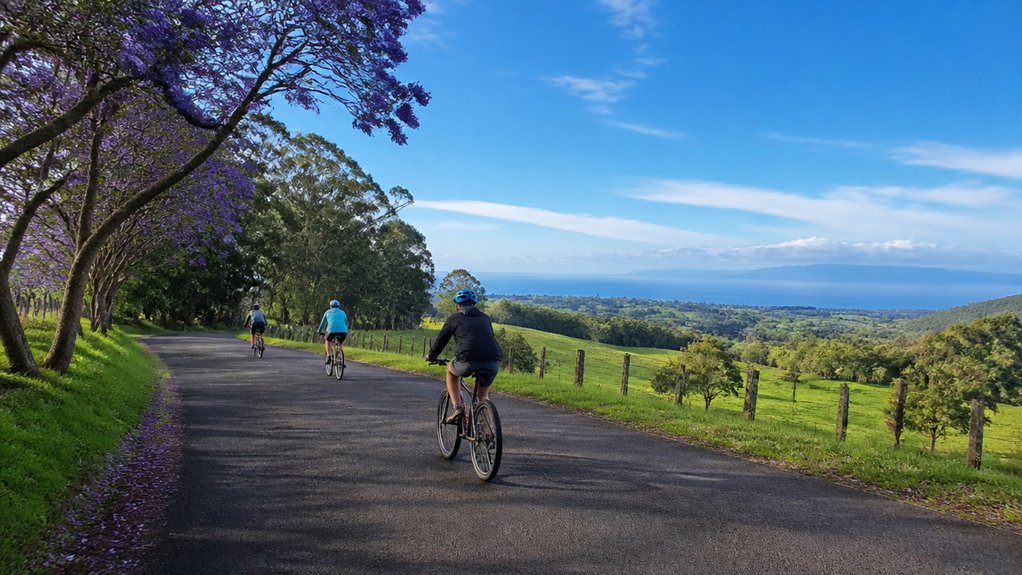
If you want a stronger Upcountry day, you can turn right at the Kaulike and Crater junction and grind up Crater Road for about 2 more miles as the air cools and the views open. About 3 miles up, the Lavender Coffee House gives you a handy stop for food, restrooms, and a quick reset before you roll on. From there, you can U-turn for a fast scenic descent toward Kula or link up near Kula Lodge to shape a longer loop, just keep an eye on changing weather and those quick downhill corners. For changing conditions on this stretch, pack warm layers and rain gear so the ride stays comfortable as temperatures drop and weather shifts.
Crater Road Climb
Once you reach the Kaulike and Crater junction, Crater Road gives your Kula ride one more worthy test with about 900 feet of extra climbing over the next 3 miles. You keep grinding upward on paved Crater road as the air turns cooler and mist sometimes slips across the shoulder. Near 3,800 to 3,900 feet, the route feels high, quiet, and earned. Riders considering a longer day should review age and height requirements before combining this climb with a Haleakala bike tour.
- Expect a steady pitch that pairs with Kaulike Drive for a strong high elevation loop.
- Watch for occasional potholes, especially if clouds flatten the light and hide the surface.
- Aim for the Lavender Coffee House area, then make a simple U-turn for the long downhill run.
From there, you roll back toward Kula Lodge and Pukalani with gravity finally doing some honest work for you.
Lavender Cafe Stop
Then the route sweetens a bit at Lavender Coffee House, about 3 miles up Crater Road at roughly 3,800 feet. It’s a handy mid-ride stop for coffee, food, and reliable restrooms, which matters on this stretch because services thin out fast. You’ll earn it too. Leaving Kula Highway for Crater Road adds about 900 feet of extra climbing.
The timing feels just right. The cafe appears soon after the roughly 2-mile descent from Kaulike summit near 3,900 feet, so you can pause, refuel, and make a quick U-turn without overthinking it. At this elevation, weather can shift fast. You might roll into cool air or a thin mist that beads on your sleeves. Pack a light windbreaker or arm warmers for the descent. Your future self will thank you later. For a comfortable Maui bike tour, lightweight layers are a smart call when temperatures and conditions change quickly upcountry.
Scenic Return Options
Crater Road turns the ride home into a scenic bonus loop instead of a straight retreat. After Rice Park and the top of Kula Hwy, you can tack on a stout side trip that lifts you from roughly 3,000 feet to about 3,800 or 3,900. It’s work, but the payoff arrives fast.
- About three miles up, Lavender Coffee House gives you coffee, food, and a restroom.
- From the Kaulike and Crater Road junction, you gain about 900 feet, then enjoy a two mile descent.
- The pavement rides well, though crosswinds and quick weather shifts can keep you honest.
This add-on echoes the feel of a Haleakalā Bike Tour itinerary, with a clear climb, a rewarding descent, and changing mountain conditions. If you want one more view packed with cool air and open slopes, take the quick U-turn back to Haleakala Hwy. Then you’ll usually roll downhill toward Kula Lodge and on to Makawao.
Ride the Makawao Figure 8 Loop
For riders who like a real challenge, the Makawao Figure 8 Loop packs 40 miles and about 4,500 feet of climbing into one beautifully punishing day. You start in Paia and grind seven miles up Baldwin Avenue, gaining 1,700 feet before Makawao even lets you catch your breath. A steep quarter-mile pitch leads to Hanamu Road by the horse ranch.
You keep climbing toward Kula, topping out just under 4,000 feet, then drop fast for two miles to Kula Highway. Harold Rice Park makes a smart pause for views and a reset. Back through Makawao, you descend Kaupakalua Road and watch for the very tight hairpin near mile 28.5. The quieter choice rolls down E Kuiaha Road into Haiku, then Hana Highway carries you back to Paia with tailwind luck if Maui feels generous. Riders wanting an easier coastal spin can swap in the Paia to Ho’okipa route along Maui’s North Shore.
Stop at the Best Upcountry Food and Water Spots
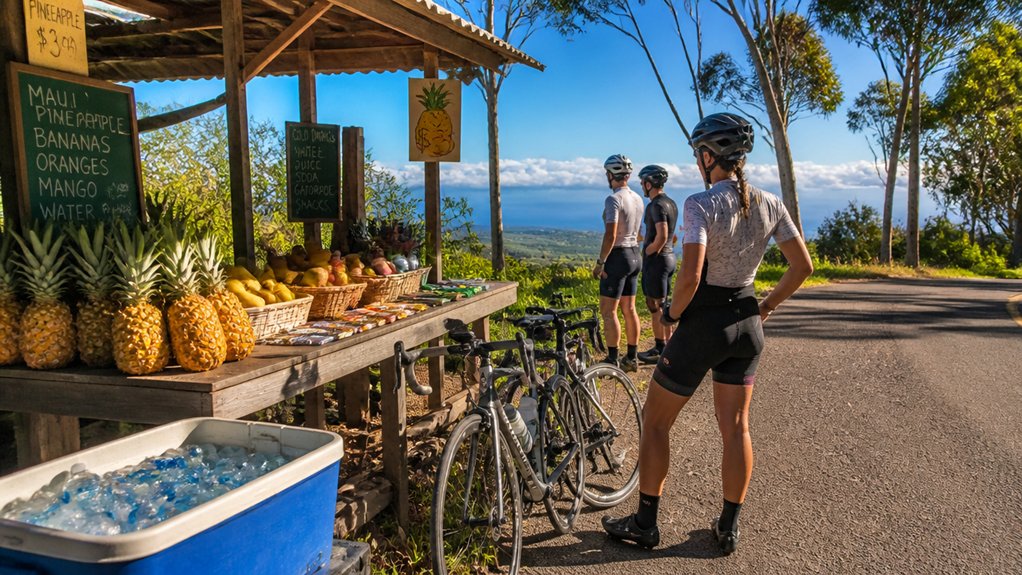
When your legs start asking questions, Kula Lodge gives you a smart first answer with hot food, coffee, water, and restrooms just past the Crater Road turn. Farther along, you can top off at Rice Park near the high point, where potable water, picnic tables, and big open views make a fine excuse to pause. If you’re looping back hungry, Haiku Marketplace is an easy snack play, and you’ll be glad you listened to your stomach for once. On Maui roads, cyclists should stay alert around road shoulders, since conditions can vary along popular Upcountry routes.
Kula Lodge Refuel
A hot climb and an empty bottle have a way of sharpening your route choices, so Upcountry’s best food and water stops matter. Kula Lodge sits near the Kula Highway crest and makes an ideal first reset. You’ll hit it about 5 to 6 miles into the climb from Pukalani, right before the road keeps rising toward 3,750 feet. Like many Maui bike tours, this stop helps turn the ride into a scenic all-day adventure rather than just a hard climb.
- Refill bottles, use the restrooms, and grab food before the next exposed miles.
- Enjoy cool air, garden views, and that welcome feeling of shade after sunbaked pavement.
- Carry two bottles and some cash, since services thin out fast beyond this stretch.
If you’re mapping the broader day, note Harold Rice farther along as another useful benchmark. But here, Kula Lodge is your smart pause button, not a luxury.
Rice Park Water Stop
Rice Park is your no-drama refill stop, tucked along Kula Highway around mile marker 13 to 13.5 and easy to appreciate once the climb starts to bite. At Harold W. Rice Memorial Park, you can top off bottles with potable water, use the restrooms, and grab a shady minute at the picnic tables before rolling on.
That reliability matters up here. The road can feel dry, bright, and strangely quiet except for wind in the trees and your breathing. Rice Park gives you a simple reset when the sun feels close and your legs get opinionated. If you’re planning a longer ride, don’t count on many easy refills between stops. Carry extra water and a snack, because facilities are sparse outside Rice Park and a few other upcountry anchors nearby. Before heading farther afield, review where to ride on Haleakala bike tours so your route stays within allowed areas.
Haiku Marketplace Snacks
Relief shows up at Haiku Marketplace just as the Makawao-to-Paia leg starts to feel warm, salty, and a little hollow in the tank. You roll in off Kokomo Road, park the bike, and find Haiku Marketplace snacks, cold drinks, and restrooms without hunting around.
- Grab fruit, pastries, or something savory from the food vendors.
- Top off bottles and reset before the coast pulls you downhill.
- Use the shade and easy layout to give your legs a brief truce.
It’s a practical stop, but it still feels like part of the ride. You hear traffic humming, smell lunch on the breeze, and watch locals flow in and out. If you skipped earlier stops like Kula Lodge or Rice Park, this place rescues the afternoon nicely, right on time for tired riders. For groups planning Maui bike tours with kids, this kind of easy snack-and-water stop can make the route feel far more family-friendly.
Watch for Narrow Roads and Rough Pavement
Keep your eyes up and your speed in check, because Upcountry Maui can switch from smooth cruising to narrow, bumpy riding in a hurry. On roads like Pulehu and parts of Haleakala Highway, narrow lanes and little shoulder mean you’ll often ride single-file and yield to passing cars.
The rough pavement can feel wild in spots. Near the start of Pulehu, a half-mile of broken, cobble-like surface rattles your bike, and higher up you’ll thread through pothole mazes. Some stretches past mile marker 31 or along Holopuni and Omaopio turn patchy, dirty, or washed out, so slow down or hop off when needed. Downhill, don’t get carried away. Fast runs can hit 40 to 50 mph near blind driveways and tight curves. Use steady, controlled braking on descents to avoid torching your hands on long downhill stretches. Carry water and repair basics too.
Pick the Best Bike for Upcountry Climbs
You’ll enjoy Upcountry climbs more on a lightweight road bike with compact gearing, especially when roads like Pulehu and Kaulike keep rising for miles and your legs start negotiating with you. If the pavement gets choppy, choose 25 to 28 mm tires, or go a bit wider for extra comfort and fewer flats. For the steep stuff, that 50/34 crank with an 11 to 32 or 11 to 34 cassette gives you the range to keep spinning instead of grinding.
Climbing Bike Choices
Start with the bike that matches Maui’s long, honest climbs. For the Pukalani to Kula grind, a lightweight Road Bike with compact gearing keeps your cadence smooth and your legs fresher over miles of steady uphill. You’ll feel the difference when the grade just keeps humming.
- Choose a gravel or endurance bike with 32 to 40 mm tires if your route hits broken pavement, potholes, or a little dirt.
- Pick disc brakes for Kekaulike descents, where mist, speed, and sharp views all arrive at once.
- Favor a light frame and wheels, but still pack puncture resistant tires and a tiny saddle bag for tubes and CO2.
If you expect rougher roads or repeated wall-like ramps, a more forgiving setup can save the day. Maui’s climbs reward smart choices, not heroics.
Gearing For Steeps
Aim for gears that let you spin, not grind, when Upcountry tilts skyward. For long ramps on Pulehu or Haleakala approaches, ride a road or gravel bike with a compact crank and an 11–34 cassette. That setup keeps your cadence steady when grades jump into the teens and the road seems to climb into the clouds.
If you expect repeated 17% walls on Pulehu or Omaopio, go lower with 11–36 gearing or consider an e-road or e-gravel bike. Pair that with 28–32mm road tires or 35–40mm gravel tires for rough pavement, potholes, and dusty bits past mm31. Keep your bike light, pack little, and wear clipless shoes. Bring two bottles and snacks too. Between Kula Lodge and Grandma’s Coffee, services thin out fast, and your legs will notice quickly.
Plan Parking, Restrooms, and Turnaround Points
Before the climb starts to feel volcanic and wonderfully remote, sort out the practical pieces that make an Upcountry Maui ride run smoothly. If you’re starting in Kula, park at the CVS/Longs near Aapueo Parkway. If you’re rolling up from town, use Home Depot in Kahului near Akamai Coffee. On Pulehu, that first half-mile is brutally broken, so start alert and carry water.
- For restrooms and bottles, aim for Kula Lodge, Rice Park, Keokea Park, Grandma’s Coffee House, or Lavender Coffee House.
- For a shorter day, turn around at Kula Lodge or Harold Rice Park and enjoy a tidy descent.
- For the classic loop, ride above the white windmills, then head back with options toward Omaopio or Haleakala Highway.
A little planning keeps the ride feeling adventurous, not improvised.
Match the Route to Weather and Fitness
With Maui, the best route often depends less on ambition than on the sky above you and the legs you brought that day. If the west side is raining, you can often find drier pavement Upcountry on Kula Hwy or near Rice Park, where clouds break and views open fast.
If you’re strong, aim for the Makawao Figure-8 or Crater Road climbs. Those rides ask for real fitness and steady grit. Pulehu and Omaopio look innocent at first, then hit you with long ramps and repeated 17 percent pitches. Save them for a day when your legs feel honest. If south-driven storms bring crosswinds to Haleakala Hwy, skip exposed summit approaches. Choose sheltered Kula and Makawao loops instead. Newer riders do better on Harold Rice Park or short Pukalani-to-Kula out-and-backs.
Frequently Asked Questions
Are Permits Required for Biking on Upcountry Maui Public Roads?
No, permits required? Generally, you don’t need permits for biking on Upcountry Maui public roads. You must follow safety regulations, obey traffic laws, and check temporary closures. If you enter Haleakalā National Park, you’ll pay entrance fees.
Can I Rent an E-Bike Near Kula or Makawao?
Yes, you can, despite Kula not hosting a bike-rental empire. E bike availability is better in Paia, Kihei, and Lahaina, so you’ll need Rental logistics: reserve ahead, arrange pickup/drop-off, and confirm battery range for those climbs.
Are Guided Upcountry Maui Bike Tours Available Year-Round?
Yes, you can book guided Upcountry Maui bike tours year-round. You should still check seasonal availability, since weather can shift routes or difficulty. For schedules, shuttle details, and gear, contact providers directly through current operator contacts.
What’s the Best Time of Year for Blooming Upcountry Scenery?
Late spring, especially May–June, gives you the best blooming scenery. That’s when wildflowers peak, lavender glows, and views clear. Wait for a breezy turn, and you’ll catch eucalyptus scent drifting through sunny, flower-lined roads.
Can Non-Riders Meet Us at Stops Along the Route?
Yes, you can arrange meet up points for non-riders at Kula Lodge, Rice Park, Grandma’s, or Lavender. Tell support vehicles to park legally, confirm landmarks or mile markers, check weather, and bring cash for stops.
Conclusion
Choose your route with the weather and your legs in mind, and Upcountry Maui rewards you fast. You might start in Kula at sunrise, zip past jacaranda trees, then climb toward Rice Park with cool air on your arms and cattle lowing below. A strong rider can push on to Keokea. On a windy day, you might wisely turn at Grandma’s Coffee House instead. Either way, you finish with grit on your calves and a story worth retelling.


