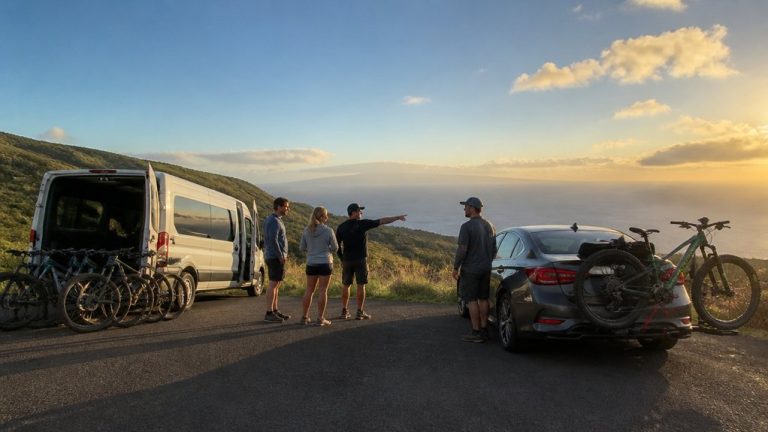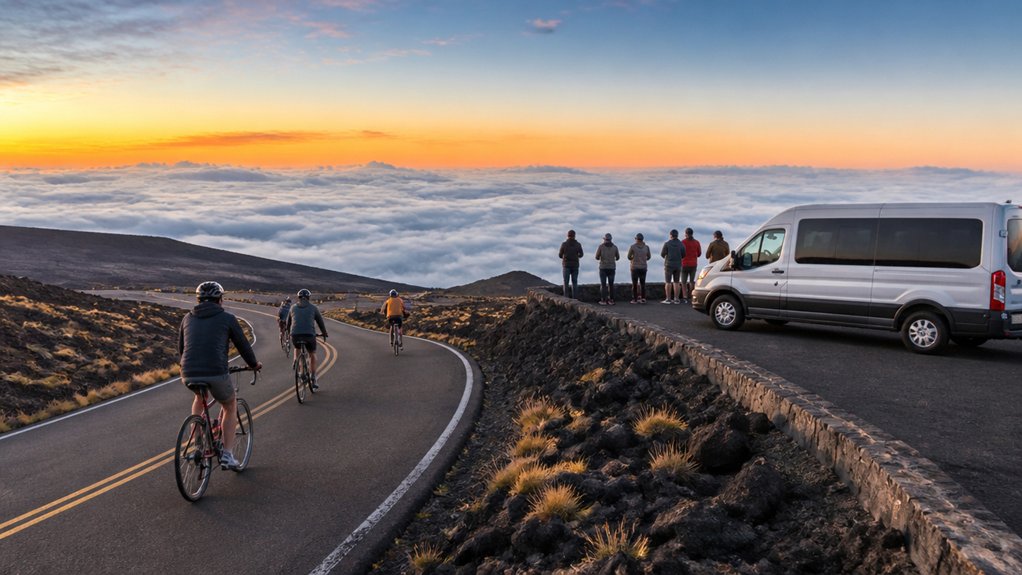
More than 10,000 feet of elevation separates Haleakala’s summit from the coast, so your tour choice shapes everything that follows. If you pick the downhill bike ride, you’ll grip the brakes through cool dawn air, hear tires hum on switchbacks, and roll past eucalyptus and Upcountry towns at your own pace. If you choose the guided van, you’ll trade that freedom for warm layers, easy stops, and local stories. The better fit isn’t obvious until you weigh a few key details.
Key Takeaways
- Choose a downhill bike tour for a 23–26 mile descent, independence, and active adventure; choose a guided van tour for comfort, narration, and easier logistics.
- Bike tours demand strong braking skills and confidence on steep switchbacks, traffic, and changing weather; van tours greatly reduce these safety and control demands.
- Sunrise bike tours are cold, crowded, and require very early check-in; morning or day van tours offer warmer temperatures and less hassle.
- Guided bike tours add hotel pickup, safety briefings, helmets, wind suits, warm drinks, and planned stops; self-guided rides offer more pace flexibility.
- Families with younger kids or nervous riders usually fit van tours better, while confident riders age 15+ are better suited to downhill biking.
Which Haleakala Tour Fits You Best?
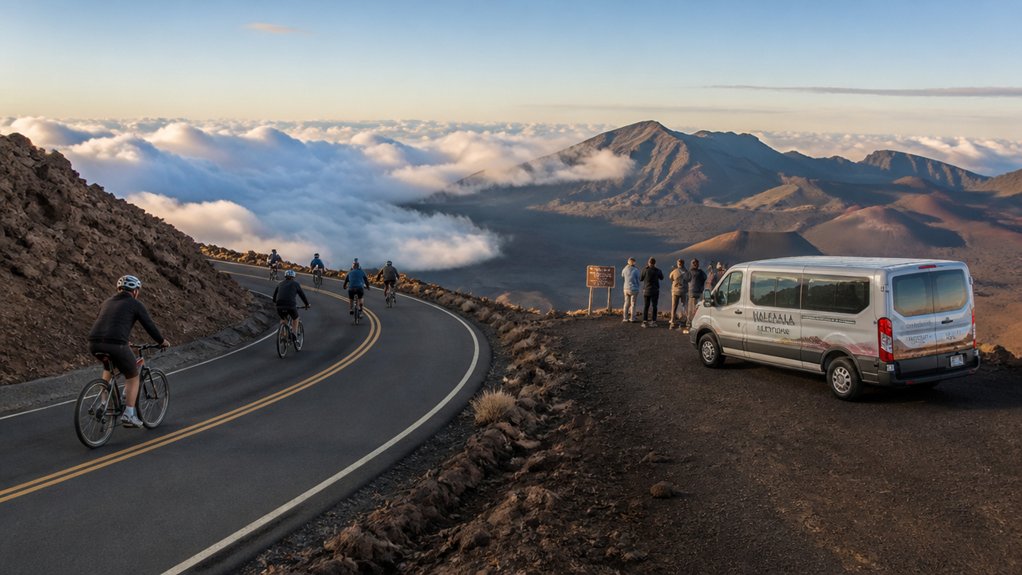
Which Haleakala tour fits you best? If you want ease, context, and extra support, choose a guided tour. You’ll ride or ride along with local pros who handle hotel pickup, park narration, summit stops, and gear like wind suits and full-face helmets. You get warm drinks, too, which feels heroic before dawn.
If you like more freedom, a self-guided bike ride lets you descend at your own pace after a safety briefing and van shuttle. You’ll cover roughly 23 to 26 miles downhill from cool high slopes toward the coast, with switchbacks, changing air, and big island views. The route is famous for its 23 to 26 miles of descent, which gives independent riders plenty of time to settle into the ride. It’s thrilling, but it asks more from you. Strong bike skills matter. So do age, height, and weight rules. In short, comfort seekers lean guided. Confident riders roam.
Sunrise, Morning, or Day Tour?
You’ve got three very different ways to meet Haleakala, and the choice starts with how you handle sunrise crowds and summit cold in the 30s and 40s. If you’d rather sleep a little longer, a morning ride gets you the same long downhill run through Kula, Makawao, and Paia without the 2:30 AM wake-up call. If flexibility matters most, a day tour lets you keep the classic coast-to-country ride and a warmer start, which your fingers will probably appreciate. It’s also worth noting that the Haleakala Sunrise Bike Tour is still happening, so sunrise remains an option if the early alarm feels worth it.
Sunrise Crowds And Cold
If sunrise at Haleakala sounds magical, it’s worth knowing the trade-off before you set that alarm. For a Sunrise Bike plan, you’ll usually check in between 2:30 and 4:00 AM, then head to a summit that can feel downright freezing. Temperatures often drop into the 30s, and the wind can bite through thin jackets fast.
Sunrise also brings the biggest crowds. Parking fills, viewing spots get packed, and timed entry feels tighter than later visits. If you’d rather skip the pre-dawn shuffle, morning or day tours feel much easier. You’ll usually get milder air in the 60s, more breathing room, and simpler logistics. Many Haleakala bike tours begin very early in the morning, which is why sunrise options can feel especially demanding. A guided sunrise van tour can soften the hassle with warm gear and handled entry. Also, clouds sometimes hide the show anyway up there.
Morning Ride Timing
Timing shapes the whole Haleakala ride, from how early your alarm rings to how cold your fingers feel on the first stretch downhill. If you choose sunrise, you’ll likely check in between 2:30 and 4:00 AM, reach the summit in Haleakala National Park before dawn, and finish riding around 10:30 AM.
A morning or day tour lets you sleep longer. You’ll usually check in around 8:00 to 8:45 AM and begin near the park entrance at about 6,500 feet. Those starts feel much milder, often in the 60s, instead of summit temperatures in the 30s. If you book a self-guided sunrise option, expect about five to six hours total with van transport and a 26-mile descent. Guided sunrise rides add narration, support, and handy hotel pickup too. Most Haleakala bike tours follow a clear step-by-step itinerary, which can help you know exactly what to expect from check-in to the final downhill stretch.
Day Tour Flexibility
While sunrise rides deliver the big summit moment, day tour options give you far more room to shape the experience around your energy, comfort, and schedule. You skip the 2:30 to 4:00 AM check-in, trade freezing summit air for temperatures often in the 60s, and start after breakfast instead of before dreams end.
If you want independence, a self-guided bike descent lets you roll 26 miles at your own pace and still finish by mid-morning. The full 26-mile descent gives riders a clearer sense of how long the Haleakala bike tour can take depending on pace and stops. If you’d rather relax, a guided bike or van tour adds local stories, pitstops in Kula, Makawao, or Paia, and extra safety support. Later express options start around 9:00 AM, sometimes skip the summit, and shorten ride time. That makes them ideal if you want flexibility, warmer weather, and fewer sunrise crowds on busy Maui mornings.
Bike Tour vs Guided Van Tour
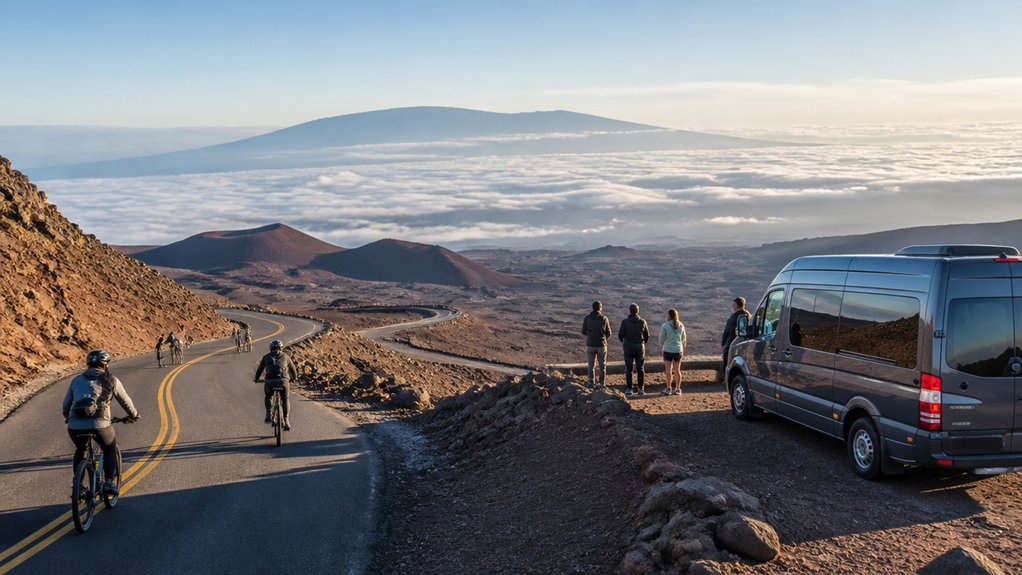
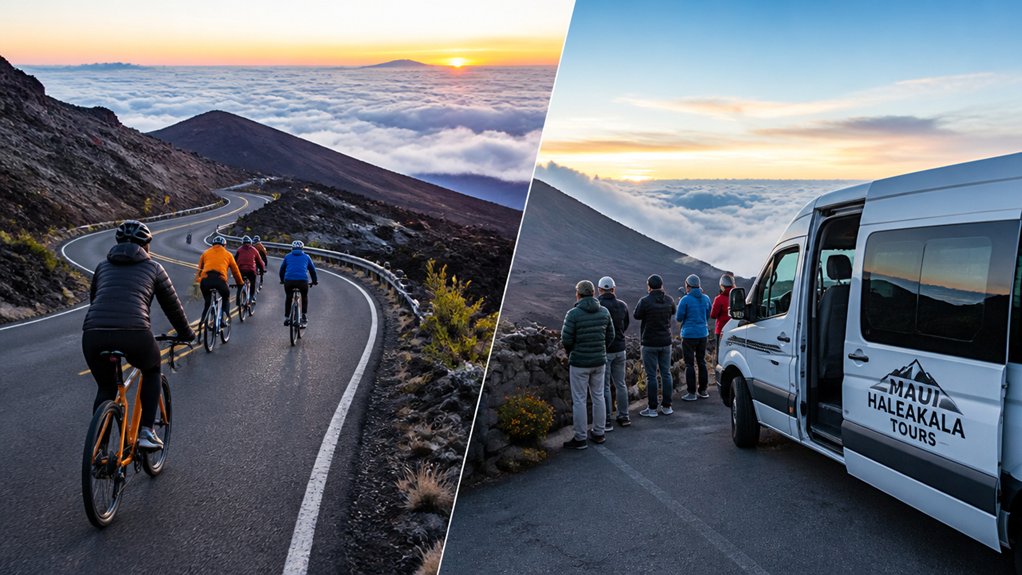
Choosing between a Haleakala bike tour and a guided van tour comes down to how you want to experience the mountain. If you want motion, chill air, and long downhill miles from about 6,500 feet to sea level, biking delivers. If you’d rather focus on crater views, narration, and easy logistics, a Guided van tour keeps things simple.
- You trade physical effort for comfort and context.
- Bike tours pass through Kula, Makawao, and Paia.
- Van tours often include hotel pickup and return.
- Guided rides add support, local insight, and pitstops.
- Van tours reduce risk on switchbacks and traffic.
You should also weigh safety and independence. Self-guided rides give you gear and freedom, but you need confidence. Van tours feel controlled, warmer, and easier on your nerves. Many Haleakala bike tours from Paia are designed around essential safety tips and route planning for the descent.
What a Haleakala Bike Tour Is Like
Riding down Haleakala feels like moving through several climates in one long glide. Your Haleakala bike tour usually begins high on the mountain, often between 6,500 and 10,000 feet, then rolls for about 23 to 26 mostly downhill miles through ranchland and upcountry towns toward the coast.
You start early, sometimes absurdly early, with a safety briefing before the ride. Then you clip on a full-face helmet, grab rain gear and warm layers, and settle onto a KONA bike. The air can feel sharp and cold at the top, then soften as you descend into Kula, Makawao, and Paia. You hear wind, tires, and occasional birds. You also need confidence with hand brakes and rules, because steep switchbacks, traffic, and changing weather keep you alert the whole way.
What a Guided Haleakala Van Tour Is Like
If the bike tour gives you the mountain in motion, a guided Haleakala van tour lets you settle in and watch the whole show unfold. You leave early, reach the summit of Haleakala, and hear stories of the House of the Sun before sunrise crowds thicken near the entrance of Haleakala National.
A guided Haleakala van tour lets you settle in, reach the summit early, and watch the House of the Sun awaken.
- Guides handle timing, parking, and views.
- You get local legends, wildlife facts, and Trip Reports style insight.
- Hot drinks, rain gear, and layer tips beat the cold.
- You skip steep driving and simply enjoy the ride back.
- Stops through Upcountry add Kula, Makawao, or Paia color.
Unlike Maui bike tours, Bike Maui, Mountain Riders, or another Bike Company, this Guided van tour suits first time visitors, kids years old, or anyone with personal preference for comfort over bike rides or a bike ride. The pickup details and schedule from Kahului can also make early morning planning feel much simpler.
Guided vs Self-Guided Bike Tours
Picture the morning air turning sharp and cold as you decide how you want to meet Haleakala: with a guide up front or with your own hands on the brakes.
A guided Bike tour gives you structure. You ride with a local pro, hear stories on the van ride, and stop in places like Kula, Makawao, and Paia. Gear and refreshments are usually included, and hotel pickup can make the early start feel less brutal. It suits first-time visitors who want context and an easy flow. Many operators let you choose between guided or self-guided formats depending on how much support you want.
A self-guided ride gives you more freedom. You set your pace on a 26-mile descent from about 6,500 feet and spend around five to six hours including transport. You’ll need confidence on hand-brake mountain bikes, and most operators require advance reservations, waivers, and basic size limits.
Haleakala Bike Tour Safety Risks
Before you coast into Haleakala’s famous downhill, you need to size up the real risks: steep switchbacks, car traffic, and long braking stretches that can punish tired hands fast. You’ll also ride through cold, wet, and sometimes foggy conditions, especially on early starts, where slick pavement and thin mountain air can turn a pretty sunrise into a shaky wake-up call. If you’re choosing guided or self-guided, ask yourself whether you can handle hand brakes, road signals, and quick decisions for 23 to 26 miles, because this route rewards skill and doesn’t care if your vacation brain is still asleep. Many travelers ask whether the bike tour is safe, but the honest answer depends heavily on road conditions, your experience, and how confidently you can manage a long descent.
Road And Traffic Hazards
Although the Haleakala ride looks dreamy from a distance, the road itself demands your full attention. On a Bike, you drop through long, steep grades and tight switchbacks where speed builds fast and brakes can fade. You also share narrow two-lane roads with cars and tour vans. Around blind curves, limited sightlines leave little room for mistakes. Some sections have no guardrails, just abrupt drop-offs that turn a wobble into a serious crash. That’s why operators require briefings, gear, and minimum age and height standards. Traffic on Haleakala Bike Tours can shift quickly, so riders should expect changing vehicle patterns and stay alert the entire descent.
- Speed feels fun until control disappears
- Tight curves punish late braking
- Drivers may drift or glance away
- Narrow lanes leave tiny margins
- Mixed skill levels can rattle a group
Beautiful? Absolutely. Forgiving? Not really. Ride like every turn asks a question.
Weather And Visibility Risks
Even when the sky looks calm, Haleakala can switch moods fast. At the summit, sunrise temperatures can sink into the 30s, and that cold can numb your fingers right when you need steady braking and steering on the downhill ride. That loss of feeling can make hand protection and brake control much harder on long descents. Then fog or low cloud can roll across the upper switchbacks and cut visibility to almost nothing.
Rain or melting frost can leave the pavement slick, especially on steep grades and tight turns. Your tires grip less, stopping takes longer, and skids become much more likely. Low sunrise glare can also flash across your eyes and make blind turns feel extra uncertain. Add the strong summit winds that shove across exposed ridgelines, and the mountain starts to feel less postcard, more weather laboratory. Beautiful, yes. Predictable, not really.
Rider Skill Requirements
Weather is only half the story on Haleakala. Your skill level matters just as much on this tour. You must be at least 15, at least 4’10”, fit an adult bike, and confidently use hand brakes. The descent can start between 6,500 and 10,000 feet and runs 23 to 26 miles. That means long braking, switchbacks, and mixed traffic. Cold summit air can numb your fingers fast, so full-face helmets, gloves, and layers aren’t optional. Maui bike tours also follow helmet rules to help reduce injury risk on long downhill descents. Neither is a solid bike fit.
- Know hand brakes before you go
- Expect long, tiring braking sections
- Stay calm in switchbacks and traffic
- Respect weight and gear limits
- Choose a guided tour if you’re unsure
Safety briefings and waivers are standard. If you’re inexperienced, skip the downhill. Broken bones aren’t a souvenir.
Who Should Skip the Bike Tour
If fast downhill riding makes your hands tense, skip the Haleakala bike tour and enjoy the mountain another way. On Haleakala, the descent can run 26 miles from roughly 6,500 to 10,000 feet, with steep switchbacks, shared car traffic, and long stretches of braking. If that sounds more white-knuckle than fun, trust that feeling.
You should also pass if anyone in your group is under 15, shorter than 4’10”, or above the usual 300-pound bike limit. Most operators also post clear bike tour requirements for age, height, and riding ability before booking. Don’t book if you’re a complete beginner, haven’t ridden hills lately, or can’t use hand brakes with confidence. Recent injuries, major medical issues, or no travel insurance are solid reasons to choose the van. Cold matters too. Temperatures can dip into the 30s, and rain can turn exposed roads slick fast.
Haleakala Route, Stops, and Timing
You’ll usually start the Haleakala bike route near 6,500 feet, then roll 23 to 26 miles downhill through ranch land, cool Upcountry air, and winding roads toward Paia by the sea. Along the way, you can expect stops in Kula for big switchback views, Makawao for a food or shopping break, and sometimes Paia Town for one last pause before the coast. Your timing shapes the whole feel, since sunrise tours start very early and wrap by mid-morning, while later options move at an easier pace and can stretch into early afternoon. Some operators also offer a breakfast experience as part of a Haleakala sunrise bike tour.
Starting Elevation And Route
Because the route shapes the whole experience, it helps to know where the descent actually begins and how the day unfolds. On Maui, most bike tours start near 6,500 feet at the park entrance, though sunrise options begin higher after a very early check-in. Many riders find a Maui bike tour worth it because the long descent combines scenic views, changing climates, and a memorable sense of progression from summit country to the coast. You’ll roll through Haleakala Ranch, then follow switchbacks for the upper 6.5 miles before the road relaxes into Upcountry. Most descents cover about 23 to 26 miles toward the coast, with total tour time around five to six hours.
- Sunrise check-in often starts between 2:30 and 4:00 am.
- Morning tours usually begin check-in around 8:00 to 8:45 am.
- Guided van tours add narration and planned visitor center stops.
- Self-guided shuttles drop you, then meet you later.
- Express options skip the park section and finish earlier.
Town Stops Along Descent
Along the way, the town stops give the descent its shape and let you trade summit chill for Upcountry coffee and a slower look at Maui life. After the first switchbacks, many tours meet the van in Kula, where you warm up and reset before rolling lower.
From there, Makawao often becomes the most memorable pause. You’ll usually get time for restrooms, browsing boutiques, grabbing coffee, or an early lunch, with Local amenities close together and easy to use. The town feels lived in, not staged, with paniolo roots, wooden storefronts, and a few roosters that act like they own the sidewalk.
Many rides finish in Paia, where restaurants and shops make a practical final stop. You can end with fish tacos, shave ice, or just one last wander before heading out. For riders starting on the south side, transportation options from Kihei can shape how much time you spend at each stop along the descent.
Tour Duration And Pace
While the ride feels like one long glide to the ocean, Haleakala bike tours run on a pretty clear clock. You’ll cover roughly 23 to 26 miles from about 6,500 feet to Paia. Self-guided rides usually take 5 to 6 hours total, including the van up. Your Pacing strategies matter because switchbacks, safety talks, and van meetups shape the day. Packing the right essentials can also keep the long descent more comfortable from cool upland temperatures to warmer coastal stops.
- Sunrise check-in can start at 2:30 to 4:00 AM.
- Morning tours usually begin around 8:00 to 8:45 AM.
- Sunrise rides often wrap by about 10:30 AM.
- Guided van tours add 1 to 2 sightseeing hours.
- Stops in Kula, Makawao, and Paia slow things nicely.
If you choose the van tour, you trade wind-in-your-ears speed for stories, photo breaks, lunch, and a gentler rhythm.
Haleakala Tour Price and Gear
Compare the price tags and the gear list, and Haleakala tour options start to make real sense. You’ll usually pay more for a guided sunrise or deluxe van tour than a standard self-guided ride. That extra cost often covers hotel pick-up, hot drinks, narration, and planned stops. Self-guided tours still include solid basics, so gear costs don’t sneak up on you.
You’ll usually get a KONA mountain bike, full-face helmet, gloves, and a wind suit or rain gear. Some tours start before dawn, with check-in around 2:30 to 4:00 AM, while day rides begin closer to 8:30 or 9:00. Before booking, check age, height, and weight rules. Also read cancellation terms carefully. Refunds often shrink fast, though weather cancellations may bring rain checks or rescheduling options. Tour details should also confirm the meeting locations and check-in process before your ride day.
Best Haleakala Tours for Families
Once you’ve weighed cost and gear, the family fit becomes much clearer. Your best Haleakala tour depends on ages, confidence, and family logistics. If your riders are 15 or older and love long descents, a self-guided bike tour can feel thrilling, with 23 to 26 miles of cool air, switchbacks, and changing views toward the coast. Still, many families prefer guided van plus bike trips because support matters when temperatures dip into the 30s and traffic shares the road. First-time riders should review beginner downhill tips before choosing the bike descent.
- Teens 15+ can legally ride downhill tours
- Guided trips simplify pick-up, gear, and breaks
- Hot drinks and wind suits help at dawn
- Kula and Paia stops keep everyone happier
- Younger kids do better on van tours only
If kids are younger or less experienced, skip the descent and choose a van tour.
How to Pick a Haleakala Tour Company
Because the ride can start in cold, thin air and end in warm upcountry sun, the right Haleakala tour company matters more than the price tag alone. Use a Company checklist. Decide first whether you want freedom or support. Self-guided outfits like Bike Maui and Maui Mountain Bike Tours let you roll 26 miles at your own pace after bike fitting, a full-face helmet, and rain gear.
If you’d rather hear stories and follow a guide, book Cruiser Phil’s or Mountain Riders. You’ll get van transport, planned stops in Kula, Makawao, and Paia, plus extras like hot drinks and hotel pickup. Check age, height, weight, and riding rules before you pay. Confirm start times, finish times, refunds, park fees, and transport. Then ask about brake rules, maintenance, insurance, and emergency plans.
Frequently Asked Questions
Are There Bathroom Breaks During the Tour?
Yes, you’ll get bathroom breaks during the tour. Restroom logistics usually include reliable stops at check-in, the park entrance, and towns like Kula or Paia, but facilities are limited during long downhill stretches, so plan ahead.
Can I Bring a Backpack or Personal Belongings?
Yes, you can bring a small backpack and personal items. Pack storage usually includes van space or shop check-in for larger belongings, but you’ll carry essentials yourself. Confirm size limits, and don’t bring bulky or irreplaceable valuables.
Is Motion Sickness a Concern on the Van Ride?
Yes, you might feel motion sickness on the van ride if you have motion sensitivity, especially on winding roads and early departures. You can reduce it by sitting forward, taking medication beforehand, and avoiding heavy foods.
What Happens if the Weather Suddenly Changes?
If the weather suddenly changes, you’ll follow Weather contingency plans: operators may delay, shorten, reroute, or cancel biking for safety. Guides monitor conditions and can drive you down, while self-guided riders must adapt and may reschedule.
Are Photos Included, or Should I Bring a Camera?
Photos usually aren’t included, so bring a camera? Yes, you should. You’ll want a phone or compact camera, especially for sunrise low light. Guides might snap a few shots, but you can’t count on that.
Conclusion
Whichever you choose, you’ll come away with Haleakala under your skin. If you’re worried the bike ride sounds too intense, imagine this: cold dawn air on your cheeks, brakes humming, jacaranda trees flashing purple as you roll into Upcountry. If you’d rather stay warm and let someone else handle the curves, the van still gives you crater views, story-filled stops, and hot coffee after sunrise. Pick the tour that matches your pace, and Maui will do the rest.