
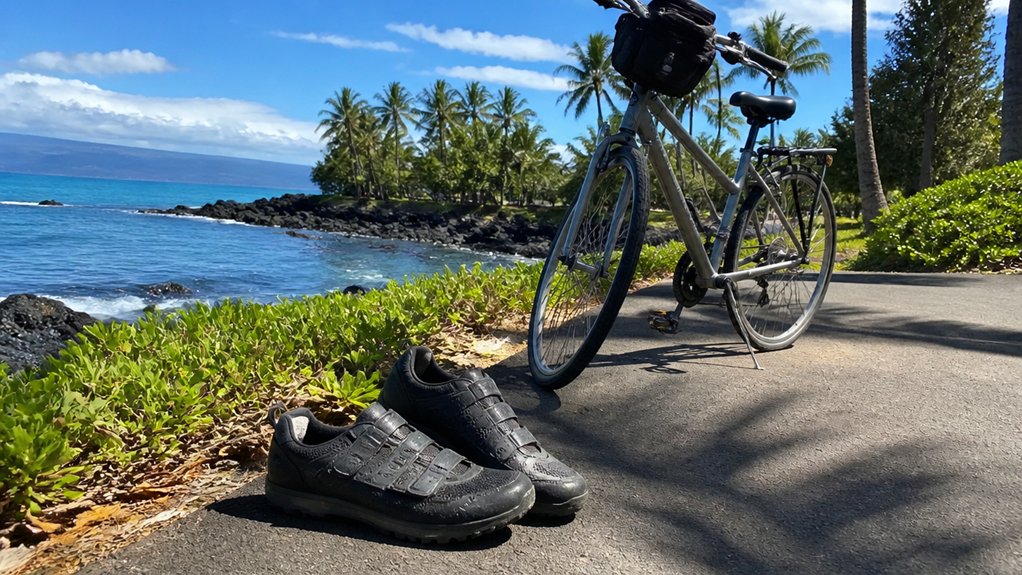
You don’t need fancy cycling shoes for a Maui bike tour, but you do need the right pair. As you roll down Haleakalā, your shoes meet cold summit air, rough pedal grips, and bits of roadside gravel. Closed-toe running or trail shoes usually handle it best, with enough tread to keep you steady at stops and enough structure to save your toes from a few rude surprises. The tricky part is knowing which kind works when.
Key Takeaways
- Closed-toe athletic or cycling shoes are best for Maui bike tours and are required by many Haleakalā tour operators.
- Choose grippy rubber soles, reliable tread, and firm midsoles to improve pedal traction and control on steep or wet descents.
- Trail-running shoes or sturdy sneakers work well; avoid sandals, flip-flops, heels, thin flats, and worn-out shoes.
- Lightweight, breathable shoes with reinforced toes and quick-drying uppers protect against cold, grit, gravel, and road spray.
- Wear moisture-wicking synthetic or merino socks, secure your laces, and test shoes beforehand for fit, grip, and comfort.
What Shoes Work Best for Maui Bike Tours?
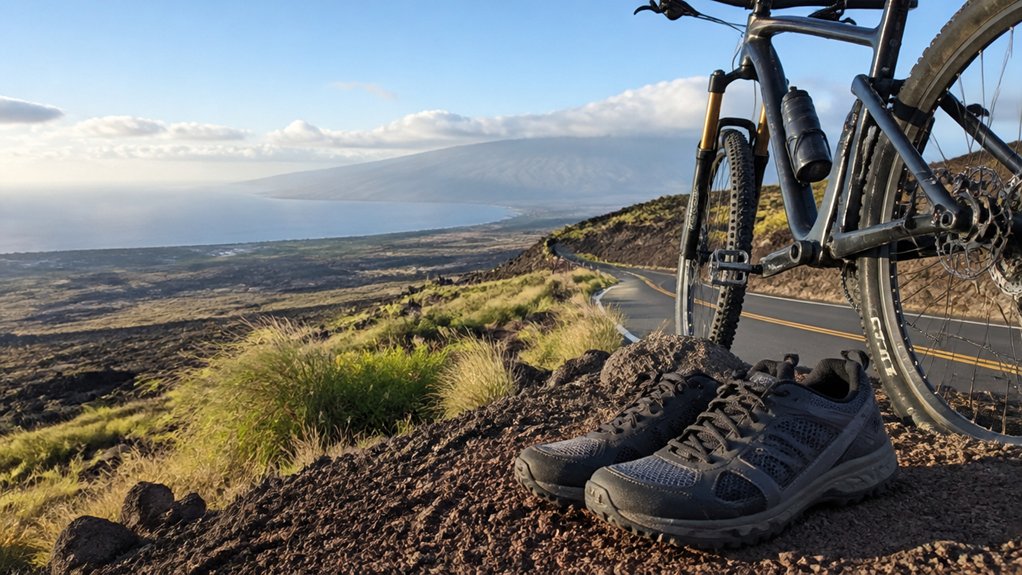
Usually, the best shoes for Maui bike tours are closed-toe athletic sneakers with solid traction that keep your feet protected and planted on the pedals. Closed-toe athletic sneakers give you the best mix of comfort, grip, and durability for long descents and changing road conditions. You’ll want a pair you’ve already broken in, since stiff new shoes can rub and raise blisters before the scenery even steals your attention.
Look for durable sneakers or lightweight hiking shoes that feel secure without weighing you down. Tread matters, especially if the pavement turns damp or gritty. If rain is in the forecast, choose quick-drying athletic shoes or hybrid water hiking shoes that shed moisture fast. This fits right in with a comfortable Maui bike tour, where dependable footwear helps you stay relaxed from start to finish. Skip sandals and flip-flops. They’re not allowed, and honestly, your toes deserve a better vacation anyway.
Why Closed-Toe Shoes Matter on Haleakalā
Because Haleakalā’s bike tours roll you down a long 26-mile descent, closed-toe shoes do more than check a rule box. They protect your feet from windblown grit, small rocks, and roadside brush as you coast downhill. You’ll also feel steadier when pavement changes and a little gravel appears.
Wear shoes that stay secure and give you solid contact with the pedals. Good traction matters when you brake on steep stretches or hit wet patches in the wind. Proper footwear also supports bike tour safety by helping riders stay stable and protected throughout the descent. At the summit, temperatures can sit in the 40s, and sunrise air bites harder than many visitors expect. Long pants and closed-toe shoes help keep your feet and legs from turning into popsicles. Sandals and flip-flops don’t make the cut. They can slip, snag, and leave your toes way too exposed out there.
Best Shoe Types for Maui Bike Tours
For Maui bike tours, you’ll want closed-toe athletic shoes that grip the pedals well and keep your feet comfortable on the long Haleakalā descent. A secure fit and solid traction help you stay steady in cool summit air, light mist, and quick roadside stops. Skip sandals and heels because they’re unsafe, and stick with sneakers that can handle a little weather without complaining. Since packing the right bike tour essentials matters on a Haleakalā downhill ride, choose shoes that are easy to walk in during scenic stops and any pre-ride preparation.
Closed-Toe Athletic Shoes
Choose closed-toe athletic shoes first, since they’re required on Haleakalā bike tours and they do a much better job protecting your toes than sandals or flip-flops. If you wear closed-toe shoes, your feet stay safer on pedals and during quick stops.
Pick sneakers with sturdy soles and reliable traction, especially for downhill braking and the occasional wet patch on the road. Skip pairs with worn tread, because slick soles can feel sketchy fast. Breathable, moisture-wicking uppers help as the air shifts from summit chill to Paia warmth. Lightweight trainers with low-profile soles usually give you better pedal feel than bulky hiking boots. Bring a secure pair you’ve already broken in, so blisters don’t try to join the tour. Thin socks are smart too, especially when dawn at 10,000 feet feels surprisingly crisp. Don’t forget that following helmet guidelines is just as important as choosing the right shoes for Maui bike tours.
Supportive Grip And Comfort
Look for sneakers that feel planted on the pedals and comfortable from the chilly upper slopes to the warmer roll into Paia. On a Maui descent, supportive athletic shoes help you stay relaxed and responsive as the air shifts and the road hums beneath you.
- Choose non-slip rubber soles with solid tread, so your feet grip the pedals and braking feels steady.
- Pick firm midsoles and good arch support to cut fatigue on long downhill stretches and keep control sharp.
- Favor lightweight, breathable materials that dry fast when sweat builds and temperatures climb toward town.
Because first-time rider safety matters on Maui bike tours, shoes that stay secure and predictable can help you focus on braking, balance, and the changing road conditions. Before tour day, test your shoes on a short ride. You’ll notice quickly if the fit stays snug, the tread bites well, and your toes feel protected instead of rattled like loose change.
Avoid Sandals And Heels
That same focus on grip and comfort rules out sandals and heels right away. On a Haleakalā bike tour, you need closed-toe shoes to protect your feet and keep a solid hold on the pedals. If you usually wear sandals on vacation, this is the one outing where you shouldn’t.
Flip-flops and other open-toed shoes leave your toes exposed to wind, road grit, and the occasional flying pebble during the downhill ride. High heels are even worse. They wobble, slip, and make control almost impossible on volcanic roads. Instead, pack sturdy sneakers or athletic shoes with good traction and a secure fit. They’ll handle wet patches, gritty pavement, and quick stops with much more confidence. Maui may provide gloves and weather gear, but your shoes are entirely up to you. Before you go, check the tour company’s height and weight limits so your bike is properly fitted for a safer, more comfortable ride.
Are Running Shoes Good for Maui Bike Tours?
Yes, running shoes are a smart pick for your Maui bike tour because they give you solid foot support, closed-toe protection, and the comfort you’ll want from summit chill to coastal sunshine. You’ll get the best results with breathable shoes that dry fast and have grippy rubber soles, so your feet stay steady on the pedals and sure-footed at scenic stops with wet pavement or rough ground. Skip thin racing shoes or flimsy flats, and pack a warmer outer layer instead of extra footwear, because your shoes should help you ride smoothly, not play a slippery little prank. As part of your Essential Gear, dependable running shoes help round out what to bring on a Maui bike tour.
Running Shoes Benefits
Slip into a good pair of running shoes, and Maui bike tours get a lot easier on your feet. You get closed-toe coverage, a secure feel, and lightweight comfort from chilly summit air to the warmer descent. Cushioned midsoles also soften rough pavement and help your feet stay fresher when you’re standing at overlooks or walking a short trail. Since Maui roads are shared by cyclists and drivers, dependable traction and stability also help you move safely at roadside stops and parking areas.
- Comfort: Moisture-wicking uppers breathe well and dry fast if your shoes get damp.
- Support: Cushioning absorbs road buzz and reduces fatigue during long stretches and scenic stops.
- Protection: A snug fit and solid tread help you stay in control, especially on disk-brake-assisted descents.
Just don’t wear overly worn running shoes. If wet conditions are likely, trail-running or water-friendly running shoes with thicker soles can add useful protection for stream crossings or muddy parking areas.
Traction And Pedal Grip
Press down on the pedal, and traction suddenly matters as much as comfort. On a Maui bike tour, your shoes need grippy rubber soles that bite metal pedals instead of skating across them. Closed-toe athletic or cycling shoes work best, especially with textured tread like Vibram. They keep your foot planted when the road tilts steeply and the descent starts humming beneath you. Good grip also supports safer downhill braking by helping you stay stable and controlled on long descents. Running shoes can work, but inspect them first. Flat or worn soles often don’t grip well enough, especially on wet sections. Softer soles also compress more, which dulls your power and control. Firmer shoes transfer force better and feel steadier on technical downhill stretches. Look for secure laces and a lugged outsole. Many tour operators require closed-toe shoes anyway, so skip sandals and slick dress shoes.
Weather And Comfort
Because Maui bike tours often begin high on Haleakalā, the day can feel surprisingly chilly before the sun warms the road. Running shoes help guarantee you feel ready for that cold first stretch, especially with warm socks. At higher stops, temperatures can dip into the 40s, so insulated feet matter. Best time of day matters on a Maui bike tour because early starts from Haleakalā often feel much colder before conditions warm up.
- Choose closed-toe running shoes with a snug fit. They protect your toes and keep your feet stable on the pedals.
- Look for solid tread. Fresh rubber grips better, which helps you stay in control through cool turns and rough patches.
- Think about rain. If showers sneak in, quick-drying running shoes will feel far better than soggy ones, and a backup pair can save the ride.
Skip sandals and flip-flops. On Haleakalā rides, closed-toe shoes aren’t optional. They’re the smart choice.
When Trail Shoes Beat Sneakers for Maui Bike Tours
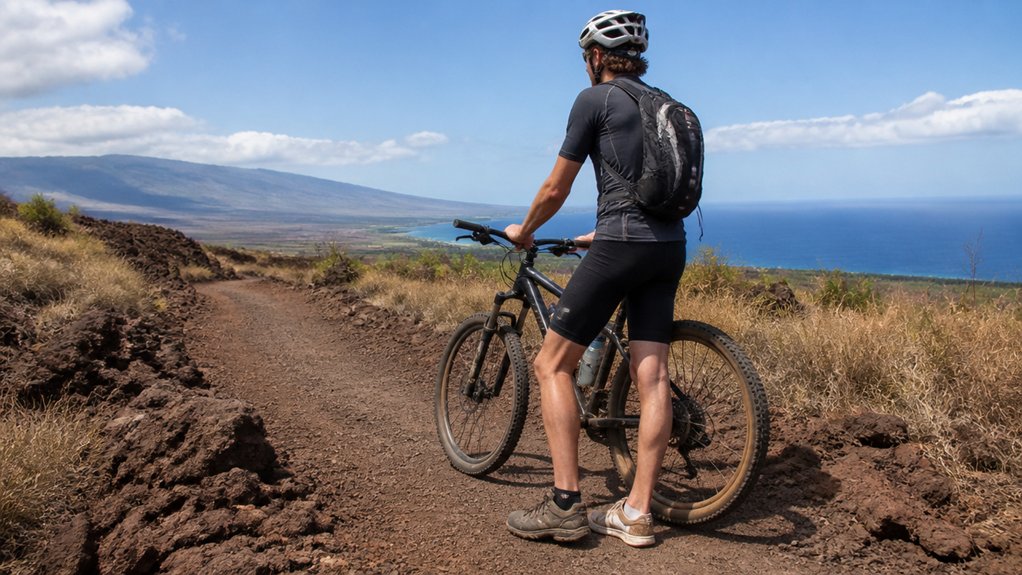
Choose trail shoes over basic sneakers when your Maui bike tour includes rough pullouts, damp pavement, or the rocky edges of the Haleakalā descent. Trail shoes grip pedals better, dry faster in mist, and cushion your feet without the bulk of hiking boots. You’ll notice the difference when road spray hits or you step onto loose gravel at a scenic stop. On the Haleakalā descent, the steep downhill grade makes secure footing even more important at stops and pullouts.
| Feature | Why it helps |
|---|---|
| Lugged sole | Better traction on pedals and pullouts |
| Reinforced upper | Shields toes from debris and scrapes |
On steep, winding sections, sticky rubber and stiffer midsoles give you steadier control. Reinforced toes and durable uppers also block wind, grit, and the occasional brush at the roadside. For Maui’s long 26-mile descent, that mix of comfort and protection feels like a smart upgrade, not overkill.
Why Sandals and Flip-Flops Don’t Work
You might love sandals for the beach, but they don’t work once you’re rolling down Haleakalā. They can slip on pedals, leave your toes exposed to scrapes and flying grit, and do almost nothing against the cold wind near the summit. If you show up in flip-flops, you won’t just feel awkward. you could miss the ride entirely. On a cold summit bike tour, closed-toe shoes help protect your feet from the chilly conditions at higher elevations.
Poor Pedal Grip
Slip into sandals or flip-flops, and pedal grip falls apart fast on a Maui bike tour. On long descents, your feet need steady contact and real traction. Open footwear gives you less sole grip and less surface area, so pedal pressure feels shaky when the road drops away and the wind starts humming.
- Thin flip-flop soles can slide during braking or when you put a foot down.
- Loose straps and floppy edges can snag pedal corners or roadside grit.
- Steep downhill sections and volcanic terrain demand the Best Footwear for control.
Even on Maui bike tours, non-cyclists quickly notice how much proper shoes improve stability and confidence on descents. You want every push to feel planted, especially over 26 miles of curves and changing pavement. That’s why tours require closed-toe athletic shoes with sturdy, grippy soles. They keep you connected to the pedals instead of negotiating with them.
Exposed Feet Risks
While Maui’s views invite a laid-back mood, exposed feet turn small mishaps into real problems fast. In sandals or flip-flops, your toes and heels stay uncovered. That means more cuts, scrapes, crushed toes, and painful bumps when you mount, dismount, or a bike tips over.
| Moment | What You Feel | Why It Matters |
|---|---|---|
| Bike shifts | Sharp sting | Toes take the hit |
| Foot slips | Sudden panic | Control drops fast |
| Road spits gravel | Hot, gritty pain | Thin soles can’t shield |
| Tour check-in | Sinking dread | You might not ride |
Open shoes also slide off pedals and reduce balance on steep downhill stretches. Flimsy soles won’t protect you from debris or hard stops. Even riders with different skill levels still need secure, closed-toe shoes because basic bike control depends on stable footing. Many operators require closed-toe shoes, so choose footwear that’s safe and comfortable.
Inadequate Weather Protection
Even if the morning looks calm at check-in, Maui’s bike tours can start in summit air that feels shockingly cold and windy, and sandals just don’t hold up there. At nearly 10,000 feet, sunrise can hover around 40°F, and gusts can shove flip-flops sideways or send them flying. That’s a rough way to begin a bike tour.
On a Haleakala bike tour, conditions can change quickly between the summit and lower elevations, making secure, closed-toe footwear even more important.
- Your toes stay exposed to cold wind, grit, and stray debris, so cuts and bruises become more likely.
- Open footwear slips on pedals and wet pavement, which matters more when disk-brake-assisted speeds pick up on steep downhill stretches.
- Thin soles do almost nothing against volcanic road vibration across 26 miles, so your feet can ache fast.
There’s also a practical catch. Many operators require closed-toe shoes, and sandals can get you sidelined before you roll.
Why Sole Grip Matters on Maui Bike Tours
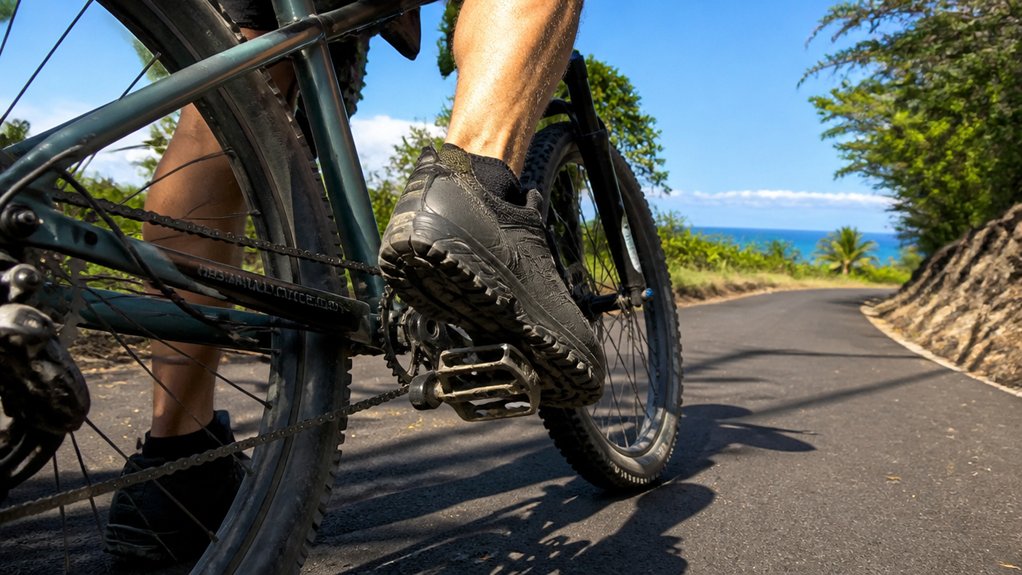
Because Maui bike tours mix cool summit air with steep, winding pavement, your shoes need real grip from the first stop to the final coast into Paia. On Haleakalā descents, you’ll stop often with disk brakes heating up and steep grades under you. At 6,500 to 10,000 feet, a steady foot down matters. Before your ride, Beginner Downhill Riding Tips can help you choose footwear that feels stable and predictable on Haleakalā’s long descent.
| Situation | Why grip helps |
|---|---|
| Dewy summit pavement | Rubber lug soles provide the grip |
| Gravelly roadside shoulder | Closed toes shield against strikes |
| Worn tread at stops | Slips become more likely |
Sneakers or athletic shoes with rubber lug soles help you restart cleanly on wet pavement. Closed-toe shoes also guard your toes from pedals and loose debris. Check tread before touring. If soles look tired, traction fades fast. Quick-drying synthetic uppers help grip stay dependable in winter drizzle and dawn dew too.
What Socks Work Best for Maui Bike Tour Shoes?
Good shoes need the right socks to do their job on a Maui bike tour. You’ll want Moisture-wicking synthetic or merino wool socks because they pull sweat away, dry fast, and help stop blisters on long downhill stretches. Thin to medium cushioning works best, giving you comfort and solid pedal feel without cramming your toes inside closed-toe shoes. Just like smooth shifting helps maintain comfort and control on a bike, the right socks help your feet stay comfortable and responsive throughout the ride.
Moisture-wicking synthetic or merino wool socks keep Maui bike tours drier, warmer, and more comfortable without crowding your shoes.
- Pick athletic or cycling socks with light to medium padding.
- Pack one or two extra pairs and swap if sweat or rain soaks them.
- Skip cotton, since it stays damp and can make chilly summit air feel even colder.
If your ride starts high on Haleakala, a lightweight wool blend adds warmth while still managing moisture. For the warmer descent, lighter synthetic socks can feel just right all the way down.
What to Wear With Maui Bike Tour Shoes
On a Maui bike tour, your shoes work best with the rest of your kit doing its part. Pair closed-toe athletic shoes or sturdy sneakers with moisture-wicking socks so you keep solid pedal grip and dodge blisters on the long downhill. Pull on long pants, whether jeans, yoga pants, or durable athletic pants, so your legs stay shielded from wind, chill, and the occasional roadside spray.
At the chilly 6,500 to 10,000 foot start, add a mid-layer sweatshirt and a lightweight windproof shell. You can stash layers in the provided backpack as the day warms. Skip sandals, flip-flops, and any open-toe footwear. They aren’t allowed, and they offer zero traction or protection. Maui bike laws also require helmets and lights for riders, so wear your helmet properly and make sure any tour-provided gear is secured before you roll out. Dress this way and your shoes can do their best work while Maui rolls past in cool air.
Best Shoes to Change Into After a Maui Bike Tour
After you roll back into town, a fresh pair of shoes can feel like part reward and part rescue. Your feet have earned a reset after the cool descent and long spin.
- Pack a comfortable pair of closed-toe sneakers (lightweight athletic shoes) to change into after the ride for better support and grip when walking around Paia or exploring town.
- Bring breathable slip-on shoes or sandals for an easy swap. They let hot feet air out while you grab coffee, browse surf shops, or watch palms rattle in the breeze.
- If rain lingers, choose quick-dry shoes or hybrid sandals with toe protection. For dinner, cushioned walking sandals or flats feel polished without sacrificing comfort. Toss in lightweight socks too. They help prevent blisters and keep your feet warm again.
If your ride follows Kula to Makawao routes, supportive shoes are especially nice once you hop off the bike and start walking around town.
Maui Bike Tour Shoe Mistakes to Avoid
Fresh shoes for town feel great, but the pair you wear on the ride matters even more. Avoid open-toed shoes (sandals,flip‑flops,slippers). Haleakalā tours require closed-toe shoes, and your feet will thank you when grit skips off the road and pedals stay grippy. Riders should also double-check age and height requirements before tour day, since some Haleakalā bike tours have minimum standards for participation.
You also don’t want tired sneakers with bald tread. Wet pavement and steep downhill sections ask for traction, not luck. Skip high heels and dress shoes too. They wobble on pedals and feel sketchy on uneven pullouts. Thin water shoes sound handy, but they soak through, stay cold, and can rub your skin raw during long descents. Finally, don’t show up with only sandals and bare legs. Summit air can hover near 40°F, and the wind has a sneaky personality. Pack long pants and a backup pair.
Frequently Asked Questions
Do Maui Bike Tours Provide Shoe Storage for Post-Ride Footwear?
Yes, you’ll usually get shoe storage for post-ride footwear. Most Maui bike tours offer Gear Stowage? through a support vehicle, backpack, or meeting point, but you should confirm each company’s policy before you book.
Should I Size up My Shoes for Long Maui Bike Descents?
No, you usually shouldn’t size up. The “more room equals more comfort” theory falls apart because control matters more. You’ll want snug, closed-toe shoes; only go a half-size up if swelling or thicker socks affect Comfort vs.formance.
Are Waterproof Shoes Better During Maui’s Rainy Season Rides?
Yes, you’ll benefit from waterproof shoes in Maui’s rainy season, but don’t overprioritize them. Choose breathable, insulated pairs with Rainproof traction, or quick-dry grippy shoes in heavy rain, since comfort, warmth, and control matter most.
Can I Rent Cycling Shoes Locally Before a Maui Bike Tour?
Yes, you can rent cycling shoes locally before your Maui bike tour. Local rentals are limited, so call Kahului or Paia bike shops ahead and reserve your size. If needed, you’ll usually do fine in sneakers.
How Do I Break in New Shoes Before a Maui Bike Tour?
Break in your new shoes with Gradual Wear: start with 20–30 minute walks, build to 2–3 hours, add short rides, wear your tour socks, test hills, and fix hot spots immediately so you won’t suffer.
Conclusion
Pick shoes that work like good tour guides. Quiet, steady, and ready for every turn. On Haleakalā, you can drop about 6,500 feet, from crisp summit air to warm roadside palms, so your feet need grip and protection the whole way. Think of sturdy sneakers or trail shoes as your tires for the day. They hold fast on pedals, shrug off grit, and let you notice the fun parts instead: wind in your ears, sunrise glow, and that well-earned post-ride snack.


