
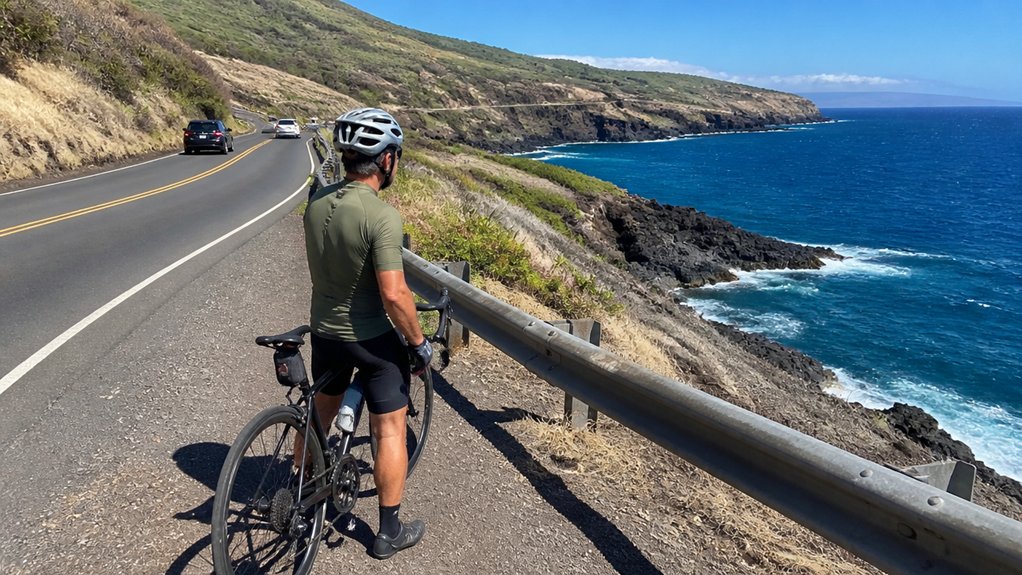
You’ll hear two versions of the West Maui Loop. One calls it a dream ride with sea cliffs, lava points, and long quiet miles above the surf. The other points to one-lane ledges, blind turns, gusty crosswinds, and red mud that gets slick fast. Both are true. If you’ve got strong legs, low gears, and good judgment, this loop can be unforgettable. The real question is which parts feel magical, and which parts tell you to back off.
Key Takeaways
- The West Maui Loop is worth it for experienced riders, with dramatic cliffs, ocean views, lush valleys, and memorable north-coast scenery.
- Safety depends on skill and timing: narrow one-lane cliff roads, blind corners, steep climbs, debris, and crosswinds make it unsuitable for casual cyclists.
- Ride clockwise at sunrise to face lighter traffic, calmer winds, and safer inside positioning on exposed cliffside sections.
- Bring low gearing, three bottles, lights, a flat kit, and a rain layer; red clay and loose rocks can quickly reduce traction.
- Skip or shorten the loop if traffic pressure, fast descents, or narrow drop-off roads make you uncomfortable; safer alternatives nearby exist.
Is the West Maui Loop Safe to Ride?
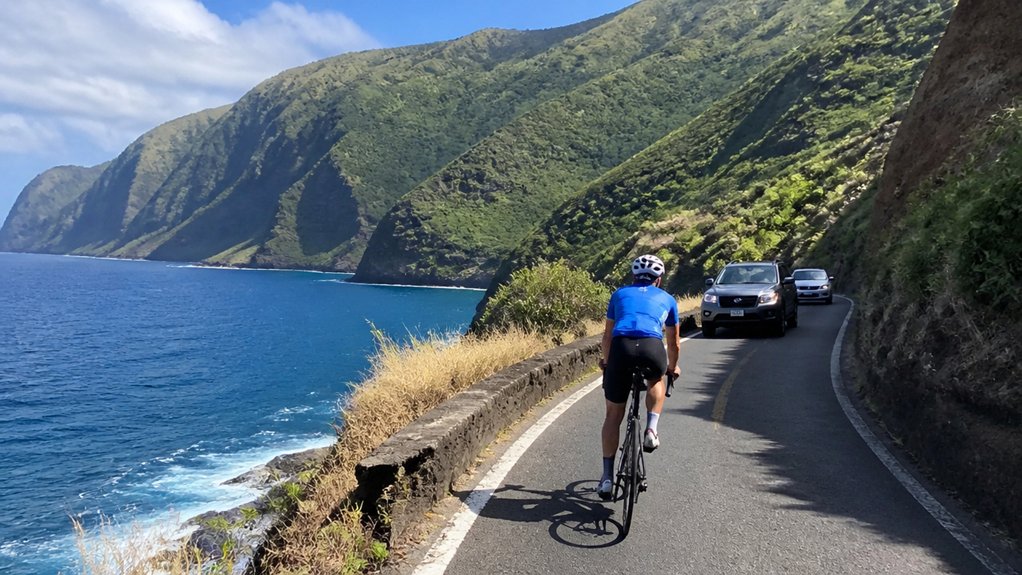
While the West Maui Loop is rideable for many cyclists, it isn’t a casual cruise. You can ride it safely if you treat it like a serious road day, not a sightseeing spin. The biggest challenge is the narrow, one-lane cliffside stretches, especially near mile 14 to 16 and again around 30 to 42, where drivers sometimes need to back up.
You’ll improve your odds by starting near sunrise and riding clockwise. That usually means lighter traffic, calmer winds, and a better road position on exposed sections. Stay far right through blind corners. Use a flashing rear light or Varia. Expect gusts, loose rocks, and slick red clay after rain. Bring low gears, three bottles, snacks, and a rain jacket. If a section feels wrong, turn around. If you want an easier warm-up before committing to this route, the Paia to Hookipa ride on Maui’s North Shore is a much mellower option.
Who Should Skip the West Maui Loop?
If narrow cliffside roads make your hands tense, skip the full West Maui Loop and pick a shorter coastal ride instead. Some back-side stretches shrink to one lane, with blind corners, rock walls, and moments when someone has to back up. If traffic makes you freeze, this isn’t your day.
You should also pass if steep punchy climbs, long grinding ascents, or fast switchback descents sound more punishing than fun. The loop can stack up about 4,000 feet of climbing, and “Mr. Steepy” doesn’t care about your vacation legs. Don’t just rent a bike and hope. You need low gears, three bottles, a flat kit, bright lights, and confidence around slick red clay and debris. If you won’t start early or turn back, choose an easier ride today. If you still want saddle time, look for nearby alternatives with open spots around Lahaina instead of forcing the full loop.
Which Way Should You Ride the West Maui Loop?
Usually, the smartest way to ride the West Maui Loop is clockwise from Lahaina through Kapalua, around the wild north coast, then back by Wailuku and Maalaea. On a West Maui Bike day, that direction puts you inside the road on narrow cliff stretches, lets you tackle bigger climbs while you’re fresh, and helps you beat afternoon winds and traffic. Start at sunrise. If you want a gentler add-on before or after the loop, the Kapalua Coastal Trail is one of West Maui’s more bike-friendly paths for an easier spin.
| Why clockwise | What you gain |
|---|---|
| Inside line | More buffer from drop-offs |
| Early start | Calmer winds |
| Morning hours | Fewer tourist cars |
| Big climbs first | Better energy later |
| Unsure rider | Choose north-coast out-and-back |
You’ll likely feel steadier on descents and switchbacks too, because staying right matches how many local drivers track the center. If the full loop feels like too much, ride the scenic north side.
Which West Maui Loop Sections Feel Sketchy?
You’ll likely feel the road get real between the blowhole and Kahakuloa, where cliff-side one-lane stretches pinch tight and fallen rocks can turn a pretty view into a quick reality check. You’ll also want extra focus near blind corners around mile markers 14 to 16 and again near mile 7, where narrow pavement, no shoulder, and the occasional backup shuffle with oncoming cars keep you honest. If the north coast is wet, slick red clay and roadside debris raise the stakes, so riding clockwise, starting early, and running a flashing rear light can make these sketchy bits feel a lot more manageable. That’s also why so few riders take on routes like this by bike, since narrow one-lane roads and unpredictable conditions tend to scare off all but the most prepared cyclists.
Still comparing West Maui Loop By Bike: Is It Safe And Worth It?
Ask for tour ideas, hotel suggestions, or a simple trip plan that combines both.
Trip Helper
Blowhole To Kahakuloa
Past the Nakalele Blowhole, the mood shifts from scenic to serious as the road heads west toward Kahakuloa. After the Nakalele blowhole, you roll into a rougher stretch where the pavement pinches to one lane and the cliffside feels close enough to tap. Like the Haleakala downhill experience, this section can feel deceptively manageable until the grade and exposure demand your full attention.
- You may meet cars where the road is barely wider than a bike path, and someone has to back up.
- Loose rocks, debris, and fallen stone near the bluff lookouts can rattle your line and threaten flats.
- Red clay turns slick fast when rain hits, so traction can vanish without warning.
- The climb into and out of Kahakuloa is long and steep, so stay right, ride visible, and start early.
If your gut says turn around, listen. Banana bread tastes even better after a cautious reset.
Blind Corners And Shoulders
Although the views stay huge, the sketchiest part of the West Maui Loop often comes down to what you can’t see. On the north coast and near Kahakuloa, blind corners stack up fast. You round a bend and suddenly hear tires, not birds. Stay far right, because some cliffside stretches shrink to little more than a bike path, with no shoulder at all.
Between roughly mile 30 and 42, and around Nakalele, you may need to yield or even back up for a truck or RV. Clockwise helps, since passing cars stay on your left hand, away from the drop. Still, watch the pavement. Loose gravel, rocks, and red clay can make your line twitchy, especially after rain. A bright rear light, or radar, buys you a little breathing room there. Drivers and riders both need to expect narrow Maui road shoulders and share space patiently on these tighter sections.
When Should You Start the West Maui Loop?
Ideally, start the West Maui Loop at sunrise or within the first hour of daylight. If you start at sunrise, you’ll dodge the heaviest tourist traffic and the winds that build later. Leaving Lahaina or Boss Frog’s around 6:00 to 7:00 AM gives you room for a relaxed pace, a banana bread stop, and quick views over Honolua.
- Aim to clear miles 30 to 42 before mid-morning.
- Bring front and rear lights, plus a flashing rear light.
- Ride clockwise if you want calmer descents and fewer awkward passes.
- Be ready to turn around if the one-lane cliff sections feel wrong.
That early window feels quieter. Tires hum. Roosters complain. The ocean flashes silver, and the road still belongs to people moving under their own power. If you’re driving to the start, review Maui bike tour parking options in Kahului, Paia, or Kihei the night before so your sunrise rollout stays smooth.
How Hard Is the West Maui Loop?
If you’ve ridden a solid weekend century or a punchy mountain loop, the West Maui Loop will feel tough but very doable. The full loop runs about 60 miles and packs roughly 4,000 feet of climbing, so for most riders it’s a long day, not a casual spin.
You’ll hit steep pitches, including the blunt little wall called Mr. Steepy, plus grinding climbs out of Honokohau and Kahakuloa. Low gearing helps. So does patience. Early miles can feel fast and friendly along the coast, but the north side turns hilly, narrow, and twisty for about 20 scenic miles. Save something for those switchbacks. Heat, wind, and little shade can make the ride bite harder than the numbers suggest. It’s easier than Haleakala, but you still need fitness, handling skills, and calm descending. Riders looking for a less committing Upcountry option often compare it with Kula to Makawao routes on Maui.
Is the West Maui Loop Worth the Effort?
If you’re wondering whether the West Maui Loop earns the sweat, the short answer is yes if you want huge ocean views, wild cliffside miles, and a ride that feels earned. You’ll get the biggest scenic payoff on the north coast near Nakalele and Kahakuloa, where steep ramps like “Mr. Steepy” keep your legs honest and banana bread stops sweeten the deal. It’s not the easiest day on Maui, and the narrow back side asks for care, but if you start early and come ready, you’ll likely finish thinking the effort was worth it. If you want another Maui ride with useful food and break ideas, the Makawao Bike Ride guide highlights quick stops and local eats.
Scenic Payoff
Cliffs, surf, and a ribbon of road make the West Maui Loop feel worth the work long before you finish it. You get some of Maui’s best ocean views here, especially on the north coast and the hilly backroads where every bend seems to open wider.
- Stop at Honolua Bay or the Windmills for bluff-top lookouts.
- Keep your camera handy because the vistas come fast.
- Plan a break for Julias banana bread and a few salty breaths.
- Favor the north and back sections if you want the biggest scenic reward.
The flatter highway middle can feel ordinary, but the back half brings the magic back. You’ll see blue water flashing below cliffs, rough green slopes, and tiny villages tucked into folds of land. Start early, stop often, and let the views set pace. If you want a gentler contrast elsewhere on Maui, the Kihei Bike Path offers a relaxed ride for visitors.
Ride Challenge
Although the West Maui Loop asks a lot, it gives a lot back. You’re looking at about 60 miles, with roughly 4,000 feet of climbing on the back side of West Maui. That makes it a real day ride, not a casual spin, and you’ll enjoy it more if you save energy early.
The challenge comes in waves. You’ll hit steep pitches like Mr. Steepy, then grind out valley exits like Honokohau’s WALL. Narrow one-lane cliff sections, blind corners, debris, and crosswinds keep you alert long after the one-mile marker slips by. Still, the reward is huge on the north coast between Kapalua and Kahakuloa. If the full loop feels like too much, ride clockwise or choose a shorter out-and-back with banana bread waiting nearby at Lorraine’s. For a more realistic gauge of effort, think of how a ride like Iao Valley to Wailuku is manageable, while this loop is a much bigger all-day undertaking.
What Is the Scenery Like on the West Maui Loop?
Usually, the West Maui Loop feels like several island rides stitched into one day, and that’s what makes the scenery so memorable. You roll from resort coast near Kaanapali into a north shore stretch that’s one of the best visual payoffs on Maui, especially if you’re on a great bike.
- Ocean views turn wild fast, with cliffside roads and surf exploding near Honolua Bay.
- Around Nakalele, the coast looks raw and wind-carved, with overlooks that feel almost lunar.
- Farther on, lush valleys, taro fields, cow pastures, and the steep Honokohau climbs keep changing the scene.
- Near Kahakuloa, panoramic bluffs like the Windmills viewpoint open wide, and the road feels remote in the best way.
Like planning a stop around turtle and surf timing at Hookipa Lookout, the best views on this loop can feel even more rewarding when you hit each stretch at the right part of the day. The hilly north side easily beats the flatter middle for drama and variety, every mile.
Where Should You Stop on the West Maui Loop?
For the best stops, think of the West Maui Loop as part snack run, part photo hunt, and part reality check. In Kahakuloa, pull over for Julia’s or Lorraine’s banana bread. It’s the classic quick refuel, warm, sweet, and usually gone fast.
Coming from the west, Napili is your last easy stop for food, drinks, and restrooms before the north coast feels more remote. For photos, aim for Honolua Bay around mile 32 and the Windmills overlook near mile 34. Both give you ocean drama and space to breathe. Like a scenic coastal cruise, this stretch rewards a steady pace with nonstop ocean views.
At Nakalele and near the one-mile marker stretches by mile 30 to 42, pause and assess whether you want to keep going. Finish in Lahaina or Kaanapali for restaurants, parking, and Bike Rentals returns after your loop.
What Road Hazards Should You Expect?
You’ll meet narrow one-lane cliffside sections and blind corners on the north coast, so hug the right edge, stay alert for oncoming cars, and remember that clockwise riding usually gives you a little more breathing room. You should also expect loose rocks, road debris, and patches of red clay that turn slick fast in the rain, plus steep climbs and sharp descents that reward low gears, calm braking, and a patient mindset. Start at sunrise if you can, because wind and tourist traffic build later, and bright rear lights can help you stay visible when the road starts feeling a bit too exciting. Just like traffic on Haleakala bike tours, vehicle activity tends to increase as the day goes on, so an early start can make the ride feel safer and less stressful.
Narrow Lanes And Blind Corners
While the West Maui Loop feels wild and cinematic, its biggest challenge is the road itself. You’ll face narrow cliff-side lanes where a single car can fill the space, especially after one mile marker and through the rougher mile marker stretches around 14 to 16 and 30 to 42.
- Expect one-lane pinch points where you may need to stop or even back up.
- Treat blind corners and tight switchbacks like oncoming traffic is already there.
- Stay far right, ride defensively, and don’t assume drivers will hold their line.
- Use a flashing rear light, control your speed on descents, and yield when needed.
Past Nakalele, some approaches get shockingly narrow, almost bike-path thin. Add crosswinds and the occasional fast local driver, and you’ll want calm nerves and sharp focus. Maui bike laws also make bike lights especially important if your ride runs late or visibility drops.
Loose Debris And Slick Clay
Road width isn’t the only thing that keeps you alert out here. You’ll also meet loose rocks and gravel on shoulder sections, especially near bluff lookouts and the windmill area. Those scattered chunks can nick a tire, trigger a flat, or make your bike skate just when you want steady grip.
The trickier surprise comes after rain. Red clay surfaces turn slick fast, even after a brief shower, so unpaved pullouts and roadside patches can feel like soap under your wheels. Debris also collects where the shoulder pinches down, forcing you to pick a cleaner line carefully. Carry a spare tube or patch kit and expect to use it someday. If you do get stranded, knowing some basic flat tire handling steps can make a big difference on a Maui bike tour. Some riders lower tire pressure a bit, but don’t overdo it. You still need support over rough edges and loose sections.
Wind, Descents, And Traffic
Even on a calm morning, this loop can turn serious fast once the wind finds the cliffs and the road drops away.
- Start at sunrise if you can. Later, wind builds, and those exposed descents feel twice as fast and half as friendly.
- Expect narrow one-lane cliff sections, especially near miles 30 to 42 and 7 to 16. If a car appears, you may need to stop or back up.
- Watch the steep descents past Kapalua and the switchbacks around Mr. Steepy. Local drivers know every bend, and blind corners can get lively.
- Keep a flashing rear light on, ride clockwise when possible, and trust your gut. Shoulders are thin, messy, and sometimes slick with red clay. If a stretch feels wrong, turning around is smart, not dramatic at all.
Strong crosswinds on Maui can hit suddenly on exposed sections, so keep a relaxed grip and stay ready for gusts that push you sideways.
What Should You Bring for the West Maui Loop?
Usually, the West Maui Loop goes best when you pack like the day might turn from bright postcard sunshine to slick red-clay drizzle in a few miles. Start with three bottles of water, because the exposed coast drinks your energy fast. Add sunscreen, sunglasses, light layers, and a compact rain jacket. Wet shoulders get greasy, and the sun feels personal out here.
Bring a bright flashing rear light, or a Garmin Varia, plus a front light for dim starts and narrow shoreline stretches. Use low gearing for the punchy climbs, especially Mr. Steepy. Toss in a spare tube and repair kit since rocks and road grit can trigger flats. If you’re using a Bike Shop rental, request your pedals and helmet, and load a GPS or Strava route file. Choosing comfortable bike clothing can also make long hours in the saddle feel much easier on a Maui tour.
Where to Rent, Park, or Get Support
Start by lining up your bike before the island wakes all the way up. For rentals, West Maui Cycles in Lahaina and Boss Frog’s Bike Rentals at 156 Lahainaluna Rd are solid bets. You’ll get route tips, tuned bikes, and practical safety advice. Reserve by phone, ask for your model, and bring your own pedals if you can.
Some rental and tour operators also share meeting locations and check-in details ahead of time, which can make an early start much smoother.
- Arrive very early if you need street parking near Baldwin Ave.
- Use the public lot by the Shell station if nearby spots vanish. It’s about a quarter mile back.
- Ask about supported rides or guided packages for a first long day. The extra logistics help is well worth it.
- Return airline banned CO2 cartridges for store credit, and pack lights, extra water, and a rear flashing light.
West Maui Loop or Haleakala: Which Is Better?
Once your bike is sorted, the big Maui question is what kind of hard day you want. The West Maui Loop gives you about 60 miles and roughly 4,000 feet of climbing, plus ocean drama, banana bread stops, and punchy ramps like Mr. Steepy. It feels varied and wild, but those one-lane cliff sections can get spicy when a car appears.
Haleakala is different. You trade twisty coast for a huge, steady climb to thin air, with around 10,000 feet of gain and summit views that feel almost lunar. If you want scenery, village stops, and a more accessible ride, choose the West Maui Loop and ride clockwise early with lights. If you want the pure climbing test, choose Haleakala, pace carefully, use low gears, and consider support if it’s your first attempt there. If climbing the volcano sounds too intense, a guided van tour offers a lower-stress way to experience Haleakala.
Frequently Asked Questions
Can You Ride the West Maui Loop on an E-Bike?
Yes, you can ride the West Maui Loop on an e-bike if you manage e bike accessibility and battery range. Start early, expect steep climbs and narrow sections, carry water and lights, and turn back if needed.
Is There Reliable Cell Service Around the Entire West Maui Loop?
No, cell coverage flickers like a dying flashlight around much of the loop. You’ll get stronger service near towns, but remote cliff sections often go dark. Download offline maps, tell someone your route, and don’t count on signal boosters.
How Long Does the West Maui Loop Take With Photo Stops?
You’ll usually take about 5 hours with photo stops on the full West Maui Loop, though pace variations can stretch it to 6–6.5. If you focus on scenic sections, you’ll spend roughly 1–2 extra hours.
Are There Local Etiquette Tips for Biking Through Small West Maui Communities?
Yes, ride respectfully: respect private property, stay on paved roads, and share narrow shoulders. You should ride single-file, yield on one-lane sections, keep quiet in villages, support roadside stands, use lights, announce passes, and pack out trash.
What Weather Changes Should You Expect on Different Sides of the Loop?
You’ll encounter microclimate shifts: mornings stay calmer and sunnier on the leeward resort side due to the windward rainshadow, while north bluffs turn gustier, hotter, wetter, and slicker later, especially after showers or strong winds.
Conclusion
If you ride the West Maui Loop, you don’t just circle an island. You circle a mood. Start early, go clockwise, and pack water, lights, and a real flat kit. Then earn the bluffs, the salt-bright Nakalele coast, and the hush of the north shore. Respect the one-lane cliffs, crosswinds, and loose gravel, and turn back if conditions sour. For a seasoned rider, that mix of beauty and bite is exactly the point, and reward.


