
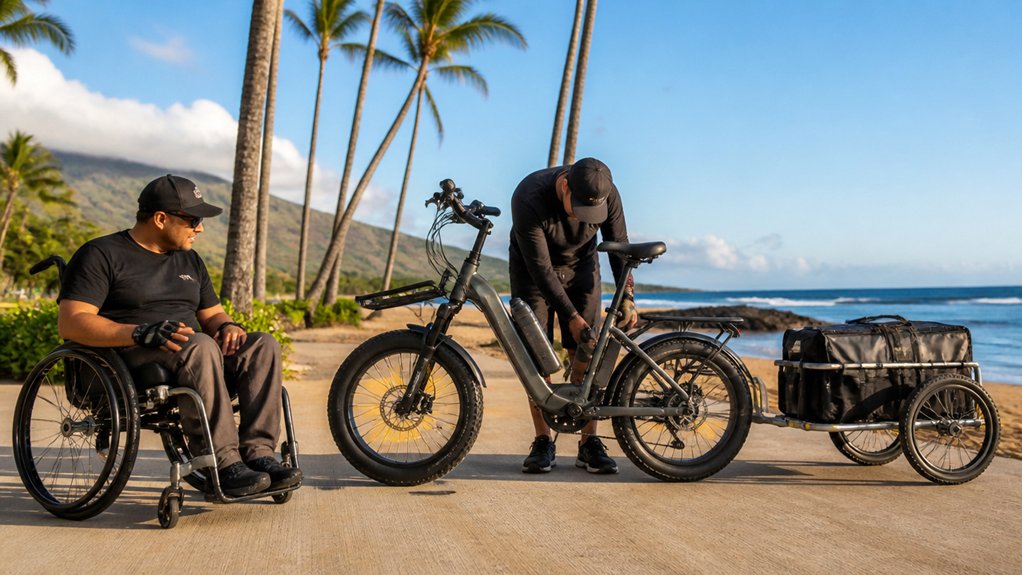
If you want a wheelchair-friendly e-bike on Maui, you can’t just stroll into any beach-town rental shop and expect a perfect match. Most places stock standard cruisers, while adaptive options like recumbent trikes or hand-crank bikes usually take extra calls, extra planning, and sometimes your own gear. Still, the payoff can be sweet: ocean air, palm shade, and the soft whir of tires along flatter coastal paths. The real trick is knowing what to ask before you book.
Key Takeaways
- True wheelchair-friendly e-bikes on Maui are rare; most rentals are standard e-bikes, not adaptive wheelchair-accessible models.
- Ask vendors directly about adaptive inventory, transfer setup, weight limits, incline capability, and written confirmation of equipment details.
- Specialty options like recumbent trikes or hand-crank e-bikes may be possible only through advance planning or off-list contacts.
- Bringing your own wheelchair conversion or shipping equipment ahead may be the most reliable way to get a proper fit.
- Best routes for adaptive riding are flatter paved areas like Kaanapali Coastal Path, Wailea Boardwalk, and Kihei promenades.
Which Wheelchair-Friendly E-Bike Options Exist on Maui?

Here’s the key thing to know right away: Maui does have plenty of e-bike rentals, but true wheelchair-friendly e-bike options are hard to track down. You’ll mostly find standard bikes, not a wheelchair-accessible adaptive e-bike. A recumbent trike or hand-crank e-bike may exist through specialty contacts, but mainstream listings rarely show them.
If you need a wheelchair-to-e-bike conversion, Maui accessibility usually depends on planning ahead. Maui Handi Transport and some operators may help with specialized transport, transfer assistance, or an adaptive tour. Still, confirmed rental inventory stays thin. You should call directly, ask about off-list equipment, and get details in writing. Check weight and incline limits too, especially for Maui’s sunny roads, rolling grades, and breezy coastal paths. Sometimes the biggest adventure is simply finding the right wheels first. In some cases, comparing shuttle or self-drive logistics can also help you figure out which setup is more practical for getting to and from a specialized adaptive ride.
Where Can You Rent Wheelchair-Friendly E-Bikes on Maui?
Across Maui, you can easily rent a standard e-bike in places like Kihei and West Maui, but finding a true wheelchair-friendly e-bike is much tougher. Most shops stock regular models only, with a posted weight limit and clear transfer requirements that assume you can ride conventionally.
If you need a wheelchair-accessible e-bike, adaptive e-bike rentals are rare. You probably won’t find a wheelchair-friendly trike or handcycle rental waiting beachside beside the palms. Maui Handi Transport and some adaptive tour operators can help with accessible vans or activities, but they usually don’t supply bike setups. Before booking, ask detailed accessibility questions about transfer requirements, rider support, and equipment limitations so you know exactly what is possible. For a true fit, you may need to bring your own wheelchair conversion or ship equipment ahead. Always contact vendors directly to confirm details, ask about the weight limit, and book early before the few adaptive options disappear fast.
Which Maui Pickup Locations Are Accessible?
A few Maui pickup spots are easier to manage than others, especially if you’re watching for smooth pavement, step-free entry, and parking that doesn’t turn into a small obstacle course. In South Maui, Kihei Electric Bike Rentals stands out. Its storefront has ground-floor access, sits near public transportation, and may feel more wheelchair accessible than many bike-shop setups.
On the west side, the Lahaina meeting point at 30 Halawai Dr offers a paved, level check-in area and nearby parking. That helps with easier pickup locations. Some shops also offer delivery/pickup services to hotels or meeting points, which can sidestep tougher storefronts. For beachside handoffs, the Kaanapali boardwalk and major resort zones often have level paths. In Kahului, Paia, and Kihei, checking parking tips ahead of time can make arrivals smoother for Maui bike tours. You’ll still want an accessible restroom, ramp access, and to confirm curb cut details.
What Should You Confirm Before Booking?
Start with the practical stuff, because a smooth Maui rental can hinge on a few small details. First, confirm the bike’s weight limit, plus any combined limits for passenger seats or carriers. Ask whether you’ll get a step-through frame, low standover height, or adaptive seating that makes transfers easier.
Then check the nuts and bolts of accessibility. Verify helmet sizes, chargers and locks for multi-day use, and whether you need your own water bottle. Ask about shop pickup accessibility, staff help with mounting or dismounting, and the service animal policy. Maui’s e-bike tours can vary widely in terrain and pace, so ask whether the planned route matches your comfort and mobility needs. Finally, read the reservation terms closely. A clear cancellation policy matters if plans shift with weather or energy levels. Also confirm waivers and insurance, including liability forms and any optional damage or medical coverage before you click reserve online.
Still comparing Wheelchair Friendly E Bike Options On Maui: What’s Possible?
Ask for tour ideas, hotel suggestions, or a simple trip plan that combines both.
Trip Helper
Which Maui Routes Work Best for Adaptive E-Bikes?
Once you’ve confirmed the bike fits your needs, the route matters just as much. On Maui, the best accessible routes stay smooth, scenic, and practical for adaptive e-bikes.
On Maui, the right route keeps adaptive e-bike rides smooth, scenic, and genuinely easy to enjoy.
- Ride the Kaanapali Coastal Path for mostly flat paved shared-use paths, ocean views, and short ramps.
- Choose the Kihei Kamaole promenade if you want beachfront promenades, frequent curb cuts, and easy 4 to 10 mile loops.
- Try the Wailea Boardwalk for wide pavement, gentle grades, and room for trikes or recumbent setups.
- Skip Hana Highway and most Upcountry climbs unless you can handle steep gradients, higher torque needs, and long ascents.
Visitors looking for another mellow option may also appreciate the Kihei Bike Path for its relaxed, easygoing ride style.
You’ll also want nearby parking, restrooms, and shade. Check weight limits and clearance widths before you roll, because paradise feels better when logistics behave themselves too.
Frequently Asked Questions
Can I Bring My Own Wheelchair and Use It With an E-Bike?
Yes, you can bring your wheelchair if you confirm wheelchair compatibility, mounting options, secure fastening, weight limits, maneuvering techniques, transfer assistance, electric conversions, braking adaptations, visibility accessories, and liability waivers with the e-bike rental operator beforehand.
Are Wheelchair-Friendly E-Bikes Allowed on Maui Buses or Shuttles?
Yes, you can sometimes bring wheelchair-friendly e-bikes on Maui buses or shuttles, but you must check bus policies, space limits, boarding ramps, folding requirements, peak restrictions, intermodal transfers, operator assistance, priority seating, fare exemptions, service animals.
What Weather Conditions Affect Adaptive E-Bike Rides on Maui?
Like a sudden slap, Maui weather hits your adaptive e-bike ride with High winds, Heavy rain, Intense sun, Humidity levels, Flash floods, Coastal spray, Low visibility, Temperature extremes, Road runoff, and fast-changing Microclimates.
Do Maui Resorts Provide Storage or Charging for Adaptive E-Bikes?
Yes, you’ll often find resort charging and overnight storage, but storage policies vary. Ask concierge services about in room charging, dedicated lockers, valet assistance, ADA compliance, battery swapping, and on site workshops before arrival.
Is Travel Insurance Recommended for Renting Adaptive E-Bikes on Maui?
Absolutely, freedom feels thrilling, accidents feel costly, so you’ll want travel insurance. Check liability coverage, rental damage waivers, medical evacuation coverage, trip cancellation benefits, preexisting conditions exclusions, equipment loss reimbursement, policy excess deductibles, emergency assistance services.
Conclusion
Maui can work for you if you plan like a pro and ask sharp questions early. Confirm the bike style, weight limits, steep hill ability, pickup access, and who’ll help you on site. Then match your ride to smoother coastal paths or quieter roads where you can hear surf, feel warm trade winds, and stop without stress. Think of it as threading a needle. A little prep opens the island in bright, practical ways, with fewer surprises.


