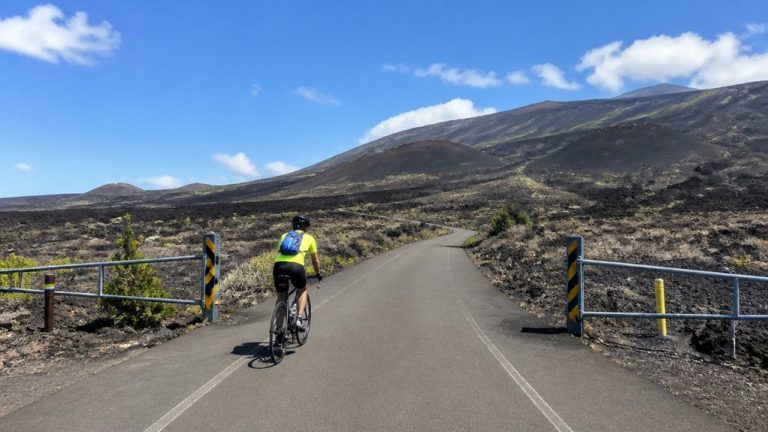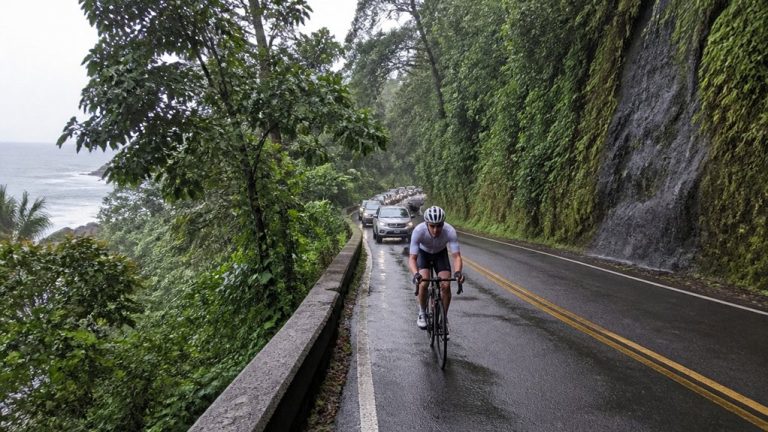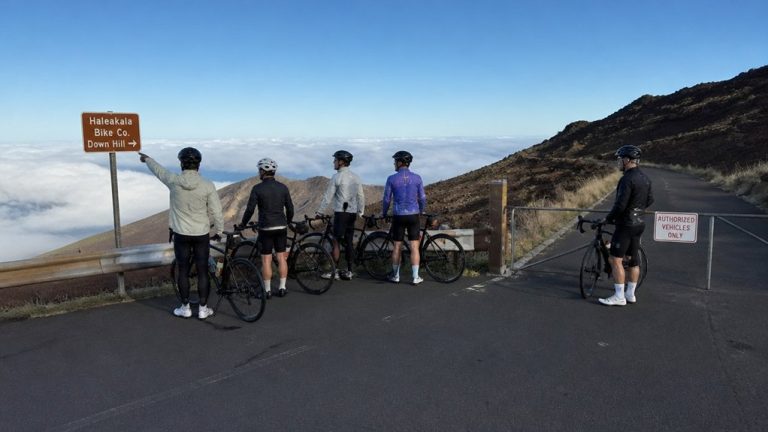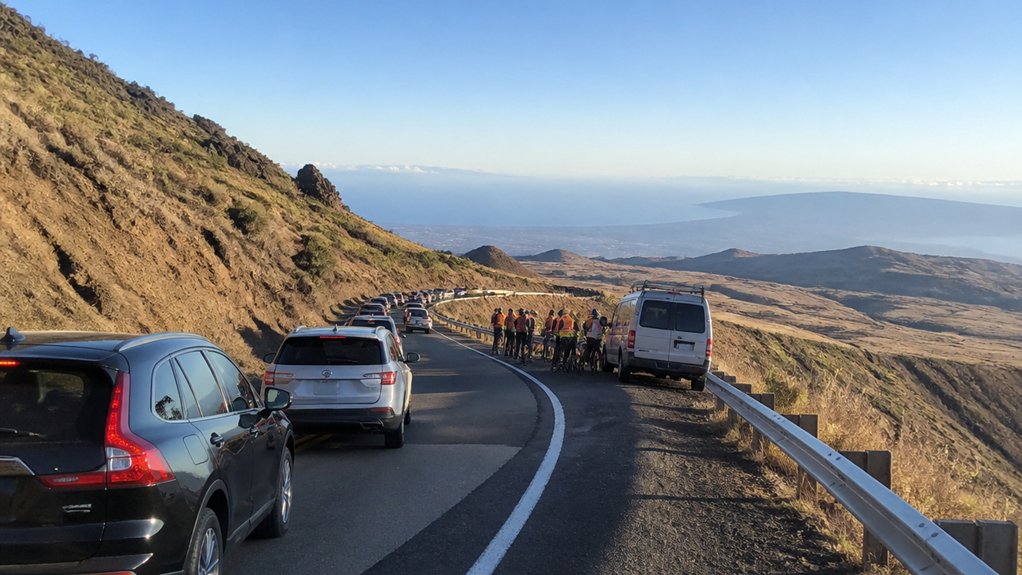
You don’t need to be a daredevil to handle traffic on a Haleakala bike tour, but you do need to know what the road is like. You’ll share a two-lane route with cars, vans, and the occasional impatient local, while sharp switchbacks, cool mist, and rough pavement keep you honest. Some stretches feel wide and easy. Others get tight fast. The trick is knowing where traffic bunches up and when the mountain gets busiest.
Key Takeaways
- Expect real traffic on a shared two-lane road, with the tightest conditions on upper switchbacks, Crater Road, and forested middle sections.
- Traffic is heaviest near sunrise at the summit, then again lower down around 7:30–8:30 am and late morning near Paia.
- Downhill speeds can reach 30–40 mph, so wet pavement, fog, narrow shoulders, and sharp curves increase close-pass risk.
- Ride single file, keep right, brake before hairpins, and hold a steady line to stay predictable around vehicles.
- Guided tours improve safety with lead guides, trailing vans, timed departures, and regroup stops through narrower or busier sections.
How Dangerous Is Traffic on Haleakala Bike Tours?
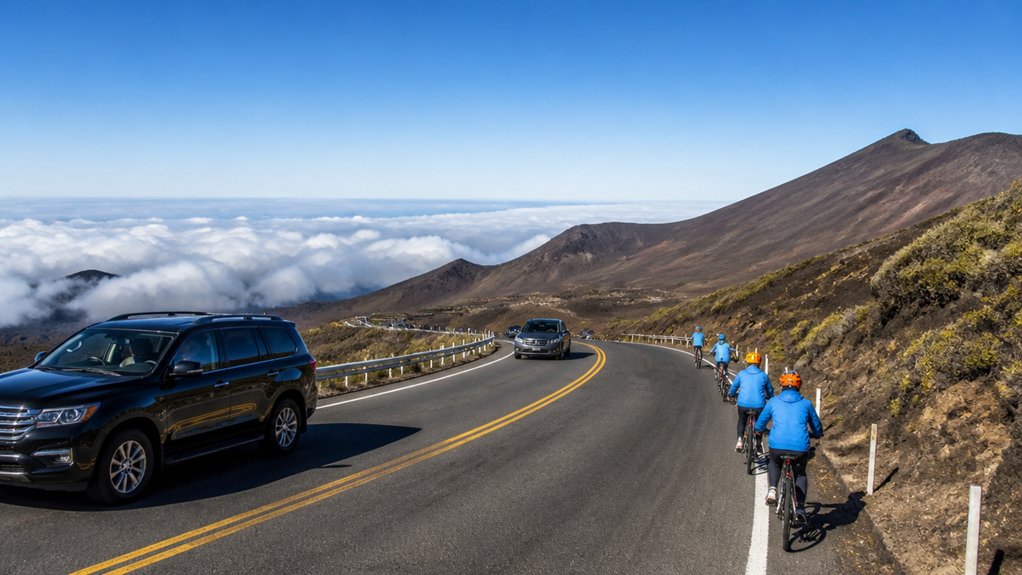
How dangerous is traffic on a Haleakala bike tour? You share a two-lane road with real traffic, narrow shoulders, and sharp curves, so the risk feels more tangible than many expect. On a Haleakala bike or downhill bike run, you may hit 30 to 40 mph. Add cold fog or wet pavement, and braking gets trickier fast.
Still, serious crashes remain rare. The National Park Service and tour operators have tightened rules after past accidents, and guided tours use lead riders plus a trailing van to buffer traffic. Many riders asking is the tour safe are really weighing these traffic conditions against the added structure of a guided descent. If you ride down Haleakala, wear closed-toe shoes and stay alert for close passes, especially during busy visitor hours. You won’t be alone out there, but the mountain definitely doesn’t hand out free passes to distracted riders.
Where Does Traffic Get Tightest on Haleakala?
Traffic starts to pinch in a few clear zones, and you’ll feel the change right away. On Haleakala, the upper switchbacks near 6,500 feet get snug fast. Hairpin turns, narrow lanes, and rough patches on Crater Road make your Bike Ride feel close to cars. If you bike down the volcano, watch the forested stretch too. Thick greenery trims sightlines and makes every meeting feel narrower. The Haleakala bike tour covers a long downhill route, so these tighter sections can feel more noticeable as the ride goes on.
| Area | Why it tightens | What you notice |
|---|---|---|
| Upper switchbacks | Hairpins, slim lanes | Slower cars, little shoulder |
| Crater Road sections | Rough pavement | Shared space on your Bike tour |
| Forested middle | Limited visibility | Traffic feels suddenly closer |
Lower down, town approaches near Paia and Makawao can feel tighter. Temporary controls may also bunch vehicles into short convoys nearby.
When Is Haleakala Bike Tour Traffic Busiest?
Timing changes the whole feel of a Haleakala bike tour. If you join sunrise tours, you’ll hit an early rush near Haleakala National Park, where summit parking and crater road access get crowded before dawn, often from 4:30 to 6:00 am. Mid-morning starts usually dodge that summit squeeze.
Lower down, peak traffic often lands around 7:30 to 8:30 am. That’s when school drop-off thickens Baldwin Ave and Olinda Road, especially through the first 6.5 miles. By late morning, the route can feel busier again as you approach Paia. Shops open, Road to Hana cars stack up, and narrow shoulders make every passing vehicle feel closer. Around 9:30 am, clouds can gather near 5,000 to 6,000 feet, softening views and slowing the flow a bit. Many riders on sunrise tours notice the heaviest congestion clusters near the summit before the downhill portion begins.
How Do You Ride Safely in Haleakala Traffic?
Usually, a safe Haleakala ride comes down to staying steady, visible, and a little humble on the mountain. You’ll Ride single file, keep right when it’s wide enough, and hold a predictable line on this two-lane road near the National park.
Obey traffic laws, yield to downhill vehicles, and keep both hands on the bars. Hairpin turns arrive fast, so brake smoothly and shift early before speed builds to 30 or 40 mph. Wet pavement near the summit can feel slick as glass. Use braking tips to avoid overheating your hands on the long descent. Wear a helmet and closed-toe shoes, and carry water and a charged phone. On any tour, follow pace instructions. In a small group, set regroup stops and a contact rule. Use good judgment at narrow pull-outs, and slow for passing cars.
Still comparing Traffic On Haleakala Bike Tours: What To Expect?
Ask for tour ideas, hotel suggestions, or a simple trip plan that combines both.
Trip Helper
How Do Guided Tours Reduce Traffic Risk?
Because the road can tighten fast on Haleakala’s switchbacks, guided tours cut risk by making your ride easier for drivers to read. You roll in a small pack with a lead guide up front and a trailing van behind. That setup controls group pacing and adds a visible safety buffer on narrow two-lane stretches.
Before you start, guides brief you on stops, single-file rules, and spacing so your line stays compact and calm. That predictable rider behavior matters when hairpin turns appear and shoulders pinch down to lava rock. Your guide’s local traffic knowledge helps you avoid school rushes, pick smart photo pullouts, and move through tricky sections smoothly. If traffic stacks up or someone wobbles, the trailing van can assist fast. Riders comparing guided tours with self-guided options often find the added structure especially helpful in traffic. Even the wind seems more organized somehow today.
Frequently Asked Questions
Do I Need Prior Road-Cycling Experience for a Haleakala Bike Tour?
No, you don’t need extensive road-cycling experience level, but you should have descending confidence, solid braking technique, and familiarity gears. You don’t need peloton riding or route reconnaissance; a basic fitness baseline helps.
Are E-Bikes Allowed on Haleakala Bike Tours?
Usually, you can’t use e-bikes on Haleakalā tours, like bringing hiking boots to a swim meet. Check e bike regulations, battery restrictions, rental availability, motor classifications, trail compatibility, permit requirements, and noise concerns before booking.
What Should I Wear for Haleakala’s Changing Temperatures?
You should use a layering strategy: wear moisture wicking thermal baselayers, breathable fabrics, and a windproof jacket. Add sun protection, bring a waterproof shell, and choose closed-toe shoes with solid footwear grip for chilly descents.
Can Children Join Haleakala Bike Tours Safely?
Frankly, you shouldn’t assume children can join safely: age restrictions, supervision ratios, child sized bikes, child helmets, child friendly gear, restroom breaks, and snack policies matter, but strong skills and downhill experience still decide eligibility.
What Happens if Weather Forces a Tour Cancellation?
If weather cancels your tour, you’ll get weather refunds under the operator’s refund policy, reschedule options, and clear communication protocol. Guides make a safety assessment, may use alternate routes, and help with equipment storage.
Conclusion
Traffic on Haleakala bike tours isn’t a deal breaker, but it does demand attention. You’ll share narrow two-lane roads where riders often hit 30 to 40 mph, so even one close pass feels louder and faster than expected. Start early and you’ll likely meet the busiest flow near sunrise. Choose a guided tour if you want more buffer, a trailing van, and calm coaching. Then you can focus on the cool air, lava slopes, and that long rolling descent.