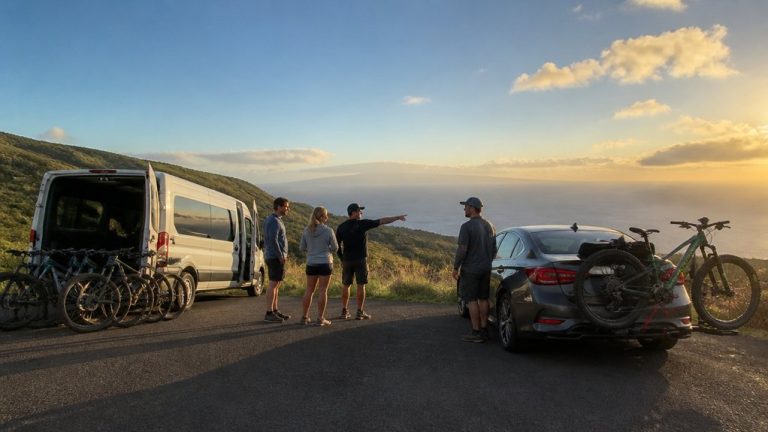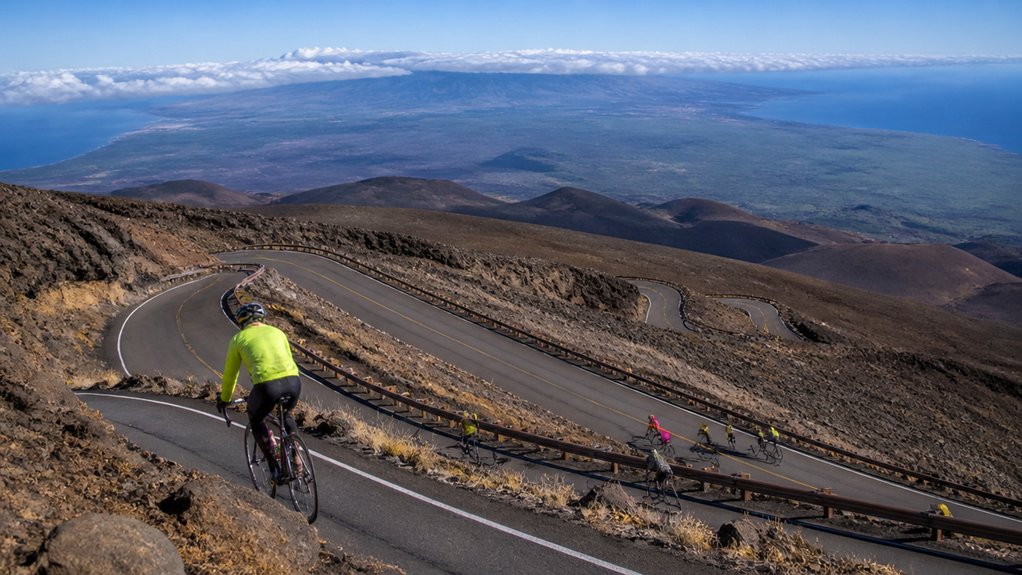
You don’t drop off Haleakala like a cliff. You roll into a long, steady descent that averages about 5.4 percent over roughly 35 miles. Much of it feels smooth and fast, with cool air, dry pavement, and the hiss of tires through open switchbacks. Then the mountain throws in sharper 7 to 11 percent ramps where your brakes suddenly earn their pay. The real question isn’t just how steep it gets. It’s where that steepness shows up.
Key Takeaways
- The Haleakalā downhill averages about a 5.4% grade over roughly 35 miles, so it feels like a long, steady descent.
- Most of the route ranges from 0–10%, with many extended sections sitting in the 5–7% range.
- The steepest sustained stretches are in the upper switchbacks above 8,000 feet, where grades often reach 6–7% and briefly higher.
- Some shorter ramps hit 10–11%, especially near the summit parking area and on parts of Olinda Road.
- It is not extremely technical, but sharp switchbacks, crosswinds, and sustained braking make the descent feel steeper than the average grade.
How Steep Is the Haleakala Downhill Ride?
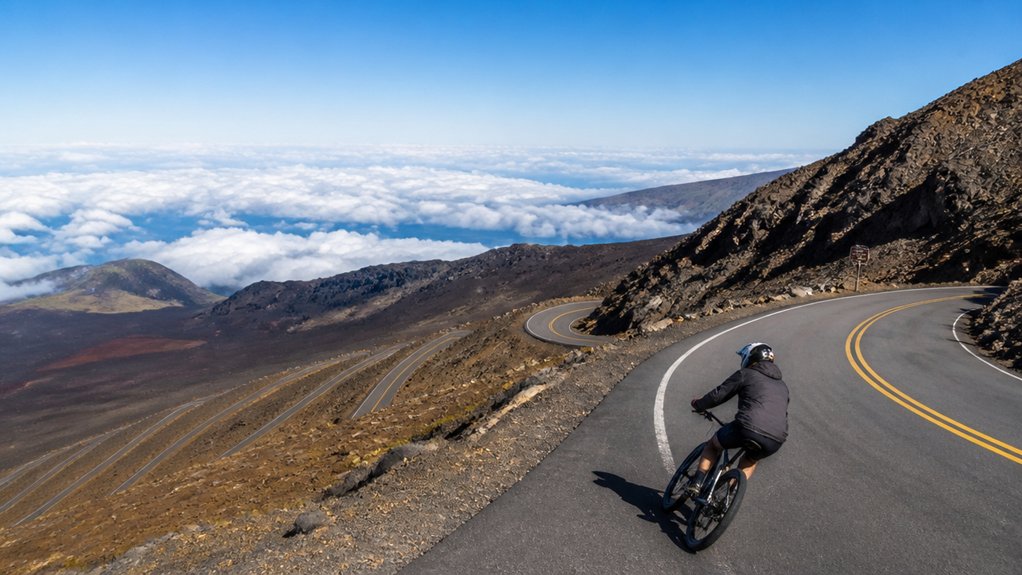
Start with the big picture: the Haleakala downhill ride averages about a 5.4% grade over roughly 35 miles, which means it feels more like a long, steady drop than a cartoonishly steep plunge. On a Haleakala Bike ride, you lose thousands of feet of elevation, but the road usually unfolds in manageable, rolling stretches.
You’ll notice the grade changes often. Many sections feel gentle at 0 to 5%, while much of the route sits in the 5 to 10% range that keeps your speed lively and your brakes honest. That’s also why riders often ask about tour safety, since the descent is long and speed can build even when the slope does not feel extreme. The pavement hums under your tires. Cool air brushes your sleeves. Long switchbacks let you watch the crater fade behind you and the coast sharpen ahead. It’s sustained, not savage. Think more smooth mountain glide, less white-knuckle cliff dive for most riders.
Where Does the Haleakala Downhill Get Steepest?
Look for the route’s sharpest bite in the upper mountain and again near the summit end, where the road quits being merely brisk and starts asking for real brake control. On Haleakala, the upper switchbacks from about 8,000 to 9,300 feet hold the most consistently steep stretches. In the last five miles, you’ll meet repeated 5 to 8 percent grade, with sharper ramps tucked into the bends.
Another hotspot sits lower, in the second half of the first 22 switchbacks between roughly 5,840 feet and the park gate. There, sections rise above 7 percent, and short pitches on Olinda Road touch about 11 percent. Near the summit parking area, the final approach kicks up again to around 10 to 11 percent, a last little warning from the mountain itself. Riders on the Haleakala Downhill bike tour usually notice these steep sections most when alternating between long straight descents and tighter turns that demand steadier braking.
What Does the Haleakala Downhill Feel Like?
Usually, the Haleakala downhill feels less like a white-knuckle plunge and more like a long, flowing coast above the clouds. You roll from cool, thin air into a steady downhill ride that seems to go on forever. The grades feel friendly, not punishing, so you can relax into sweeping turns and let the bike hum.
On a Haleakalā downhill bike tour, the speed often feels shaped by wind and temperature as much as slope. Higher up, the air bites your cheeks and crosswinds keep you alert. Lower down, Upcountry Maui opens around you with ranch land, eucalyptus, and big island views. The pavement usually feels smooth and predictable, with wide shoulders and clear sightlines. You get a scenic glide, not a technical test, though your hands will know you’ve been descending. A typical bike tour itinerary helps set expectations for how the downhill unfolds step by step.
Which Parts of the Descent Need the Most Braking?
Although much of the Haleakalā descent feels like a smooth, easy coast, a few sections will make your brake levers earn their keep. The first big test comes near the summit parking lot, where a short 10 to 11 percent pitch is the steepest sustained section and calls for firm, steady braking. To avoid torch your hands on these upper slopes, use controlled, steady braking instead of gripping the levers continuously. You’ll also work hardest in the upper switchback zone above 8,000 feet. Through those eight turns, grades often top 6 to 7 percent, and some stretches approach the steepest continuous mile on the route. Tight corners mean you can’t just let it run. Lower down, the second half of the first 22 hairpins gets your attention too. It averages just over 7 percent, with sharp bends and short drops that make your hands remember who’s boss.
Still comparing How Steep Is The Haleakala Downhill Bike Tour?
Ask for tour ideas, hotel suggestions, or a simple trip plan that combines both.
Trip Helper
How Do Wind and Weather Affect the Ride?
You’ll feel Haleakala’s weather change fast, with warm lowlands giving way to summit air that can feel winter-cold, so you’ll want layers, gloves, and a windproof shell before you roll. As you descend, easterly winds can push at your front wheel from the side or straight ahead, and clouds or rain can turn the upper slopes cold, slick, and a little moody. If fog slides in and visibility shrinks, you’ll notice how quickly this beautiful ride asks for calm hands, sharp eyes, and a healthy respect for the mountain. Along with the changing weather, traffic conditions can also affect how relaxed or demanding the ride feels on Haleakala’s winding roads.
Summit Cold And Layers
Because Haleakala starts in the clouds and above them, the summit can feel shockingly cold even on a bright Maui morning. If you reach the summit early, expect near-freezing air, especially in clouds or fog. Daytime can still feel raw, and the higher you go, the stronger the winds seem.
Dress for the ride before you leave the visitor center around mile 25.3. Bring layers you can actually use: a base layer, a warm midlayer, and a windproof or rain shell. Add gloves and something for your legs too. For cold summit tips, wear closed-toe shoes and avoid light clothing that leaves too much skin exposed. Clouds can roll in fast, dim the views, and turn a sunny stretch into drizzle or freezing mist. That long descent steals heat quickly, so underdressing isn’t brave. It’s just miserable. Above that point, water and restroom stops thin out, so gear up early.
Crosswinds On Descents
Cold is only half the story on Haleakalā. On the downhill from Haleakala National Park, easterly winds can shove at your bike, especially if you’re heading south toward Paia. Higher up, above about 7,000 feet, gusts can jump hard and make braking feel busier than expected.
- Expect stronger headwinds and crosswinds with elevation.
- Watch exposed switchbacks between 7,000 and 9,500 feet.
- Wear windproof layers and secure anything loose.
- Start early if you can. Winds are often lighter.
You’ll notice the rough hiss of wind in your helmet before you see what it’s doing. On open upper slopes, gusts can hit 40 to 50 mph. That means steadier hands, better brakes, and no dangling jacket straps doing interpretive dance. The rough hiss in your helmet is often the first clue that a crosswind is building across the open upper slopes. Conditions can shift fast. Ride ready.
Clouds, Rain, Visibility
What catches riders off guard fastest on Haleakalā? The weather flips quickly. You can start in warm sun, then ride into clouds, mist, and sharp easterly wind above 7,000 feet. In the cloud zone, visibility can collapse to near zero, especially mid-mountain. Add rain or freezing drizzle and the pavement turns slick fast. With summit temperatures often between 31 and 55°F, wind chill bites hard, so waterproof layers matter. If your ride begins before dawn, sunrise reservations can also affect how early you reach the upper mountain.
| Zone | What changes | What you do |
|---|---|---|
| Sea level | Warm sun | Start light |
| 3,000–8,000 ft | Clouds, fog | Slow down |
| Above cloud layer | Strong crosswinds | Grip bars |
| Summit approach | Poor visibility | Use lights |
| Wet sections | Rain, slick road | Brake early |
Check forecasts, start early, and expect microclimates. Haleakalā likes surprises.
Is the Haleakala Downhill Ride Hard or Technical?
You won’t work all that hard on Haleakala’s downhill since the route is mostly a smooth coast with only light pedaling, but you do need steady hands and confidence on the brakes. The road feels wide and flowing, with long sweeping turns instead of tricky hairpins, yet speed, crosswinds, and chilly air can make those open mountain sections feel serious fast. If you’re comfortable on a bike and pay attention to weather, layers, and basic safety rules, you’ll likely find the ride more exhilarating than technical. Most Haleakala bike tours from Paia also include a guided shuttle upcountry before the descent, which helps riders save energy for the long ride down.
Physical Effort Level
Although the Haleakala downhill ride looks dramatic from the summit road, it usually isn’t hard in a technical sense. Your downhill ride begins near 6,500 ft after a shuttle, so you skip the brutal climb and save plenty of energy. You’ll coast for long stretches, but the effort isn’t zero.
- You brake and steer for miles
- Wind and cold can drain you
- Traffic keeps you mentally switched on
- Basic fitness still matters
That means you won’t grind uphill, but you will stay engaged. Smooth pavement and wide shoulders help, yet fast curves, crosswinds, and changing temperatures can wear you down. Good bike handling makes the day feel relaxed, not tense. Some travelers choose a guided van tour instead if they want the Haleakala experience without the physical demands of the ride. Tour rules also hint at the effort level. You need enough strength, focus, and stamina to control the bike safely all the way down.
Bike Handling Skills
From a bike-handling standpoint, the Haleakala downhill ride is more demanding than technical. You won’t face rocky singletrack or tricky obstacles. Instead, you need calm control for a very long descent, with smooth sweeps that invite speed and long minutes of focus.
The real test is braking, line choice, and staying relaxed through the many switchbacks. The first set of hairpins feels sharper and steeper, so confident modulation matters. Near the summit, strong crosswinds can shove at your front wheel and keep you honest. Because the tour distance is long, pacing your grip strength and attention matters almost as much as your cornering skills. If cold mist or wet pavement shows up, cornering takes more patience and a lighter touch. You should feel comfortable checking your gear, managing hand fatigue, and reading the road while descending for mile after mile. Think steady, not flashy.
Road And Safety Conditions
Usually, the road itself isn’t the technical part. Haleakalā Highway stays smooth and broad, so your downhill bike or road bike won’t fight broken pavement. The challenge comes from speed, weather, and exposure. You’ll coast for miles on a roughly 5.4% average grade, with a few summit pitches feeling much steeper.
- Wide shoulders help, but you still need steady braking.
- Cold air bites early, so gloves and layers matter.
- Crosswind gets stronger higher up and can shove your front wheel.
- Wet clouds can roll in fast and dull visibility.
A few sections touch about 7.8% for a mile, and one quarter-mile nears 11%, so you’ll notice the slope. Check your brakes before starting. Leave early for lighter traffic, clearer views, and fewer weather surprises. Your fingers will thank you later. Before booking, review the age, height, experience requirements, since the route’s speed and changing conditions can be too demanding for some riders.
Who Is the Haleakala Downhill Ride Best For?
Who enjoys the Haleakala downhill ride most? You will if you’re comfortable on a road bike for a long downhill and can use hand brakes with control through curves. You don’t need to be a professional cyclist. You do need calm focus when the wind pushes across open slopes. The ride suits a wide range of fitness levels because it’s mostly self-paced and gravity does the heavy lifting.
You’ll also like it if scenic, low-effort travel sounds ideal. A van shuttle handles the climb, then you roll past ranch land, eucalyptus, and Upcountry towns at your own pace. Dress for cold air at 6,500 to 10,000 feet. Layers matter. Reviewing beginner downhill tips before Haleakala can also help first-time riders feel more prepared for the long descent. If high speeds, crosswinds, or steep descents make you uneasy, this probably isn’t your ride. Tandems, riders under 15, and riders over 300 pounds can’t join.
Frequently Asked Questions
How Long Does the Haleakala Downhill Bike Tour Usually Take?
You can expect the Haleakala downhill bike tour’s estimated duration to be about 1–2 hours riding, though start times, rest stops, and your pace can stretch it longer; most shuttle-based tours finish by early afternoon.
What Should I Wear for the Temperature Changes on Haleakala?
You should wear layered clothing: a moisture wickingbase, breathable mid-layer, windproof jacket, and insulating layer. Add full-finger gloves, sunglasses, sunscreen, and optional leg warmers, so you’ll stay comfortable from freezing summit air to warm sea level.
Are E-Bikes Allowed on the Haleakala Downhill Tour?
Yes, you can sometimes use e-bikes, but many Haleakalā tour operators don’t allow them. You should check e bike restrictions, battery regulations, and motor classifications with your operator, rental shop, and park staff before booking.
Can Beginners Join a Guided Haleakala Downhill Bike Ride?
Yes, you can join as a beginner. Guides provide beginner tips, confidence building support, and pacing strategies. You’ll start high after a shuttle, ride mostly downhill, get safety gear, and receive help with brakes and fit.
What Safety Gear Is Typically Included With the Bike Tour?
You’ll typically get helmet rental, protective gloves, and a reflective vest. Many tours also include a wind/rain jacket, small backpack or pannier, plus a safety briefing and fitted bike check, so you’re prepared before descending.
Conclusion
So is the theory true that Haleakala is one long easy coast? Not quite. You get miles of smooth, fast descent and huge views over lava slopes, eucalyptus, and cloud banks. Then the road tightens, the grade kicks up, and your brakes start singing on the sharper ramps. You feel more flow than fear, but you stay alert. If you like scenic rides with a few spicy turns, this tour delivers. Bring layers. The summit air bites early.