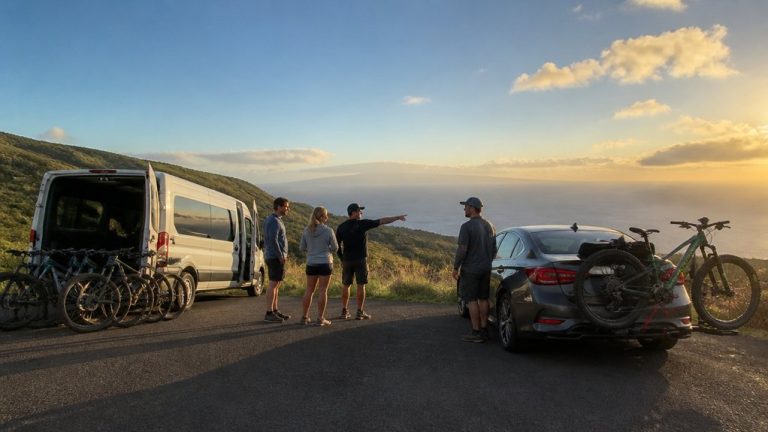
You start high on Haleakala’s slopes, where the air feels cool and thin and the road drops toward the sea in a long ribbon of switchbacks. You’ll pass ranchland, eucalyptus groves, and wide ocean views, with a guide van close by or a self-guided plan if you want more freedom. It sounds simple, but the best tour depends on your comfort, timing, and taste for speed.
Key Takeaways
- Haleakalā downhill bike tours start near 6,500 feet and descend shared public roads to Paia with sweeping volcanic, valley, and ocean views.
- Guided tours include certified guides and narration, while self-guided tours offer flexible pacing, van support, roadside assistance, and optional stops in Kula or Makawao.
- Riders should be intermediate to expert cyclists, comfortable braking on 5–6% grades, riding in traffic, and reaching speeds around 25–30 mph.
- Safety rules usually require riders to be at least 15, about 4’11” tall, under 280–300 pounds, and under 18 with an adult.
- Most tours check in at Paia around 8:45 AM, provide helmets and wind/rain gear, and require bike returns by 1:30 PM.
Which Haleakala Bike Tour Fits You?
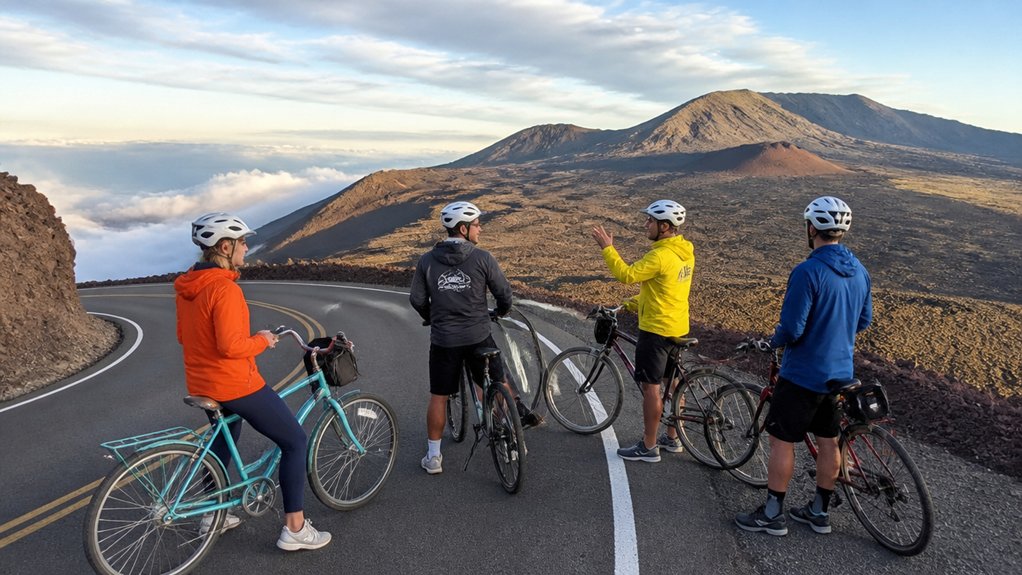
Which Haleakalā bike tour fits you best? Your pick depends on start time (morning vs mid-morning), skill level (beginner vs intermediate), and how much structure you want. A guided sunrise tour gives you an early summit stop, narration, and certified guides before the Haleakalā downhill begins from about 6,500 feet.
A self-guided bike tour works if you want freedom, plus van support and roadside assistance. You’ll still get helmet and rain/wind gear, then choose your own pace through Kula and Makawao stops for snacks and photos. Check the safety requirements (age/height/weight) before booking. Riders under 18 need an adult, minimum height is about 4’11”, and limits can run 280 to 300 pounds. Expect average descent grade and speeds around 5 to 6 percent and 25 to 30 mph. Many travelers find a Maui bike tour worth it for the scenic ride, flexible pacing, and memorable descent.
What Does the Ride Feel Like?
Once you’ve picked the tour style that suits you, the real question is how the ride actually feels once the wheels start rolling. On a Haleakala bike tour, you coast from crisp mountain air near Haleakala National Park into warm upcountry Maui sunlight, with a downhill bike tour that feels almost gravity-powered.
- You roll through 29 switchbacks, hear tires hum, and catch huge volcanic and ocean views.
- You set your own rhythm on a self-paced bike, then pause in Kula or Makawao for snacks or photos.
- You feather disc brakes on shared roads, while van support and roadside assistance stay nearby.
- On longer stretches, use braking tips like light, intermittent pressure to help protect your hands from fatigue on the descent.
The upper miles feel cool and ranchy. Then the Final Descent turns warmer, faster, and breezier. You’ll likely grin a lot, maybe with helmet hair.
What Are the Safety Requirements?
Start with the nonnegotiables, because Haleakala’s downhill beauty comes with real road rules. The Minimum age is 15, and riders under 18 need an adult with them the whole time. You also need the minimum height of 4’11” to fit the bikes, and operators list a maximum weight around 280 to 300 pounds. These height and weight limits help ensure every rider can be properly fitted to the bike and handle the descent safely.
This ride is for intermediate-to-expert cyclists, not casual cruisers. You should feel steady in traffic, confident with disc brakes, and calm at 25 to 30 mph. Since you’ll share the road, anyone uneasy with speed or cars should skip it. Pregnant riders prohibited means exactly that. Before rolling out, you’ll attend a safety briefing, wear provided helmets and gloves, add wind/rain jackets if needed, and know roadside assistance/van pickup is available.
Where Does the Haleakala Route Go?
From the moment you roll out, the Haleakalā route drops from a 6,500-foot staging area just outside the national park entrance and keeps trending downhill toward Maui’s North Shore. Your Haleakala Downhill Bike begins at the staging area near Haleakalā National Park, then follows a nearly continuous descent on shared public roads.
From a 6,500-foot staging area near Haleakalā, the ride rolls steadily downhill on public roads toward Maui’s North Shore.
- Upper slopes bring about 29 switchbacks, eucalyptus scent, ranchland views, and a steady downhill grade around 5 to 6%.
- You’re usually shuttled through Kula to skip a county-restricted highway section, then you keep descending into Makawao.
- The route finishes in Paia near the shoreline, with big mountain-to-sea views, churches, farms, homes, valleys, and ocean glimpses.
You’ll notice changing textures fast. Cool volcanic slopes give way to warmer streets, and cars remind you this isn’t a theme park ride. If you’re wondering about the classic pre-dawn version, the sunrise bike tour is no longer generally offered in the way many visitors remember.
Still comparing Haleakala Downhill Bike Tour: Complete Guide?
Ask for tour ideas, hotel suggestions, or a simple trip plan that combines both.
Trip Helper
How Do Timing and Booking Work?
If you like your adventures organized but not overly scripted, the timing here is pretty easy to live with. Your Check-in time at the Paia shop is usually 8:45 AM, though doors open at 8:30. The Paia shop is one of the main Maui bike tour meeting locations, so it helps to arrive a little early and ready to check in. After gear fitting, you’ll board a narrated van drive to 6,500 ft, then start your self-guided coast.
| Step | What happens | Good to know |
|---|---|---|
| Morning | hotel pick-up or cruise-ship pickup | West Side usually excluded |
| Before ride | final cancellation by 7:30 AM | Weather calls the shots |
| After ride | return bikes by 1:30 PM | Most riders finish earlier |
Booking stays flexible too. A 48-hour change policy helps if plans wobble, and refunds apply if no new date works. Mondays and Tuesdays run busiest, while weekends feel quieter. Tip around 18% if service shines.
Frequently Asked Questions
Can I Bring a Camera or Gopro on the Bike Tour?
Yes, you can bring a camera or GoPro; follow camera etiquette, use secure mounting options, apply stabilization techniques, add weather protection, check insurance considerations, respect drone restrictions, pack storage solutions, plan battery management, lighting options, accessibility concerns.
Are There Age Limits for Children on Haleakala Bike Tours?
Yes, most tours set a minimum age; like training wheels, rules steady kids’ rides. You’ll need guardian supervision, parent consent, youth waivers, age verification, child helmet, child sized bikes; lap seating, stroller restrictions apply. Ask about family discounts.
What Should I Wear for the Chilly Summit Conditions?
Wear layering essentials: thermal base layers, moisture wicking shirts, windproof outerwear, insulated gloves, thermal socks, sturdy footwear, and sun protective beanie options. Add reflective accessories, so you’ll stay warm, visible, and comfortable in chilly summit conditions.
Are Bathroom Breaks Available During the Haleakala Downhill Ride?
Yes, you’ll get bathroom breaks through restroom logistics like scheduled stops and portable facilities. You can expect emergency relief, privacy options, accessibility accommodations, gender specific stalls, sanitation supplies, wait time updates, and hydration breaks during rides.
Can Cruise Ship Passengers Book Haleakala Bike Tour Pickup?
Yes, you can, but it’s not always a slam dunk. You should confirm cruise transfers, port logistics, ship arrival times, passenger disembarkation, shore excursion coordination, group pickup, terminal shuttle, boarding passes, luggage handling, and customs timing first.
Conclusion
Maybe the real Haleakala theory is this: the ride feels less like a tour and more like borrowing Maui’s back roads for a morning. You start in cool thin air near 6,500 feet. Then tires hum through 29 switchbacks, eucalyptus drifts past, and the ocean slowly brightens ahead. If that sounds a little too cinematic, good. Book early, show up on time, listen to the safety briefing, and see if the mountain-to-sea legend holds up for you.