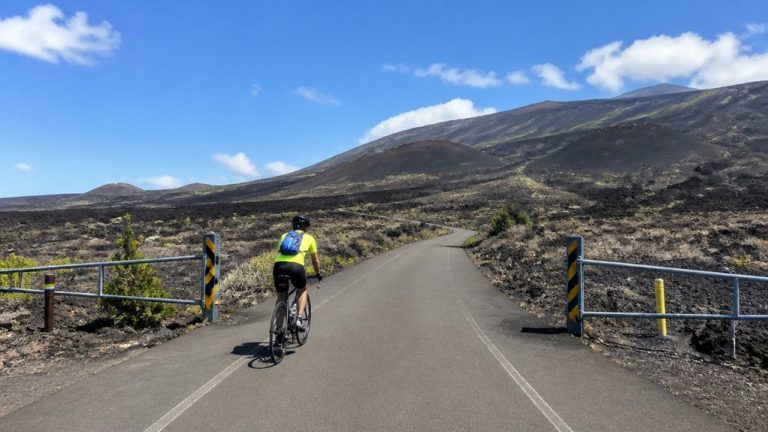
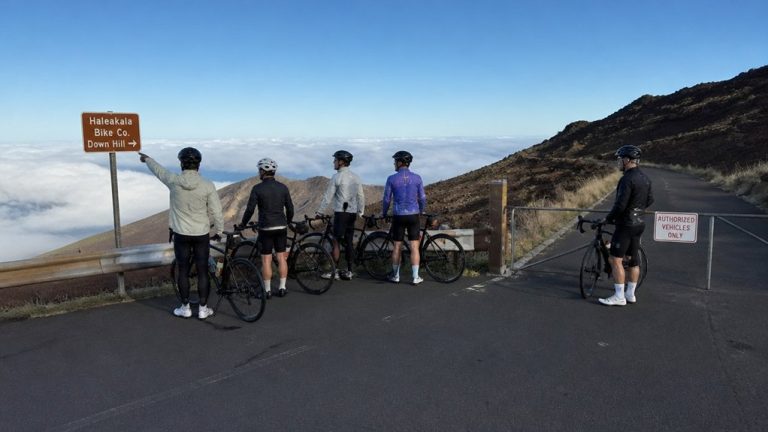
You might not know that on Maui bike tours, your helmet isn’t just a downhill accessory. You wear an approved lid from check-in to the last rolling mile, even when the road feels easy and the trade winds sound soft in your ears. Most riders get a checked full-face Bell helmet, while open-face options usually need prior approval. Fit matters too, and guides take that seriously. What happens if you decide yours can come off?
Key Takeaways
- Helmets are required for every Maui bike tour rider from check-in through the final mile, with no riding allowed without one.
- Juveniles under 16 must wear helmets under Maui County rules, and all helmet policies are reviewed during the pre-ride safety briefing.
- Most riders receive inspected full-face Bell helmets, while open-face helmets are allowed only for advanced riders with prior approval.
- A proper fit means the helmet sits low on the forehead, straps form a V under the ears, and movement is minimal.
- Refusing a helmet or removing it during the ride can end your tour and may cause loss of fare or roadside pickup.
Are Helmets Required on Maui Bike Tours?
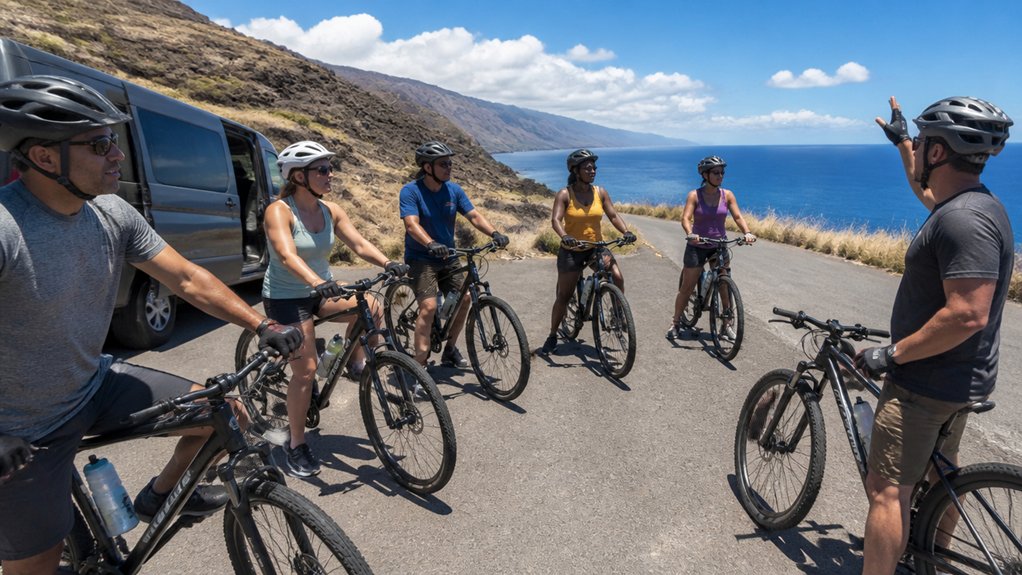
Yes, helmets are required on Maui bike tours, and the rule isn’t casual. On these rides, helmets are mandatory for every rider, and guides enforce that rule from check-in to the last rolling mile. You’ll hear it clearly during the safety briefing, because preventing head injuries matters on fast downhill roads.
That focus also lines up with Maui County rules, especially for juveniles under 16, who must wear helmets. Your helmet fit needs to be snug across your forehead so it stays put in wind and motion. Modern standards matter too. You may hear riders ask about full-face helmets or open-face helmets, but the big point is simple. On Maui bike tours, you don’t pedal without one. Think of it as your smallest piece of essential gear. For anyone wondering about Haleakala bike tour safety, strict helmet use is one of the key reasons these rides are managed more safely.
What Helmet Do Maui Bike Tours Provide?
Once you know a helmet is required, the next question is what kind you’ll actually wear on the ride. With Maui Bike Tours, you usually get full-face helmets, specifically Bell helmets, for downhill riding. They’re included with your gear, and certified mechanics inspect them daily. That matters when the road starts humming beneath your tires.
| Type | Who gets it | Notes |
|---|---|---|
| Bell helmets | Most riders | Full-face protection |
| open-face helmets | Advanced riders | Team approval required |
Mandatory helmet use applies on downhill sections. Maui Bike Tours uses top-tier gear, and the helmets follow recommended Snell standards or ANSI standards. You’ll also get basic helmet fitting at check-in so the helmet sits snugly over your forehead. Think secure, not space helmet. For first-time riders, full-face protection can add confidence and extra coverage during Maui’s fast downhill stretches.
How Should Your Helmet Fit for the Ride?
Check your fit before the wheels start singing on the pavement. Your helmet fit should feel secure and simple. Keep a snug forehead with the shell sitting low, about one to two finger-widths above your eyebrows. Good helmet positioning covers your brow and never tips back like a lazy sunhat.
Tighten the chin strap until it stays firm when you open your mouth. The straps should form a neat V under each ear. Test helmet movement by rocking it front to back and side to side. You want no more than one or two fingers of shift. For Maui descents, a full-face helmet is part of mandatory wear. An open-face helmet works only for very experienced riders with approval. Choose safety standards like Snell ANSI every ride, always. At the summit, pair your helmet with cold-weather layers since Haleakala conditions can be much colder than riders expect.
What Happens If You Refuse or Remove a Helmet?
A good fit only matters if the helmet stays on for the whole ride. On Maui bike tours, a helmet is mandatory for every downhill rider, and staff won’t let you start without a provided full-face or approved option. If you refuse one at check-in, expect tour denial for the descent. You may lose the fare or get a rain check, depending on company policy.
If you remove your helmet once the ride begins, guides can end your trip on the spot. That means waiting by the roadside for van pickup or heading back to the shop instead of coasting through cool morning air and volcanic views. Safety drives the rule, along with local regulations. Unless you’ve earned prior approval at check-in, don’t count on an open-face helmet. These safety policies matter even more on routes with where to ride restrictions during Haleakala bike tours.
What Helmet Rules Must Riders Follow?
Because the descent starts high on Haleakalā and picks up speed fast, helmet rules on Maui bike tours stay simple and firm. You must wear helmets at all times. For downhill riding, full-face Bell models are mandatory. An open-face option exists only if you’re a very experienced rider and the Bike Maui team approves it at check-in.
Riders should also confirm they meet age and height requirements before tour day, since those rules go hand in hand with the safety gear policy.
| Rule | What you do |
|---|---|
| Standard | Wear the provided Bell helmet |
| Exception | Use open-face only with approval |
| Fit | Make sure helmets fit snugly |
| Timing | Follow checks at briefing and tour |
Your helmet should fit snugly across your forehead and meet Snell or ANSI guidance. Juveniles under 16 must wear one by law. You’ll review every rule in the pre-ride safety briefing. It’s not glamorous, but it’s smart.
Frequently Asked Questions
Can I Bring and Use My Own Helmet on the Tour?
Yes, you can bring helmets and use your own if they meet approved standards, pass fit adjustment, and inspection. You should check visor compatibility, strap modification, age restrictions, insurance implications, storage options, weight consideration, ventilation performance.
Are Helmet Liners or Hygiene Caps Available for Riders?
Maybe, maybe not, you should call ahead, since disposable liners, fabric liners, antimicrobial caps, breathable liners, zippered liners, sweat wicking caps, silicone liners, adjustable liners, reusable caps, or moisture barrier liners aren’t guaranteed; you can bring your own.
How Are Helmets Cleaned Between Maui Bike Tours Rides?
You’ll find helmets cleaned between rides using sanitization protocols, approved disinfectant types, and ventilation drying. Staff training supports an inspection checklist, helmet storage, cleaning frequency, UV C sterilization, detachable liners, and antimicrobial coatings when available.
Do Passengers on Support Vehicles Need to Wear Helmets?
No, you don’t need helmets in a support vehicle; like stowing umbrellas before rain, passenger safety follows seatbelts, not helmet policy. Crew exceptions, insurance implications, rental liability, local ordinances, age requirements, enforcement procedures, helmet storage, and ride signage apply.
What Should I Do if My Provided Helmet Feels Uncomfortable?
If your provided helmet feels uncomfortable, seek assistance to adjust fit, swap sizes, or try padding options. Check chin strap, vent alignment, and helmet rotation. Report pressure points, use quick release, and request helmet replacement.
Conclusion
On Maui bike tours, your helmet isn’t just gear. It’s your ticket to keep rolling past lava rock, cool dawn air, and the hush before the coast wakes up. Since about 90 percent of impact protection comes from a proper fit, that snug band across your forehead matters. Keep the chin strap secure from check-in to the final mile. Do that, and you can focus on the view, not on becoming the day’s cautionary tale.