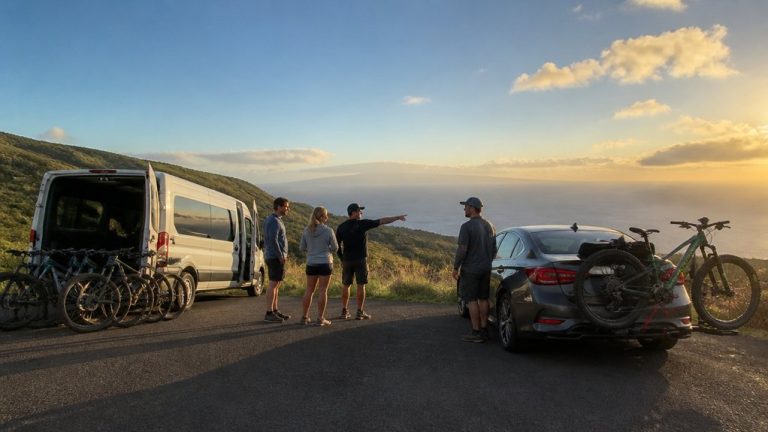
You check in at the Paia shop, pull on a helmet and wind jacket, and ride a shuttle up Haleakalā while the air turns thin and cool. At the staging area, you snap a few photos, hear the safety talk, and test your brakes before the road tips downhill. Then you roll into switchbacks, open ranchland, and bright coastal views, with the wind in your ears and 26 miles ahead. The real question is which kind of tour suits you best.
Key Takeaways
- You check in at the Paia shop around 8:30–8:45 AM, sign waivers, drop luggage, and get fitted with bikes and safety gear.
- A narrated van shuttle takes riders uphill for about 30–45 minutes to a staging area near 6,500 feet above sea level.
- Guides give a safety briefing, adjust bike fit, explain the route, and review brake control, road sharing, weather, and pickup procedures.
- The ride is about 26 mostly downhill miles on public roads, with switchbacks, changing weather, scenic overlooks, and Upcountry town stops.
- Support includes maps, phone assistance, and van pickup if weather, fatigue, nerves, or bike issues prevent finishing the ride.
What Is a Haleakalā Bike Tour Like?

What does a Haleakalā bike tour actually feel like? You check in around 8:30, then roll uphill by van from Paia as a guide shares island stories. About 45 minutes later, cool thin air hits your face at the staging area. Then the ride begins.
A Haleakala bike tour drops you from high country toward sea level on a route that’s about 98 percent downhill. You lean into long grades, hear your tires hum, and sweep through the famous upper switchbacks with big sky all around. Speeds can reach 25 to 30 miles per hour, so the jacket, gloves, helmet, and sturdy brakes matter. Along the way, you pass ranchland and small Upcountry towns before ending back near Paia by early afternoon, grinning and a little windblown from the whole thing. Many riders say the upper switchbacks are one of the most memorable parts of the descent.
Which Maui Bike Tour Type Fits You?
Narrowing it down starts with how you like to ride. Maui bike tours range from guided Haleakala sunrise runs to self-guided HALEAKALA DOWNHILL adventures. If you’re a starter, pick a guided tour or private day bike tour with a Van Tour, storytelling, stops, and extra safety. If you want freedom, choose a self-guided downhill bike tour with full gear, roadside support, and a staging start before rolling scenic roads to Paia. A typical step-by-step guide helps riders know exactly what happens from summit-area staging to the downhill ride. Want flexibility? A rental works.
| Type | Best for | Includes |
|---|---|---|
| guided | sunrise fans | safety, storytelling |
| self-guided | confident riders | full gear, support |
| private | comfort seekers | custom pacing |
| rental | explore-your-way | flexible hours |
Some operators offer CRUISE SHIP PICK-UP, too, so you can ride a bike without extra planning stress.
Where the Ride Starts on Haleakalā
You’ll usually check in at the Paia shop at 8:30 a.m., then get your safety briefing and bike fit before the van heads up the mountain. From there, your guide drives about 45 minutes to the 6,500-foot staging area just outside Haleakalā National Park, where cool air, big views, and lined-up bikes make the real start feel close. That shuttle also skips the county-restricted highway sections, so when you roll out, you’re already set for the long downhill run toward Paia. For guests coming from central Maui, Kahului pickup is often part of the bike tour schedule as well.
Summit Staging Elevation
By the time the van climbs above the clouds, your ride usually begins not at Haleakalā’s 10,000-foot summit but at a 6,500-foot staging area just outside the national park entrance. That starting point feels high, cool, and a little wild. You’ll reach it after a narrated 30 to 45 minute shuttle from Paia, with chances to stretch, snap photos, and watch the landscape shift. Riders coming from South Maui often compare Kihei transport options before joining the Paia shuttle.
- Guides dial in your bike fit, hand out helmets and jackets, and cover safety before you roll.
- The air feels chilly and often windy, so you’ll want warm layers even if the beach was balmy.
- If you visited the summit for sunrise, this lower launch still delivers big views without the thin-air drama.
It’s practical, scenic, and just adventurous enough to quicken your pulse a bit.
National Park Boundary
That 6,500-foot staging area also marks an important line on the mountain. You start outside Haleakalā National Park, near the boundary on Haleakala volcano, at the highest legal point for many self-guided downhill rides. If you booked a sunrise or summit tour, the bike part still doesn’t begin up top. A vehicle brings you down first.
That detail shapes the whole route. You roll out on county roads below the park entrance, not inside the park itself, so the downhill segment doesn’t need National Park permits. On the way up, you usually get a narrated van ride with stories about the landscape and the park. If wind or rain turns feisty near the boundary, some operators shift your start lower. It’s practical, safer, and a little warmer too. From this boundary-area launch, the Haleakalā bike tour typically covers a long downhill route rather than a short ride inside the park.
Paia Check-In Process
Things kick off in Pāʻia, where the shop opens check-in at 8:30 AM and expects everyone signed in and at the safety briefing by 8:45.
At the Paia shop, you’ll fit gear, sign waivers, and hand over luggage while guides stack bikes in the van. Then you roll uphill by van on a narrated 45-minute drive to the 6,500-foot staging area, the highest legal start for self-guided rides.
- You get a final bike fit, helmet, jacket, and gloves.
- Guides review the route, safety rules, and pickup options.
- You receive a map, often with a QR code, plus roadside assistance info.
Before you launch, guides snap photos and point out turnaround spots. If needed, the shop can arrange hotel or cruise-ship pickup, though some West Side areas aren’t included. The Paia shop serves as one of the main meeting locations for Maui bike tour check-in before the Haleakalā ride begins.
How the Van Ride Up Works
You’ll check in at the Paia shop around 8:45 AM, get your gear fitted, and hear the safety briefing before the van pulls out. As you climb for about 45 minutes, your guide keeps the ride lively with stories about Maui’s history, culture, and volcanic landscape while the van skips the county-restricted highway sections through Kula. At the 6,500-foot staging area, staff unload the bikes, fine-tune your fit, and send you off with final checks before the real fun begins. Most Haleakala bike tours begin in the morning, with check-in and departure times designed to get riders on the road early.
Check-In And Gear
Start the morning at the Paia shop around 8:30 to 8:45 AM, where the tour shifts from beach town ease to bike-day logistics in a smooth, well-practiced flow. You check in, sign waivers, and get fitted with the right gear before anyone heads uphill. Guides hand out helmets, gloves, jackets, pants, backpacks, and route maps with a handy QR live-map.
- You watch bikes get loaded and strapped into the van while guides make quick fit tweaks and check brakes and tires.
- You grab bottled water or a snack, hear the safety briefing, and settle into the day.
- You know support stays with you later too, with roadside help, shuttle bypasses through Kula, and pickup if plans change.
It feels organized, calm, and reassuring. For many riders, that early structure is part of what makes a Maui bike tour feel worth the ride.
Narrated Climb Up
Once everyone’s fitted and briefed, the morning shifts into a narrated climb that feels part shuttle, part mini island lesson. You board the narrated van after check-in at the Paia shop around 8:45 AM, and your guides take over from there. As you head upcountry for about 45 minutes, they share Maui history, local culture, and the volcanic story written into the slopes outside your window.
Before the ride begins, guides also review age, height, experience requirements so everyone knows who can safely join the Haleakalā bike tour. The route matters too. The van bypasses a county-required stretch of highway by climbing through Kula, which lets you start from the highest legal point without entering Haleakalā National Park. You’ll notice cooler air, changing light, and the road curling upward. If weather turns or safety looks shaky, guides make the call early, usually by 7:30 AM. That’s reassurance, not buzzkill, before wheels ever roll.
Staging Area Arrival
By the time the van reaches the 6,500-foot staging area, the morning feels organized and a little cinematic. You’ve already checked in at the Paia shop by 8:45, signed the waiver, and dialed in your gear before the 45-minute Ride uphill. Along the way, guides narrate Maui’s history, culture, and geology, so the shuttle feels like a moving lookout with stories.
- You step out into cool air while guides fine-tune your bike fit.
- You get your helmet, gloves, jacket, backpack, and route map with a QR live-map.
- You pause for photos, then notice what the shuttle skipped: the county-required highway stretches through Kula.
That bypass matters. You start at the highest legal point outside Haleakalā National Park, with full van support and easy pickup if your legs vote no. This setup reflects the highest legal point available for Maui bike tours starting from Paia.
What Happens at the Safety Briefing

What exactly happens at the safety briefing? At check-in, usually around 8:45 a.m. after the Paia shop opens at 8:30, you sign the waiver and hear the route plan. Guides explain the ride begins at 6,500 feet outside Haleakalā National Park and drops mostly downhill, with an easy 5 to 6 percent grade. Some briefings also clarify the difference between a guided van tour and a downhill bike tour so riders choose the experience that fits their comfort level.
| You hear | Why it matters |
|---|---|
| Start point | Sets expectations |
| 98% downhill | Sounds fun, stays real |
| 25 to 30 mph | Reminds you to focus |
| 29 switchbacks | Sharpens attention |
| Van support | Adds reassurance |
During the safety briefing, you learn brake control, shared-road awareness, and help procedures if weather shifts or you need pickup. You also review route tracking by QR code, policy cutoffs, and the usual tipping norm.
What Bike Gear You Get
You’ll get a sturdy mountain bike, often a Redline Monocog 29-inch or something similar, with disc brakes that feel reassuring when the road tips steeply downhill. You’re also set up with the essentials for summit weather, including a helmet, gloves, and often a wind or rain jacket and pants, so the cold air doesn’t boss you around. On top of that, your booking usually includes a backpack, a bike lock, a route map, and basic repair tools, while guides handle fit checks and support so you can focus on the ride. It’s also smart to bring sun protection and water, since conditions can shift quickly during a Haleakala downhill ride.
Included Riding Equipment
Gear-wise, Maui bike tours set you up with more than just a bike and a push down the volcano. You get a self-paced bike setup that feels dialed in before the first coast begins. Guides adjust fit, check basics, and handle loading, unloading, and sanitizing, so you can focus on the road and the views. Tour operators also explain how long tours run before departure, so riders know what to expect from start to finish.
- A mountain bike with disc brakes, often a 29-inch Redline Monocog or similar, plus a full-face helmet.
- Gloves, a backpack, a bike lock, and a detailed route map with a QR code that shows your live position.
- Handy extras on some tours, like warm ponchos or cold water and granola bars for sunrise starts.
If anything goes off script, roadside help is available by phone during the ride too.
Safety And Weather Gear
Because Haleakalā can swing from chilly mist to bright sun in one ride, the tour sets you up with the practical gear that keeps the descent comfortable and controlled. You get a mountain bike with disc brakes, a full-face helmet, gloves, and wind and rain layers for comfortable riding. Maui bike tours follow helmet rules to help keep every rider protected throughout the descent. Everything is sanitized, checked, and fitted at the staging area.
| Gear | You feel | Why it matters |
|---|---|---|
| Helmet, gloves | steady | More confidence |
| Jacket, pants | cozy | Weather shifts |
| Map, van support | reassured | Help stays close |
You also receive a backpack, bike lock, and a route map with a QR live map. Guides handle bike fit and quick maintenance. If weather, nerves, or a flat tire interfere, phone support and the van can rescue your day.
Who Is This Ride Best For?
Who tends to love this ride most? You will if you’re an intermediate or expert cyclist who feels steady on a 26-mile mostly downhill route from 6,500 feet. This isn’t for beginners, rusty riders, or anyone wanting a lazy beach cruiser day.
- You enjoy a scenic, self-paced or guided bike experience, with crisp air, big views, narrated van transport, and photo stops in Kula, Makawao, and Paia.
- You meet the practical basics: age 15 or older, about 4’11” or taller, and within the posted bike weight limit.
- You ride confidently with disc or drum brakes, stay calm in shared traffic, and don’t mind altitude or winding mountain roads.
Some riders especially like having guided or self-guided choices so they can pick the tour style that matches their comfort level and experience. If that sounds like you, this tour can feel exciting, beautiful, and very rewarding. Seriously unforgettable.
How Steep and Fast the Descent Is

From about 6,500 feet up, you roll into a 26-mile descent that drops at an average 5 to 6 percent grade, so it feels steady and serious right from the start. You’ll often cruise at 25 to 30 mph, and some stretches push past that, with wind in your ears and your brakes getting plenty of attention. In the upper section, 29 switchbacks and tight turns keep you honest, especially when you’re sharing the road with cars and there’s little room to drift. Many riders say the Haleakala downhill feels thrilling because the long grade stays consistent for much of the route.
Average Downhill Grade
While the Haleakalā bike route feels like one long glide, it isn’t a wild plunge so much as a steady 26-mile descent that drops from about 6,500 feet to Paia at an average grade of roughly 5 to 6 percent. On your bike tour, you Ride the slopes of Haleakala through Maui’s majestic winding roads.
- You start below the National Park boundary, where tour guides and GUIDED TOURS maximize downhill miles and make sure restricted roads stay off your day tours.
- You’ll notice the road is about 98% downhill, so Take your time on a self guided bike ride or biking tour.
- Around 29 switchbacks, the air feels cooler, tires hum, and you might see the crater before Road To Hana stories and rich history fill the rest of your day tour.
Many riders ask about tour safety, and the route is generally considered manageable because the descent is steady rather than extremely steep.
Typical Descent Speeds
Often, the speed surprises people more than the grade. From the 6,500-foot start, your bike rolls roughly 26 miles toward Paia on a route that’s about 98 percent downhill. The average slope sits around 5 to 6 percent, but what you feel most is momentum building under your wheels.
You’ll often cruise at 25 to 30 mph, and some stretches can push past 30. On a typical bike tour with breakfast, riders can expect the descent to be part of a broader Haleakala sunrise experience. Up high, 29 switchbacks and sloping turns demand real brake control and steady hands. The road is shared with cars, and shoulders or bike lanes may disappear, so speed feels sharper than the numbers suggest. You hear wind rushing in your helmet and tires humming over pavement. That’s why guides give safety briefings and support. You’ll want solid downhill skills, comfort with disc brakes, and good judgment too.
What the Road Conditions Are Like
Set out on the Maui bike tour and you’ll find a road that feels fast, open, and surprisingly demanding in spots. Most tours start outside the park after a shuttle skips a restricted highway section through Kula. From the 6,500-foot staging area, you’ll mostly coast for 26 miles on a steady 5 to 6 percent grade.
- You share the road with cars, and shoulders or bike lanes often disappear, so you stay alert.
- The upper route packs 29 switchbacks, where clean lines and steady braking matter more than bravado.
- Pavement can feel smooth and fresh, then turn shoulderless with bits of debris, crosswinds, or even a cow cameo.
Cold air, wet patches, and gusts can sharpen the challenge, and operators will adjust or cancel when warnings make conditions unsafe. Choosing the best time of day can also shape what the ride feels like, from temperature and visibility to how exposed the road feels in changing weather.
What You’ll See on the Way Down
As you roll away from the 6,500-foot staging area, the view shifts fast from cool alpine air and crater vistas to wide-open looks over East Maui and the coast. Over roughly 26 miles, the scenery keeps changing as you drop toward sea level. You trace the famous upper 29 switchbacks through ranchland and rolling slopes, with occasional cattle grazing like they’re judging your cornering.
Soon the mountain backdrop gives way to Coastal vistas and long panoramic peeks at the shoreline. You pass through Kula, then Makawao, and finally Paia, watching the landscape turn from open country to town streets. Along the way, you notice hairpin turns, the hum of passing cars, and patches of pavement that keep the ride feeling real. It’s a moving postcard, just with helmets and brakes. While the classic Haleakala sunrise bike tour has changed over time, downhill Maui bike tours from the mountain are still very much happening.
Where Riders Usually Stop to Explore
The scenery may steal the spotlight on a Maui bike tour, but the stops give the ride its personality. You won’t just coast past Maui. You pause where the island invites a closer look, whether that’s sunrise hush, cowboy-country curves, or a surf town lunch.
- In Makawao, you usually stop for coffee, a restroom break, and a browse through Local galleries before rolling on.
- Along the route, scenic overlooks and the famous 29 switchbacks let you hop off, stretch, and snap photos of ranchland and big sky.
- Many tours pause at Haleakalā’s summit or a nearby viewpoint for sunrise. Later, you finish in Paia, where lunch, beachfront restaurants, and shops reward your effort.
Even the van shuttle can include narrated history, culture, and geology stops before the ride begins.
How a Self-Guided Maui Ride Works
First, you check in at the Paia shop for a safety briefing and a proper bike fit, with helmets, gloves, and weather gear handed over before anyone heads uphill.
Then you ride in a narrated van for about 45 minutes to the 6,500-foot staging area outside Haleakalā National Park. At the legal launch point, you roll out on your own and follow a detailed route map, plus a QR-linked live map on your phone. The ride trends about 98 percent downhill over 26 miles, with easy grades and cool air turning warmer as you descend. You pass eucalyptus, pastures, and pockets of Local flora while the road hums under your tires. County-required shuttle sections skip certain highway stretches, and you usually coast back into Paia by early afternoon.
What Support You Get During the Ride
Once you roll away from the 6,500-foot staging area, you’re still far from on your own. Guides have already dialed in your bike fit, reviewed braking, and handed you a route map with live tracking, so On route logistics feel clear instead of fussy. If something changes, you can call for help.
- You ride with a Redline Monocog 29-inch bike, disc brakes, a full-face helmet, gloves, and weather gear, so chilly air and mist feel manageable.
- A support van stays available for pickup, drop-off, or roadside fixes if your bike acts up or your legs suddenly negotiate a new deal.
- Guides keep an eye on conditions and share safety tips about speed and hand-brake use as you descend toward Paia.
That backup feels reassuring all day long.
When Tours Are Canceled for Weather
Usually, weather only stops the ride when guides decide conditions aren’t safe, and they typically make that call by 7:30 AM on tour day. That usually happens when National Weather Service warnings point to high winds or heavy rain. Many tours still roll in light showers, since guides hand out rain and wind gear.
If conditions get tricky, you might not lose the day. Guides can shift the start to a lower elevation, where the air feels calmer and the road dries faster. Sometimes they’ll swap the summit portion for a van-only option instead of canceling outright. If the ride is canceled and no other date works, you get a full refund under the company’s Cancellation policy. Just remember, the 48-hour change policy still applies if you reschedule on your own.
How to Choose the Best Maui Bike Tour
Because Maui bike tours aren’t all built the same, the best one depends on how you want the day to feel on the mountain and on the road. You’ll choose between a summit sunrise near 10,000 feet or a day downhill that starts around 6,500 and rolls 26 miles toward Paia, with local culture along the way.
- Pick your pace. Self-guided rides cost less and give you freedom. Guided or private tours add narration, safety oversight, and route tweaks.
- Match the ride to your skills. You should feel steady at 25 to 30 mph, know road traffic, and meet age, height, and weight limits.
- Check the fine print. Look for van support, helmets, jackets, QR maps, pickup options, and book 72 hours early. Mondays and Tuesdays get crowded.
Frequently Asked Questions
Can Children Join a Maui Bike Tour?
Yes, children can join some Maui bike tours if they’re at least 15, tall enough, and confident riders. Child friendly? Only for experienced teens, you must accompany minors, assess skills carefully, and follow safety restrictions.
Are Photos or Videos Included in the Tour Price?
No, you usually don’t get formal photos or videos in the tour price. You may get casual guide pictures and bike-fit photos. Check the Camera Policy, ask at check-in, or bring your own camera.
What Should I Eat Before a Haleakalā Bike Ride?
Eat a light, carb-focused breakfast for Pre ride nutrition, toast, a banana, or a granola bar, 1–2 hours beforehand. You should hydrate well, avoid greasy or heavy foods, and pack a small snack if you’ll need energy later.
Are Bathroom Breaks Available During the Tour?
Yes, you’ll have bathroom breaks during the tour. Restroom logistics include a stop in town, a comfort break at the staging area, mid-ride restroom access, and guides who can often accommodate extra stops if needed.
Can I Bring a Backpack or Personal Belongings?
Yes, you can bring a small backpack and personal items; you’re not moving in, after all. You’ll get a pack, guides secure belongings during shuttles, and you should skip large luggage or valuables unless prearranged.
Conclusion
By the end, you’ve done far more than coast downhill. You’ve dropped about 6,500 feet over roughly 26 miles, which is the stat that makes the whole day click. One minute you’re zipping through cool switchbacks in a wind jacket. Next you’re rolling past ranch fences, palms, and bright blue coast. The ride feels organized but loose, with maps, guide support, and a rescue van if your legs file a complaint.