

On Maui, a bike tour can be a postcard with handlebars, but that doesn’t mean you need cyclist legs to enjoy it. You can coast a West Maui path on an e-bike with salt in the air and waves ticking the shore, or ride in a van up Haleakalā and skip the hard part entirely. The trick is knowing which tours feel easy, which ones feel cold and fast, and which ones sound better than they actually are.
Key Takeaways
- The most realistic Maui bike option for non-cyclists is a guided Haleakalā downhill tour, where gravity does most of the work.
- Guided tours are easier for beginners because they include safety briefings, bike fitting, gear, and often a chase van.
- If biking feels intimidating, a guided van-only Haleakalā tour offers the scenery without any cycling.
- West Maui e-bike rentals are another low-effort choice, with pedal assist helping on hills and in headwinds.
- Expect limits on some Haleakalā tours, including minimum age, height, weight, and the need for warm layers at high elevations.
Which Maui Bike Tours Are Easiest for Beginners?
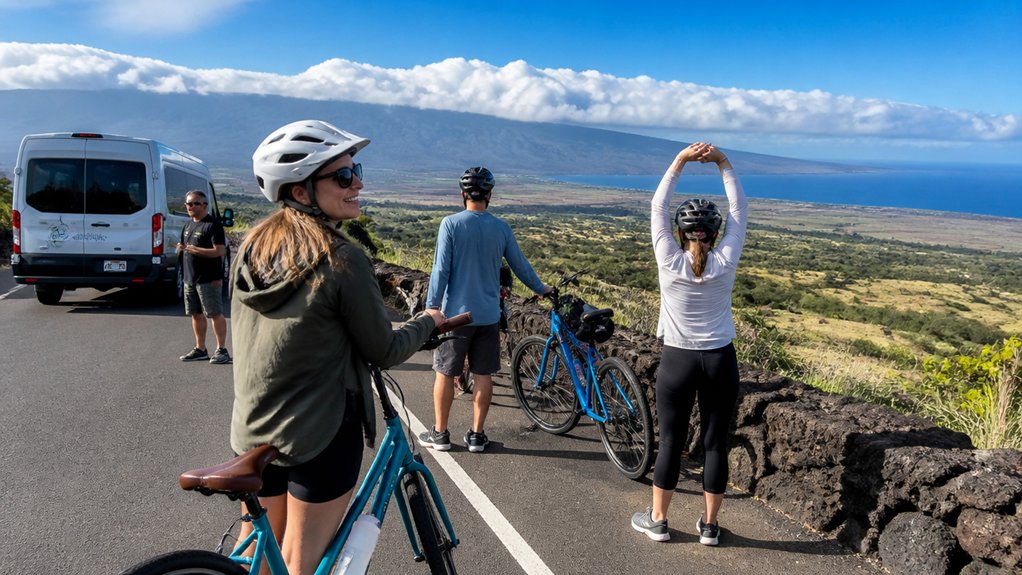
Often, the easiest Maui bike tours for beginners are the ones that let gravity do most of the work. A Haleakala Downhill Bike Tour fits that idea perfectly. You coast most of the 23-mile route, control your own speed, and pedal very little. If you’d rather have extra backup, choose a Guided Bike Tour with a chase van. A Guided Van Tour is another realistic option if you want the Haleakala experience without biking at all. Your guide sets a mellow pace, gives a safety briefing, and stays close if nerves kick in.
A shorter Express tour also keeps things simple. You spend less time on the road and still get the cool air, open slopes, and long ocean views. If climbing sounds deeply unfun, e-bike rentals in West Maui smooth out hills and headwinds. For true first-timers, they make the ride feel surprisingly light and almost sneaky.
Best Maui Bike Tours for Non-Cyclists
You’ve got great options if you want an easy Maui ride, from Haleakalā downhill tours that are mostly coasting to e-bike outings along the coast with ocean views and less work for your legs. If you like extra support, you can choose a guided tour with a steady pace, safety briefing, and chase van, or go self-guided if you want more freedom and don’t mind using your hand brakes for long stretches. You’ll also want to keep the simple rules in mind, like age and weight limits, so you can pick a scenic low-stress ride that actually feels fun instead of like a surprise workout. For many beginners, e-bike tours are worth it because they make it easier to enjoy Maui’s scenery without needing strong cycling fitness.
Easiest Ride Options
Sometimes the easiest Maui ride barely feels like riding at all. You can choose an easy downhill that’s 95% to 99% coast, so your main job is squeezing hand brakes and enjoying the long open views. Self-guided Haleakalā descents work well if you’re comfortable rolling for miles with barely any pedaling.
- You drift past eucalyptus scent, cool morning air, and big ranchland skies.
- West Maui e-bike rentals let you cruise the coast with pedal-assist, salty breeze, and plenty of snack stops.
- A private ranch e‑mountain outing keeps you on beginner-friendly dirt, where tires hum softly and the terrain stays controlled.
A typical Maui bike tour day often pairs those scenic descents with wide-open island views and a relaxed sense of adventure.
If biking still sounds like a lot, try a water bike tour or a short supported ride to the sea. You’ll get scenery first, effort second, and maybe surprise yourself.
Guided Vs Self-Guided
If you want the most relaxed version of a Maui bike day, guided tours make the call easy. You get a guide-led pace, a chase van, park entry, gear, and a required safety briefing before you roll. That setup works well if you’re nervous, rusty, or simply don’t want to think about navigation, brakes, or where to stop. Private options add even more hand-holding and usually keep groups smaller.
A self-guided ride gives you more freedom. You can coast most of the way downhill and take breaks when you want, but you need solid bike handling and comfort managing your own speed. You’ll still get gear and support by phone, yet you follow county van-transfer rules through Kula and handle more on your own. One of the biggest differences in the shuttle or self-drive choice is whether you want transportation logistics handled for you or prefer to manage the route yourself. Check age, weight, and pregnancy limits first.
Still comparing Maui Bike Tours Non Cyclists: What’s Realistic?
Ask for tour ideas, hotel suggestions, or a simple trip plan that combines both.
Trip Helper
Scenic Low-Stress Picks
Once you know how much support you want, the fun part is picking a ride that feels scenic and easy on your nerves. Maui gives you several low-stress ways to sightsee without grinding through hard miles.
- West Maui eBike tours let you cruise the scenic coastline with pedal assist, salty air, and wide viewpoints. They run about 2 to 6 hours and often cost $29 to $80.
- Water Bike Tour in South Maui keeps you afloat while you watch for turtles and shoreline birds. It’s family friendly, lasts 1 to 2 hours, and feels more playful than sweaty.
- Cycle to the Sea and private Wailea ranch guided tours offer small groups, smooth support, and beginner-friendly pacing. For Haleakalā, pick mostly downhill guided tours with included transfers and clear age limits. First-timers usually do best with guided tours that include safety instruction, bike fitting, and van support so the ride feels manageable from start to finish.
Why Guided Maui Bike Tours Feel Easier

Usually, guided Maui bike tours feel easier because the hard parts stay in the background while you enjoy the ride. Guided support means a Chase van trails the group, so if your legs fade or the weather turns, help is close. That alone can settle your nerves before the first downhill curve.
You also ride at a safe steady pace, not in a silent race with stronger cyclists. Guides handle route choices, summit logistics, and safety talks, so you don’t puzzle through van rules, switchbacks, or tricky coastal stretches. They hand you a Kona bike with disc brakes, a helmet, backpack, and Helly Hansen raingear, which feels pretty great when mountain air turns sharp. Instead of stressing over details, you listen, coast, and actually notice the eucalyptus scent nearby. For many travelers, that extra support is exactly what makes Maui bike tours worth the ride.
Which Haleakala Bike Tours Skip the Climb?
Here’s the key thing to know: most Haleakalā bike tours skip the climb entirely. On a typical Haleakala Bike Tour, you ride after a van transfer, not after grinding uphill. Most guided and self-guided trips start at 6,500 ft, so you roll into the descent fresh. Haleakala bike tours start with an early-morning van transfer before the downhill ride begins.
- On guided sunrise tours, you ride in a van to the crater rim near 10,000 ft, watch dawn spill over cinder slopes, then start biking lower down.
- On summit and express self-guided trips, county rules require transport through Kula to the 6,500 ft start, where the road tilts downhill for miles.
- You’ll hear wind in your helmet, smell eucalyptus, and barely pedal while support options, disc brakes, and rain gear keep the long descent realistic for beginners.
Are Self-Guided Haleakala Bike Tours Doable?
If you can handle a bike with confidence, a self-guided Haleakalā tour is very doable. Most self-guided Haleakala bike tours begin around 6,500 feet, not the summit, and the route is overwhelmingly downhill. That means fitness matters less than steady braking, balance, and comfort with speed, hairpin turns, and thin shoulders.
You’ll get a Kona bike with disc brakes, a helmet, maps, and often raingear. Phone support and a support van add a safety net. You also set your own pace, which makes room for stops in Makawao or Paia when the eucalyptus air turns warm and the road quiets. Still, check rules before booking. The minimum age is 15, operators have weight limits, and pregnant riders can’t participate. Height requirements may also apply, depending on the tour operator. You’ll also need layers, lights, and enough focus to respect changing weather.
Short Maui Bike Tours With the Least Effort
If you want the easiest way to see Maui on two wheels, you can cruise a coast road on an e-bike, try a water bike that feels more playful than sweaty, or pick a short downhill run where gravity does most of the work. You’ll still get the good stuff like salt air, bright blue water, and roadside views without spending the day grinding up hills. Even better, these low-effort options let you keep things simple, whether you’ve got two hours, a free afternoon, or just enough energy to coast and smile. Some of the best e-bike tours on Maui are designed for scenic sightseeing, which makes them a practical fit for non-cyclists who want minimal effort.
Electric Bike Cruising
Slip onto an e-bike and Maui suddenly feels much smaller in the best way. If you want the least effort, this is your sweet spot. A West Maui eBike self-guided ride can last just two hours, start around $40, and still give you ocean views, warm wind, and easy rolling roads. Black Rock e-bike rentals often include step-through bikes, so hopping on feels simple, not sporty.
- You cruise past lava rock, palms, and bright blue water with electric assist doing the hard part.
- You pick eBike island adventures for four hours when two feels too short.
- You choose a guided Wailea ranch ride if traffic sounds annoying and you’d rather learn on quiet trails.
The Kapalua Coastal Trail is another bike-friendly option if you want an easy scenic stretch with ocean views and a smooth ride. Many operators offer free cancellation up to 24 hours. That’s wonderfully low-commitment travel for cautious riders.
Water Bike Option
For even less effort than an e-bike, trade pavement for the water and pedal across South Maui on a floating bike. With Surf Cycle Hawaii, a Water Bike tour lasts just 1 to 2 hours, making it one of Maui’s easiest bike experiences for non-cyclists.
You’ll get a quick safety briefing, flotation support, and easy pedaling that feels more like gliding than grinding. These water bikes are family-friendly, so you don’t need cycling skills or strong fitness. You can skim over calm blue water, watch for turtles, and sometimes spot whales in season. If you want more wildlife after your ride, Hookipa Lookout is one of Maui’s best-known spots for timing turtle viewing and watching surf. Surf Cycle Hawaii says it’s Maui’s only Water Bike operator, so you’re trying something genuinely unusual. At about $124 per adult, with free cancellation up to 24 hours, it’s a relaxed, low-commitment choice.
Short Downhill Choices
Coasting is the main event on Maui’s shortest downhill bike tours, which makes them a sweet spot for non-cyclists who want the views without the workout. From Haleakala’s 6,500-foot start, you’ll mostly glide, not grind. Mountain Riders’ self-guided bike tour takes 2 to 3 hours and keeps pedaling light.
- Picture cool morning air on your cheeks as eucalyptus and damp earth drift past.
- Watch the road unwind through open slopes, then greener neighborhoods, with the ocean flashing ahead.
- Hear your tires hum while a support vehicle, helmet, and rain gear keep logistics easy.
Many riders consider a Paia start a practical way to enjoy the Haleakala descent without committing to a summit-length outing. If you want another short downhill option, Bike Maui’s self-guided Haleakala Express trims the time to about five hours. For the least effort anywhere, West Maui e-bikes make cruising coastal roads almost comically easy.
Best West Maui E-Bike Tours for Beginners
Often, West Maui e-bike tours make the coast feel far more open to beginners, because you can cruise longer stretches of shoreline without grinding through every hill. If you want a true West Maui eBike intro, the Aloha West Maui Self-Guided Electric Bike Tour keeps things simple with an easy two-hour route, coastal views, and few steep climbs.
For more range, the Self-Guided Electric Bike Tour called the Island Adventure lasts four hours and starts around $60, with free cancellation up to 24 hours ahead. If you’d rather sample the coast first, electric-bike rentals from Black Rock Bikes offer well-kept e-bikes for about two hours. These beginner-friendly tours let you hear surf, feel trade winds, and stop when something catches your eye, which is ideal if your legs prefer diplomacy. On easier days, even a ride inspired by the Kihei Bike Path shows how relaxed, visitor-friendly coastal cycling can feel for non-cyclists.
Unique Maui Bike Tours: Water Bikes and Ranch Rides
Beyond the usual road ride, Maui serves up two of its most unusual bike adventures in forms that barely feel like standard cycling. If you want novelty without hardcore effort, these options shine.
- On a Water Bike Tour in South Maui, you pedal gently over clear water for 1 to 2 hours, watching turtles surface and, in season, whales breach. It feels more like gliding than biking.
- A private Emountain Bike Tour trades pavement for Wailea ranchland, where electric assist smooths the climbs and guides keep the pace calm.
- The ranch e‑MTB setting adds dusty trails, open skies, and a controlled private landscape, so beginners can relax while stronger riders choose a tougher route.
Some travelers also look into wheelchair-friendly e-bikes on Maui, though availability and terrain suitability can vary by tour.
Both are standout Maui experiences, and both tend to fill fast.
What Do Maui Bike Tours Cost?
If you’re pricing out a Maui bike day, the range is wider than most visitors expect. You can keep the price low with a bike rental or spend more on a sunrise bike tour with support, transport, and park access. Prices usually reflect factors like ride type, whether transportation is included, and park access fees.
| Option | Typical price | Notes |
|---|---|---|
| West Maui e-bike rental | $29 to $80 | Budget friendly, self-paced |
| Mountain Riders downhill | $139 to $145 | Shorter self-guided rides |
| Bike Maui express downhill | About $147 | Popular self-guided option |
| Summit sunrise tour | $253 to $318 | Fees and taxes can raise totals |
| Guided specialty rides | About $260 to $270 | Ranch or Cycle to the Sea |
For Maui Bike Tours, always check cancellation rules. Some tours refund up to 24 to 48 hours out. Guided summit trips often need more notice.
How Cold and Fast Haleakala Bike Tours Feel

While Maui feels tropical at sea level, Haleakalā can feel shockingly cold before the ride even begins. At the Haleakala Sunrise, the temperature near 10,000 feet can hover close to freezing, so the mountain feels more alpine than beachy. Then your actual descent starts around 6,500 feet, and the air stays cool as speed strips away body heat fast. Bringing warm layers helps you handle the temperature swing from summit chill to the lower slopes.
- You hear the van doors slide open and meet sharp, dry air on your face.
- You coast through switchbacks where gusts tug at your sleeves and a windproof outer layer suddenly makes perfect sense.
- You roll toward warmer coastal light while tires hum and the road keeps falling away.
Some riders hit 30 mph on open stretches, though guided groups usually keep things calmer at 12 to 15 mph for comfort.
What Should You Wear on a Maui Bike Tour?
You’ll want to dress for two worlds on a Maui bike tour: near-freezing air at Haleakalā’s summit and bright sun lower down. Start with warm layers and a windproof shell, then wear sturdy closed-toe shoes with good grip so you can brake with confidence instead of thinking about your feet. If you add gloves, a beanie, and a light rain layer, you’ll feel ready for the cold, the coast, and that first big whoosh downhill. On many Haleakalā summit bike tours, temperatures can feel winter-cold before sunrise, so thermal layers are especially helpful at the top.
Layer For Elevation
At the top of Haleakala, the cold can catch you off guard, so dress in layers you can peel off as the island warms below. At the summit, start with a moisture-wicking base layer, add fleece or down, then finish with a windproof shell. A warm jacket matters, especially if you’re waiting for sunrise in near-freezing air.
- Picture your breath at dawn, silver in the dark, while gloves and a hat keep the sting off your ears.
- Feel the shell snap in the breeze as clouds glow pink and the volcano slowly reveals itself.
- Later, stuff that extra layer into your backpack when the descent turns brighter, softer, and much warmer.
Pack light but smart. A neck gaiter or balaclava helps, and packable rain gear adds insurance if weather suddenly shifts. Dressing this way also makes sense for the best time of day, since sunrise starts cold but conditions warm quickly as you ride lower.
Closed-Toe Shoes Matter
Usually, your shoes matter more than you expect on a Maui bike tour. Most operators on a downhill tour from Haleakala National Park require or strongly recommend closed-toe shoes for safety and better bike control. You’ll want sturdy sneakers or cycling shoes with a firm sole, especially when long coasts, switchbacks, loose grit, and speeds above 30 mph enter the picture.
Skip sandals and flip-flops. They’re often banned, and they leave your feet exposed on steep descents and hairpin turns while you work the hand brakes. If you rent a bike or e-bike, bring your own closed-toe shoes, and bring pedals too if you use clip-ins. Helmet guidelines also matter on Maui bike tours, so expect operators to require proper head protection along with the right footwear. Sunrise rides can feel surprisingly cold, so add warm socks. Your toes will thank you while waiting at the crater rim before dawn.
Who Should Skip Maui Bike Tours: and What to Book Instead?
While Maui bike tours can feel like a bucket-list thrill, they’re not the right fit for every traveler, and that’s good news because the island gives you plenty of easier ways to see the same sweeping views.
Not every Maui bike tour fits every traveler, and that’s exactly why the island’s easier adventures feel so rewarding.
If you’re pregnant, skip Haleakalā descents and book low-elevation e‑bike rentals or a van day instead. If your rider is under 15, county rules block summit downhill trips, so choose scenic drives or supervised ranch rides. You should also pass on any sunrise tour if 3:00 a.m. check-in sounds brutal, or if steep switchbacks, speed, weight limits, or mobility issues make you pause. A typical Haleakalā bike tour itinerary follows a set step-by-step descent, which can feel more demanding than many non-cyclists expect.
- Picture salt air and flat paths on a relaxed coastal cruise.
- Imagine cool eucalyptus, overlooks, and zero brake squeezing in a van.
- Trade white knuckles for snorkel fins, black lava, and easy laughter instead.
Frequently Asked Questions
Can Non-Cyclists Join Maui Bike Tours if They Cannot Balance Confidently?
No, you usually can’t join standard Maui downhill bike tours if you can’t balance confidently. Instead, ask operators about adaptive equipment, balance aids, tandem options, or guided walks, and choose beginner-friendly e-bike experiences instead.
Are There Maui Bike Tours With Hotel Pickup for Non-Drivers?
Yes, some Maui bike tours offer hotel transfers; one guided sunrise option charges about $41.77 per person. You can book shuttle service, curbside pickup, or private transport, but you’ll need to confirm zones, fees, and reserve early.
What Age Restrictions Apply to Maui Bike Tours for Beginners?
You’ll usually face age limits: downhill beginners must be at least 15, and teen policies often require guardian supervision under 18. You won’t find true senior programs, but easier self-guided or e-bike tours may suit older beginners.
Can Plus-Size Riders Find Suitable Bikes on Maui Tours?
Yes, you can often find suitable bikes on Maui tours, and that hopeful theory’s true if you verify bike fit, seat width, frame strength, and tire clearance. Check operators’ 270–300 lb limits, e-bike options, and reserve early.
Do Maui Bike Tours Operate During Rainy or Windy Weather?
Yes, you’ll usually ride in light rain or wind, but operators enforce weather policies and safety protocols. They may issue ride cancellations or alternative schedules if heavy rain, slick roads, or dangerous winds threaten safety.
Conclusion
If your theory is that Maui bike tours are only for hard-core riders, the island quickly disproves it. Picture the options like a simple map: e-bike coast rides at sea level, van-supported Haleakalā trips above the clouds, and water bikes or ranch rides when you want zero downhill nerves. You can trade heavy pedaling for views of lava slopes, salt air, and wind in your jacket. Bring layers, choose support, and let curiosity do the work.


